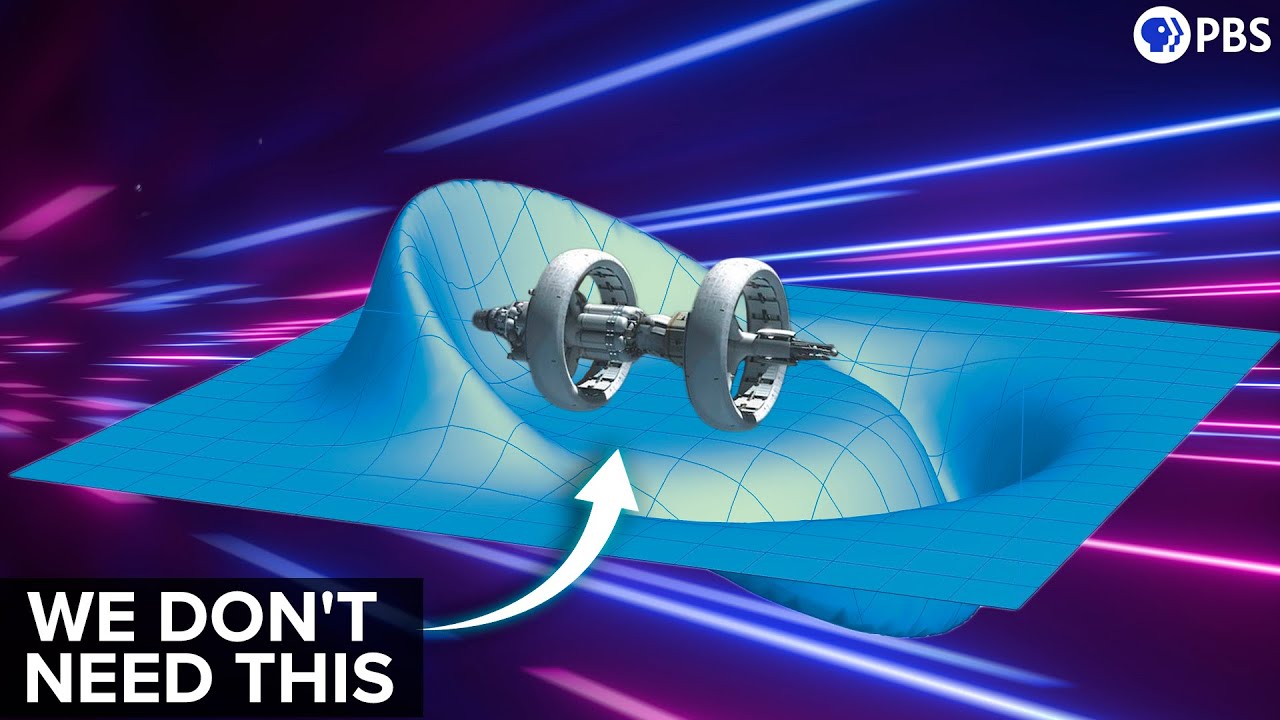
Interstellar Expansion WITHOUT Faster Than Light Travel
Keywords
Summary
142 words
Critical Evaluation
Value of the Information & Strength of the Argument
The video provides a comprehensive and well-structured overview of the challenges of generation ships, grounding its arguments in scientific studies and real-world analogs (ISS, Biosphere 2). It effectively balances technical details (propulsion, life support) with human factors (psychology, culture). The argumentation is logical, presenting a plausible scenario and systematically addressing each major constraint. The use of specific examples and studies (Marin & Beluffi, NASA’s CIMON) adds credibility. However, some aspects, such as the social and cultural stability of a multi-generational society, are treated more speculatively, acknowledging the lack of research.
Scientific Rigor, Source Quality, Title Accuracy
The video demonstrates scientific rigor by referencing peer-reviewed studies (Marin & Beluffi) and NASA projects (CIMON, ISS recycling). The sources are credible and relevant. The title accurately reflects the content, which is a detailed examination of generation ships as a means of interstellar expansion without FTL. The content is well-aligned with the title, providing a thorough analysis of the concept. The video also promotes a related documentary, ‘Space: The Longest Goodbye,’ which is relevant to the psychological aspects discussed.
184 words
Title / Content Match
The title accurately reflects the content, which explores the feasibility of interstellar travel without FTL, focusing on generation ships.
Quality & Reliability
8/10
The video is hosted by Matt O'Dowd, an astrophysicist, and references specific scientific studies (Marin & Beluffi) and NASA projects (CIMON, ISS recycling). The content is well-researched and clearly distinguishes established science from speculation. However, some concepts (e.g., AI therapist) are presented optimistically without deep critical analysis.
Key Moments
Markers derived by PSI from the transcript: the creator did not define chapters.
- Introduction to the concept of generation ships and the question of interstellar travel without FTL.
- Setting the scenario: an existential threat forces a 30-year timeline to launch a mission to Proxima Centauri b.
- Discussion of propulsion options: conventional electric propulsion (6,300-year journey) vs. nuclear pulse propulsion (140-year journey).
- Crew size and genetic diversity: citing Marin & Beluffi's study on minimum population for a multi-generational journey.
- Life support challenges: food production (hydroponics, insects), water recycling, and air recycling.
- Artificial gravity via rotating habitats and radiation shielding using water.
- Psychological and social factors: VR for connection to Earth, AI therapists (CIMON), and the need for a stable social structure.
- Conclusion: generation ships are plausible with current technology, but require significant advancements in life support and social engineering.
Cited Sources
- Space: The Longest Goodbye (documentary) — Promoted at the beginning and end of the video as related content on the psychological challenges of space travel.
- PBS Space Time Mailing List — Link for viewers to sign up for episode notifications and announcements.
- PBS Space Time Library Search — Link to search the entire library of PBS Space Time episodes.
- PBS Space Time Merch Store — Link to the merchandise store.
- J.R.S. Schattenberg (End Credits Music) — Credit for the end credits music.
Concurring Sources
- Marin, F., & Beluffi, C. (2018). 'Computing the minimal crew for a multi-generational space travel towards Proxima Centauri b.' — The video cites this study for the minimum crew size and genetic diversity requirements.
- NASA's ISS water recycling milestone — The video mentions the ISS achieving 98% water recycling efficiency.
Dissenting Sources
- Commenter's concern about machine maintenance — A popular comment points out that the video does not address the long-term maintenance of the ship's machinery, which is a significant challenge for multi-century missions.
Contribution & Novelties
The video synthesizes existing research on generation ships into a coherent and accessible plan, highlighting the trade-offs between travel time, crew size, and life support requirements. It emphasizes the importance of psychological and social factors, which are often overlooked in technical discussions. The scenario-based approach makes the challenges tangible.
Pour aller plus loin :
- Generation ship - Wikipedia — Overview of the concept and its history.
- Project Orion (nuclear propulsion) - Wikipedia — Details on the nuclear pulse propulsion concept.
- Biosphere 2 - Wikipedia — Information on the closed ecological system experiment.
- CIMON (AI assistant) - Wikipedia — Details on the AI assistant used on the ISS.
107 words
Radar Profile
The radar profile shows high scores in information quantity, quality, and reliability, with a slightly lower score in technical level. This indicates a well-researched and informative video that is accessible to a general audience but still provides substantial depth.
💬 Positif. Sur les 30 commentaires analysés, la majorité exprime de l'intérêt et de l'enthousiasme pour le sujet, avec des discussions constructives sur les défis techniques et sociologiques, ainsi que des références à la science-fiction.