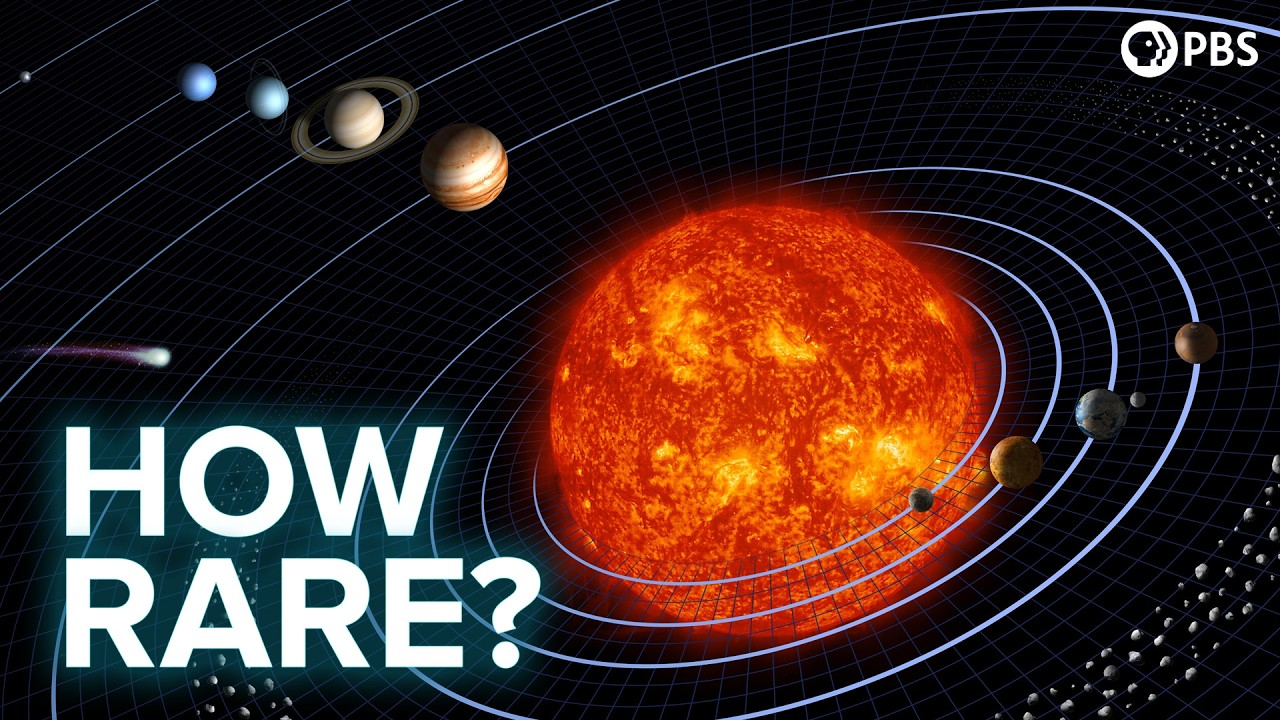
Do We Live in the Rarest Solar System In The Universe? We're about to find out!
Keywords
Summary
208 words
Critical Evaluation
Value of the Information & Strength of the Argument
The video provides substantial value by synthesizing the current state of exoplanet research and clearly explaining the astrometry method, which is often overlooked in popular science communication. The argumentation is solid, building logically from the historical context to the limitations of existing detection methods, and then to the promise of Gaia’s astrometric data. The host effectively communicates the significance of the upcoming data releases and the potential to answer fundamental questions about our solar system’s place in the universe. The inclusion of specific predictions from a recent study adds credibility and forward-looking perspective.
Scientific Rigor, Source Quality, Title Accuracy
The scientific rigor is high, with accurate explanations of the methods and appropriate caveats about uncertainties. The episode references a specific study by Caleb Lamas and Josh Wyn, though the full citation is not provided in the description. The title accurately reflects the content, which is a balanced exploration of the possibility that our solar system is rare. The content is well-structured and avoids overhyping, maintaining a measured tone. The description includes links to PBS and Patreon, but no direct links to the cited study or additional scientific resources, which is a minor weakness.
202 words
Title / Content Match
The title accurately reflects the central question of the episode, which explores the rarity of solar-system-like configurations and the upcoming Gaia data releases that may answer it.
Quality & Reliability
9/10
High-quality science communication with clear explanations of established methods (radial velocity, transit, astrometry) and recent results (Gaia DR3 exoplanets, predictions for DR4/DR5). The content is accurate and well-contextualized, with appropriate caveats about uncertainties.
Key Moments
Markers derived by PSI from the transcript: the creator did not define chapters.
- Introduction: Are we rare? The question of solar system uniqueness.
- Announcements: Black Friday merch sale and algorithm support.
- The search for habitable exoplanets and the importance of Earth-mass planets in habitable zones.
- History of exoplanet discovery: pulsar planets and radial velocity method.
- Kepler mission and the transit method; the 'peas in a pod' pattern.
- The challenge of detecting Jupiter-like planets in wide orbits.
- Introduction to astrometry method and its advantages.
- Gaia mission overview and its precision astrometry capabilities.
- First Gaia exoplanets: Gaia 4b and 5b.
- Predictions for Gaia DR4 and DR5 exoplanet detections.
- Combining Gaia and TESS to find solar system analogs; implications for life.
Cited Sources
- PBS Donate — Support PBS Space Time
- Henson Shaving — Sponsor of the episode
- Space Time Mailing List — Sign up for episode notifications
- Space Time Library Search — Search all Space Time episodes
- Space Time Merch Store — Black Friday sale
- J.R.S. Schattenberg Music — End credits music
Concurring Sources
- Gaia mission — ESA's official Gaia mission page, confirming the mission's objectives and data release plans.
- NASA Exoplanet Archive — A comprehensive database of confirmed exoplanets, supporting the current count and detection methods.
Contribution & Novelties
The episode provides a clear and accessible explanation of the astrometry method and its potential to discover Jupiter-like exoplanets, which is a relatively underexplored topic in popular science communication. It also highlights the upcoming Gaia data releases and their expected impact on exoplanet science, offering a forward-looking perspective. The discussion of the ‘peas in a pod’ pattern and the Grand Tack hypothesis provides context for understanding our solar system’s uniqueness.
Pour aller plus loin :
- Gaia mission — Official ESA page for the Gaia mission, providing detailed information about its objectives and data releases.
- Exoplanet Exploration — NASA’s exoplanet exploration page, with a wealth of information on detection methods and discovered planets.
- Grand Tack hypothesis — Wikipedia article explaining the Grand Tack hypothesis, a proposed mechanism for Jupiter’s migration and its implications for the solar system’s formation.
137 words
Radar Profile
The radar profile shows high scores across all dimensions, with particularly strong performance in information quantity and quality, reflecting the episode's comprehensive and accurate coverage. The technical level is also high, indicating that the content is suitable for an audience with some background in astronomy. The overall reliability is excellent, with no significant weaknesses identified.
💬 Très positif. Sur les 30 commentaires analysés, les spectateurs expriment une grande appréciation pour la qualité du contenu, la clarté des explications et la valeur éducative de la chaîne, avec de nombreux témoignages de fidélité sur plusieurs années.