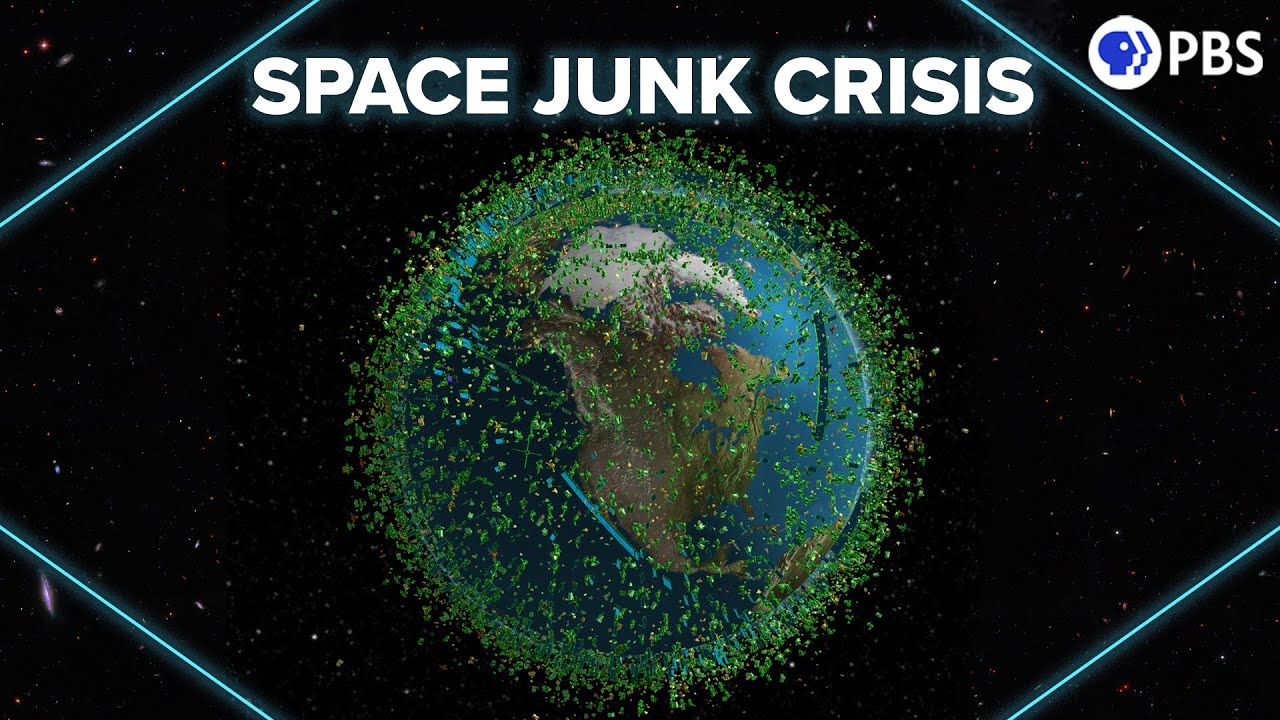
Are We Running Out of Space Above Earth?
Keywords
Summary
205 words
Critical Evaluation
Value of the Information & Strength of the Argument
The video provides valuable information on a critical issue in space exploration, presenting complex concepts like the Kessler Syndrome and orbital decay in an accessible manner. The argumentation is solid, using real-world examples and historical events to illustrate the risks. The explanation of exponential growth and positive feedback loops is clear and helps the viewer understand the urgency of the problem. The video also offers a balanced view, acknowledging both the risks and the potential solutions, and avoids sensationalism by clarifying that the Kessler Syndrome is not an immediate apocalyptic event but a gradual process that can be managed with proper action.
Scientific Rigor, Source Quality, Title Accuracy
The video maintains a high level of scientific rigor, referencing real events and concepts such as the Iridium-Kosmos collision and the 2007 Chinese anti-satellite test. It does not cite specific academic papers, but the information is consistent with established knowledge in the field. The title accurately reflects the content, which focuses on the potential depletion of usable orbital space. The video is well-produced and the explanations are technically accurate, though it could benefit from citing specific sources for viewers who want to delve deeper.
201 words
Title / Content Match
The title accurately reflects the content, which discusses the growing problem of space debris and the potential for the Kessler Syndrome to limit access to Earth's orbit.
Quality & Reliability
8/10
The video provides a well-structured, scientifically accurate overview of space debris and the Kessler Syndrome, supported by references to real events and concepts. It includes expert commentary and clear explanations, though it does not cite specific peer-reviewed sources in the video itself.
Key Moments
Markers derived by PSI from the transcript: the creator did not define chapters.
- Introduction to the Chinese Long March 5 rocket re-entry and the issue of space debris.
- Overview of the scale of space debris: 3,300 operational satellites and millions of debris pieces.
- Explanation of the Kessler Syndrome and the positive feedback loop of collisions.
- Discussion of mitigation strategies: tracking, collision avoidance, and orbital decay.
- Historical events that contributed to space debris: Iridium-Kosmos collision and anti-satellite tests.
- Impact of mega-constellations like Starlink and the potential for increased risk.
- Possible solutions: deorbiting technologies and international cooperation.
Cited Sources
- LeoLabs Space Debris Tracker — Referenced as a tool to track space debris in real-time.
- Space Time Merch Store — Promotional link for merchandise, not a scientific source.
- Space Time Mailing List — Newsletter sign-up, not a scientific source.
Concurring Sources
- NASA Orbital Debris Program Office — Provides data and research on orbital debris, consistent with the video's claims.
- European Space Agency Space Debris Office — ESA's space debris monitoring and mitigation efforts align with the video's discussion.
Contribution & Novelties
The video provides a comprehensive and accessible overview of the space debris problem, synthesizing existing knowledge into a clear narrative. It emphasizes the gradual nature of the Kessler Syndrome and the importance of proactive measures. The discussion of mega-constellations and their potential impact is particularly timely.
Pour aller plus loin :
- Kessler Syndrome - Wikipedia — Detailed explanation of the concept and its history.
- Space Debris - NASA — NASA’s official page on orbital debris, including tracking and mitigation efforts.
- Inter-Agency Space Debris Coordination Committee — International body coordinating space debris mitigation efforts.
93 words
Radar Profile
The radar profile shows high scores in information quantity, quality, and reliability, with a slightly lower technical level, indicating that the video is informative and trustworthy but may not delve into the most complex technical details. The overall balance suggests a well-rounded educational piece.
💬 Positive. Sur les 30 commentaires analysés, la majorité exprime une appréciation pour la clarté de l'explication et la pertinence du sujet, avec plusieurs références à l'anime Planetes et des réflexions sur la gestion des débris spatiaux.