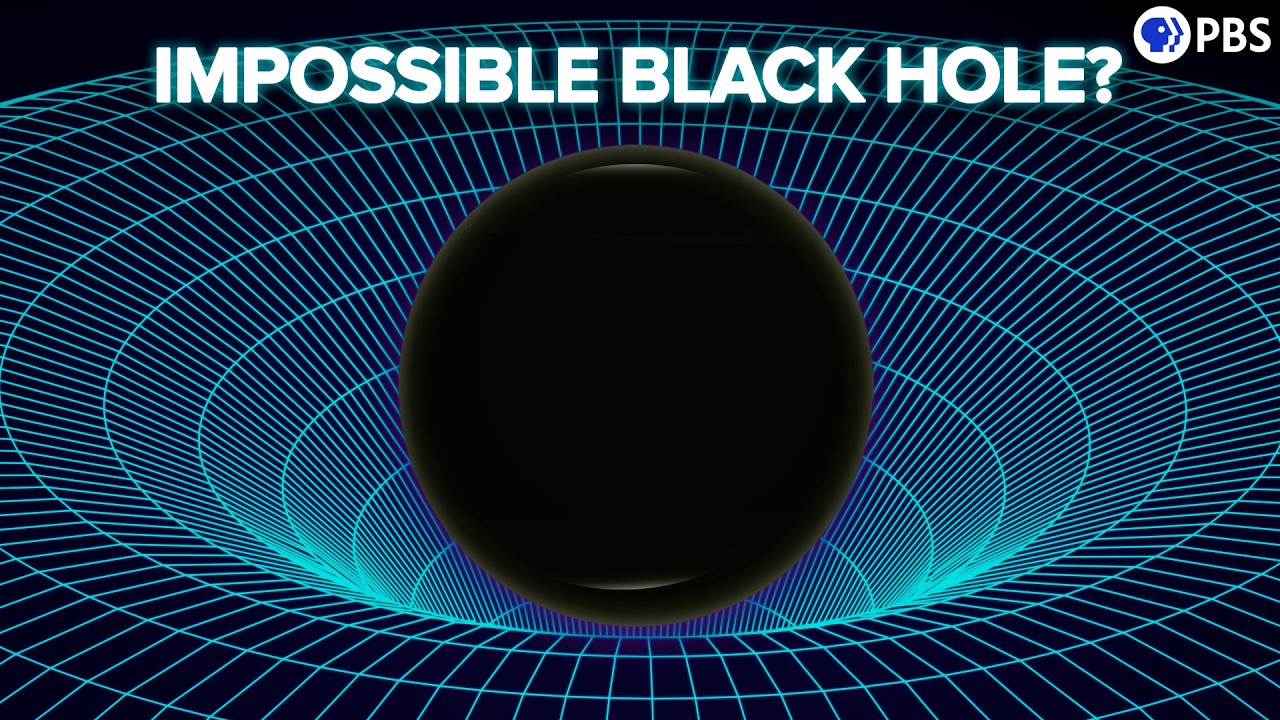
We Thought All Black Holes Came From Stars. We May Have Been Wrong.
Keywords
Summary
180 words
Critical Evaluation
Value of the Information & Strength of the Argument
The video provides substantial value by explaining the transition of gravitational-wave astronomy into a mature, statistical science. It clearly articulates how the accumulation of hundreds of detections allows for population-level inferences that go beyond individual events. The argumentation is solid, using the example of black hole spin correlations to illustrate how the catalog can falsify simple formation models and reveal multiple formation channels. The discussion of the sub-solar mass candidate is handled with appropriate scientific caution, clearly labeling it as a candidate that requires further verification. The episode effectively communicates the power of reverse inference in astronomy and the importance of understanding the ’normal’ to identify the anomalous.
Scientific Rigor, Source Quality, Title Accuracy
The scientific rigor is high, with the host accurately describing the physics of black hole formation and the capabilities of gravitational-wave detectors. The video does not cite specific papers, but it references the LIGO-Virgo-KAGRA collaboration’s latest catalog, which is a well-established source of data. The title is accurate and engaging, directly reflecting the central theme of the episode. The content is well-structured, building from the historical context to the current state of the field and then to the specific candidate. The video also includes a brief sponsored segment for Incogni, which is clearly marked and does not detract from the scientific content.
225 words
Title / Content Match
The title accurately reflects the content: the video discusses a potential sub-solar mass black hole detection that challenges the standard stellar-collapse formation scenario, suggesting a possible primordial origin.
Quality & Reliability
8/10
The video is hosted by an astrophysicist (Matt O'Dowd) and presents a balanced, nuanced view of a recent gravitational-wave candidate. It clearly distinguishes between confirmed detections and the tentative nature of the sub-solar mass black hole candidate, emphasizing the need for further analysis. The scientific reasoning is sound and aligns with current understanding of stellar evolution and black hole formation.
Key Moments
Markers derived by PSI from the transcript: the creator did not define chapters.
- Introduction and announcement of the 50th anniversary of the Mars landing.
- Reflection on the first LIGO detection and the promise of gravitational-wave astronomy.
- Discussion of the latest gravitational-wave catalog and the transition to 'normal science'.
- Explanation of how the catalog allows for population-level inferences and testing formation scenarios.
- Introduction of the sub-solar mass black hole candidate and its potential primordial origin.
- Discussion of the importance of a mature science in trusting anomalous signals.
- Potential implications of confirming primordial black holes for dark matter and early universe physics.
- Conclusion emphasizing the value of mapping the 'normal' and the ongoing work of the field.
Cited Sources
- Incogni — Sponsor of the video, mentioned in the introduction and conclusion.
- Space Time Merch Store — Promotional link for merchandise, including a special Mars collection.
- Patreon — Link to support the channel on Patreon.
- Mailing List — Link to sign up for episode notifications.
- Space Time Library Search — Link to search the entire Space Time video library.
- End Credits Music by J.R.S. Schattenberg — Credit for the end credits music.
Concurring Sources
- LIGO-Virgo-KAGRA Collaboration — The collaboration that released the latest gravitational-wave catalog mentioned in the video.
Contribution & Novelties
The video’s original contribution lies in framing the recent gravitational-wave detections within the context of Kuhnian ’normal science’, arguing that the maturity of the field is what allows for the identification of truly anomalous events like the potential sub-solar mass black hole. It provides a clear, accessible explanation of how statistical catalogs of mergers enable reverse inference about the universe’s history and black hole formation channels.
Pour aller plus loin :
- Primordial black hole — A key concept discussed in the video, providing background on these hypothetical objects.
- LIGO — The observatory that made the first detection and continues to be central to gravitational-wave astronomy.
- Thomas Kuhn — The philosopher of science whose concept of ’normal science’ is central to the video’s argument.
- Chandrasekhar limit — The mass limit for white dwarfs, relevant to the discussion of black hole formation.
- Gravitational wave — The fundamental phenomenon being studied.
148 words
Radar Profile
The radar profile shows high scores in information quantity, quality, and technical level, with a slightly lower but still strong score in overall reliability. This indicates a well-produced, informative, and technically sound video that maintains a high standard of scientific accuracy.
💬 Très positif. Sur les 30 commentaires analysés, le public exprime un fort enthousiasme pour le contenu, saluant la qualité des explications et la profondeur des sujets abordés, avec une appréciation particulière pour la discussion sur la 'science normale'.