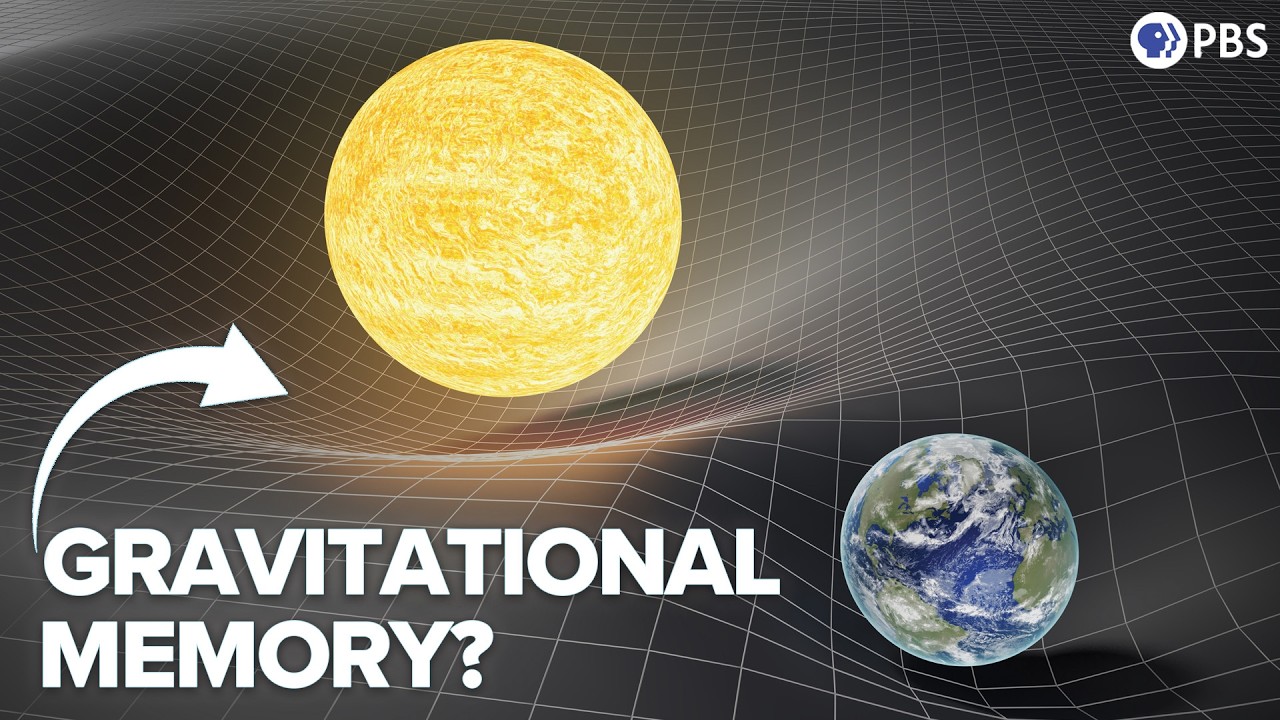
Can Space Time Remember?
Keywords
Summary
156 words
Critical Evaluation
Value of the Information & Strength of the Argument
The video provides substantial value by explaining a relatively obscure but important prediction of general relativity in an accessible yet rigorous manner. It clearly distinguishes between elastic and non-elastic spacetime responses, using analogies like water waves vs. tsunamis to illustrate the concept. The argumentation is solid, building from the basics of gravitational waves to the specifics of memory effects, and then to the detection prospects with LISA. The presentation is well-structured, and the scientific content is up-to-date, referencing recent simulations and the LISA mission. The video also explores the broader implications for testing modified gravity theories and understanding the early universe, which adds depth and relevance.
Scientific Rigor, Source Quality, Title Accuracy
The scientific rigor is high, with the content grounded in established general relativity and current research. The video cites specific predictions and simulations, and mentions the LISA mission led by ESA. While no direct academic sources are listed in the description, the channel’s reputation and the host’s expertise lend credibility. The title accurately reflects the content, and the video’s production quality is excellent. The comments section shows a positive reception, with viewers appreciating the depth and clarity, though some point out minor technical nuances, such as LISA’s interferometry method.
210 words
Title / Content Match
The title 'Can Space Time Remember?' is a compelling and accurate metaphor for the video's content, which explores gravitational memory effects. It effectively captures the central concept without being misleading.
Quality & Reliability
9/10
The video is produced by PBS Space Time, a reputable science communication channel, hosted by astrophysicist Matt O'Dowd. It presents current theoretical physics concepts (gravitational memory effects) with references to ongoing research and upcoming missions (LISA). The content is well-structured, accurate, and includes expert commentary. Minor simplification of complex topics is expected for a general audience, but the core science is reliable.
Key Moments
Markers derived by PSI from the transcript: the creator did not define chapters.
- Introduction to gravitational waves and the concept of spacetime memory.
- Explanation of elastic vs. non-elastic waves using the tsunami analogy.
- Description of different types of gravitational memory effects: displacement, velocity kick, and spin memory.
- Why current detectors like LIGO cannot detect memory effects.
- Introduction to LISA and its expected capabilities for detecting memory effects.
- Simulation results showing the detectability of displacement memory from supermassive black hole mergers.
- Potential implications for testing general relativity and probing the early universe.
Cited Sources
- PBS Donation Page — Support link for PBS member stations.
- Space Time Mailing List — Sign up for episode notifications and announcements.
- Space Time Library Search — Search the entire Space Time video library.
- Raycon Sponsor Link — Sponsor link for Raycon earbuds (advertisement).
- Space Time Merch Store — Merchandise store for PBS Space Time.
- End Credits Music by J.R.S. Schattenberg — Music used in the end credits.
Concurring Sources
- Gravitational-wave memory effects — Wikipedia article on gravitational-wave memory effects, which aligns with the video's content.
Dissenting Sources
- Comment on LISA interferometry — A commenter noted that LISA does not use traditional interferometry but rather Time Delay Interferometry (TDI), which is a more accurate description of its measurement technique.
Contribution & Novelties
The video provides a clear and engaging explanation of gravitational memory effects, a topic that is often only covered in specialized literature. It bridges the gap between advanced physics and public understanding, and highlights the upcoming LISA mission as a key tool for future discoveries. The discussion of how memory effects could test modified gravity theories and probe the early universe adds novel perspectives for a general audience.
Pour aller plus loin :
- Gravitational wave — Overview of gravitational waves and their detection.
- Laser Interferometer Space Antenna (LISA) — Details on the LISA mission.
- General relativity — Foundational theory behind gravitational memory.
- Memory effect (physics) — General concept of memory in physical systems.
113 words
Radar Profile
The radar profile shows high scores across all dimensions, indicating a well-rounded and reliable science communication video. The strong scores in information quantity and quality reflect the depth and accuracy of the content, while the technical level is appropriately high for an advanced audience. The overall reliability is excellent, consistent with the channel's reputation.
💬 Très positif. Sur les 30 commentaires analysés, la grande majorité exprime une forte appréciation pour la qualité pédagogique et la profondeur du contenu, avec des remerciements chaleureux envers l'équipe et l'animateur.