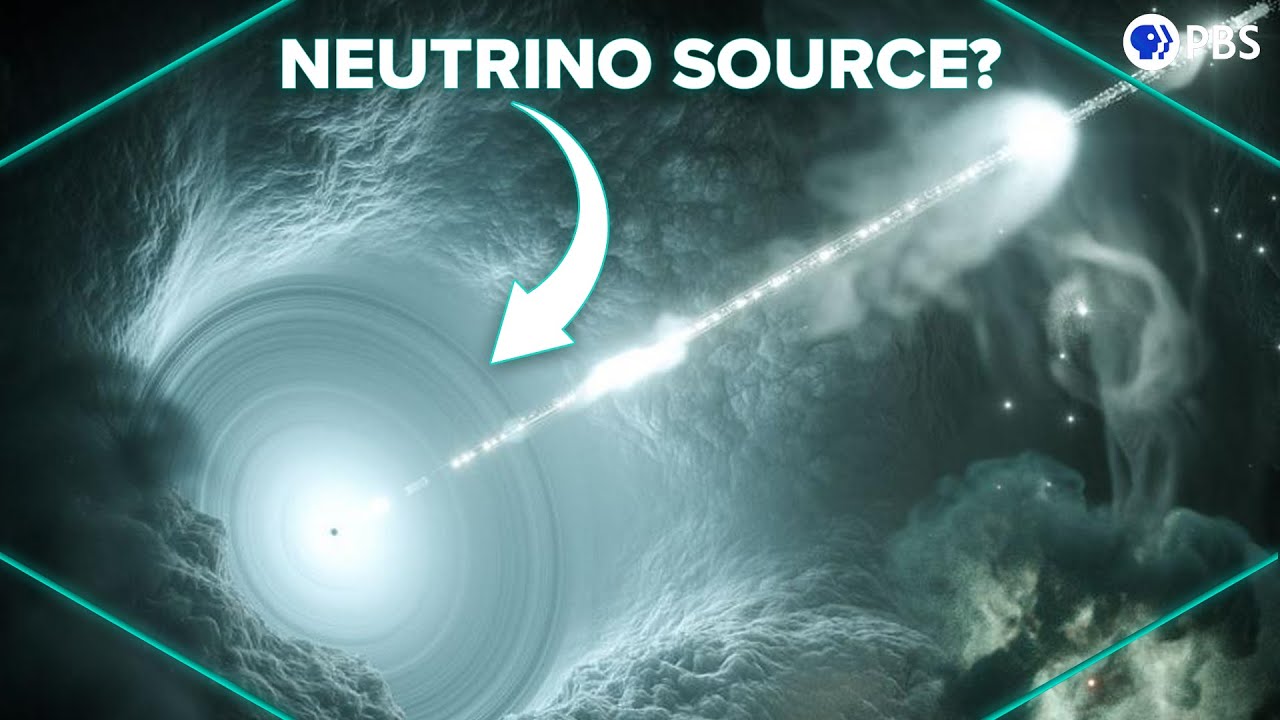
How To See Black Holes By Catching Neutrinos
Keywords
Summary
167 words
Critical Evaluation
Value of the Information & Strength of the Argument
The video provides valuable information about a cutting-edge astronomical result, explaining the science behind neutrino detection and its significance. The argumentation is solid, building from basic neutrino physics to the specific detection and its implications. The host, Matt O’Dowd, presents the material in a clear and engaging manner, using analogies and visual aids to make complex concepts accessible. The discussion of the IceCube result is well-contextualized, comparing it to previous detections and explaining the statistical significance. The video also highlights the potential of neutrino astronomy for future discoveries, making a compelling case for its importance.
Scientific Rigor, Source Quality, Title Accuracy
The video demonstrates high scientific rigor, accurately presenting the IceCube collaboration’s result and explaining the underlying physics. The sources are not explicitly cited in the video, but the description includes links to relevant resources, such as the Science Communication Lab and the PBS Space Time website. The title accurately reflects the content, which is a detailed explanation of how neutrinos are used to observe black holes. The video is well-produced and maintains a high standard of scientific accuracy, with minor simplifications for a general audience.
195 words
Title / Content Match
The title accurately reflects the content, which explains how neutrinos are used to observe black holes, specifically the supermassive black hole in NGC 1068.
Quality & Reliability
8/10
High-quality presentation of a peer-reviewed result (IceCube's 4.2 sigma detection of neutrinos from NGC 1068), with clear explanations of the physics and detection methods. The content is accurate and well-contextualized, though it does not delve into the full methodological details of the analysis.
Key Moments
Markers derived by PSI from the transcript: the creator did not define chapters.
- Introduction to neutrinos and black holes
- Properties of neutrinos and why they are hard to detect
- Introduction to IceCube detector and Cherenkov radiation
- How IceCube detects neutrinos and filters background
- Neutrino map of the sky and the detection from NGC 1068
- Explanation of active galactic nuclei and why they produce neutrinos
- Comparison with previous blazar detection and significance of the result
- Future of neutrino astronomy and plans for larger detectors
- Humorous segment on the probability of seeing a neutrino with the human eye
- Response to comments from previous episode on island of stability
Cited Sources
- PBS Space Time — Official website for the show, providing additional resources and information.
- Science Communication Lab — Provided the image used in the thumbnail, credited in the video description.
- PBS Donation Page — Link for viewers to support PBS Member Stations.
- PBS Space Time Mailing List — Sign-up for episode notifications and announcements.
- PBS Space Time Search — Search the entire Space Time library.
- PBS Space Time Merch Store — Official merchandise store.
- Private Internet Access — Sponsor link for a VPN service.
- J.R.S. Schattenberg — End credits music by J.R.S. Schattenberg.
Concurring Sources
- IceCube Collaboration — The IceCube collaboration is the source of the primary result discussed in the video.
- Science Communication Lab — Provided the image used in the thumbnail, credited in the video description.
Contribution & Novelties
The video provides an accessible yet detailed explanation of a recent scientific breakthrough: the detection of neutrinos from an active galactic nucleus (NGC 1068) by the IceCube collaboration. It explains the physics of neutrino detection, the challenges of neutrino astronomy, and the significance of this result for understanding black holes and high-energy astrophysical processes. The video also discusses future prospects for neutrino astronomy, including larger detectors and new detection techniques.
Pour aller plus loin :
- IceCube Neutrino Observatory — Official website of the IceCube collaboration, providing detailed information about the detector and its results.
- Neutrino — Wikipedia article on neutrinos, covering their properties and detection.
- Active galactic nucleus — Wikipedia article on AGNs, explaining their nature and importance.
- Cherenkov radiation — Wikipedia article on Cherenkov radiation, the phenomenon used to detect neutrinos.
- NGC 1068 — Wikipedia article on the galaxy NGC 1068, the source of the detected neutrinos.
148 words
Radar Profile
The radar profile shows high scores in information quality and technical level, indicating a content-rich and scientifically accurate video. The slightly lower score in quantity of information reflects the focused scope of the episode, while the high reliability score underscores the trustworthiness of the source.
💬 Très positif. Sur les 30 commentaires analysés, les spectateurs expriment un fort enthousiasme pour la qualité du contenu et la clarté des explications, avec plusieurs remerciements pour le travail de l'équipe et des anecdotes personnelles liées à l'astronomie des neutrinos.