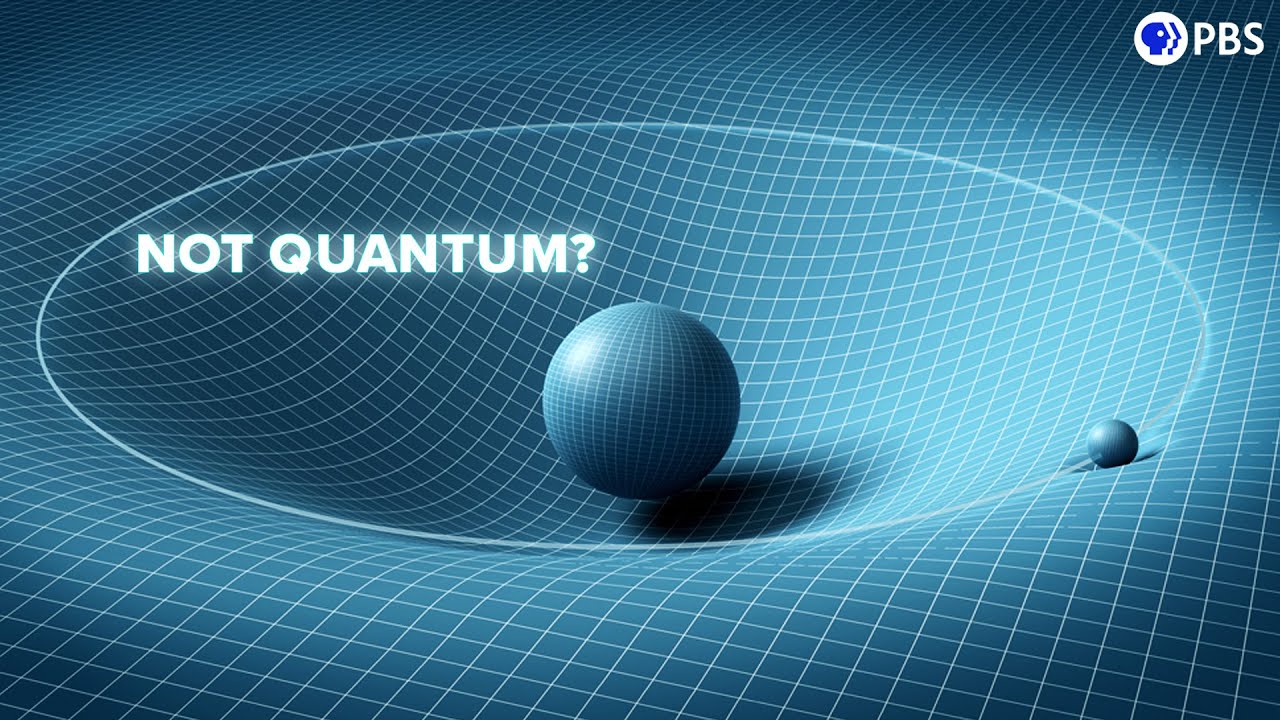
What If Gravity is NOT Quantum?
Keywords
Summary
197 words
Critical Evaluation
Value of the Information & Strength of the Argument
The video provides a high-value exploration of a complex topic by grounding the discussion in well-established physics and the specific arguments of Freeman Dyson. It clearly explains the Bohr-Rosenfeld thought experiment and its limitations when applied to gravity, highlighting the crucial role of negative mass. The graviton detector argument is presented with a clear derivation, culminating in the striking result that the detector’s parameters match the Schwarzschild radius, implying black hole formation. The argumentation is logical and rigorous, carefully distinguishing between established principles and speculative theories. The video does not overstate conclusions, instead presenting the challenges and open questions in a balanced manner.
Scientific Rigor, Source Quality, Title Accuracy
The video demonstrates strong scientific rigor by basing its content on the published work of Freeman Dyson and the historical Bohr-Rosenfeld argument. It accurately represents the physics involved, and the host, Matt O’Dowd, is a credible astrophysicist. The title accurately reflects the content’s focus on the possibility that gravity might not be quantum. The video also includes a call to action for a PBS survey, which is clearly separated from the main content. The description provides links to PBS resources and the Space Time library, but no direct citations to the original papers are given in the description. The comments are overwhelmingly positive, with viewers praising the clarity and depth of the explanation, and many noting the mind-blowing nature of the Schwarzschild radius result.
242 words
Title / Content Match
The title accurately reflects the content, which explores the possibility that gravity might not be quantized and the challenges of testing quantum gravity.
Quality & Reliability
9/10
The video presents a rigorous thought experiment based on the work of Freeman Dyson, clearly explaining the Bohr-Rosenfeld argument and the graviton detector paradox. It distinguishes between established physics and speculative theories, and the host is a known astrophysicist. The content is well-structured and accurate, though it simplifies some advanced concepts for a general audience.
Key Moments
Markers derived by PSI from the transcript: the creator did not define chapters.
- Introduction: The challenge of reconciling general relativity and quantum mechanics.
- The Bohr-Rosenfeld argument for why electromagnetism must be quantum.
- Applying the Bohr-Rosenfeld argument to gravity and the problem of negative mass.
- Freeman Dyson's thought experiment on detecting a single graviton.
- Calculating the number of gravitons in a gravitational wave and the required detector sensitivity.
- The Heisenberg uncertainty principle applied to the detector and the emergence of the Schwarzschild radius.
- The conclusion: the detector becomes a black hole, preventing measurement, and the possibility that gravity is not quantum.
Cited Sources
- PBS Annual Fan Survey — Mentioned at the end of the video as a call to action.
- PBS Space Time Merch Store — Linked in the description for merchandise.
- Space Time Mailing List — Linked in the description for episode notifications.
- Space Time Library Search — Linked in the description to search past episodes.
- PBS Donation Page — Linked in the description to support the show.
- End Credits Music by J.R.S. Schattenberg — Linked in the description for the end credits music.
Concurring Sources
- Freeman Dyson's paper on graviton detection — The video is based on Dyson's arguments, though no direct link is provided.
Contribution & Novelties
The video provides a clear and accessible explanation of two key arguments against the straightforward quantization of gravity, based on the work of Freeman Dyson. It highlights the fundamental obstacles to detecting gravitons and the theoretical impossibility of applying the Bohr-Rosenfeld argument to gravity. This synthesis of historical arguments and modern implications offers a fresh perspective on the quantum gravity problem.
Pour aller plus loin :
- Freeman Dyson — Physicist whose thought experiments are central to the video.
- Bohr–Rosenfeld uncertainty — The argument that fields must be quantized.
- Graviton — Hypothetical quantum of gravity.
- Schwarzschild radius — The radius at which a mass becomes a black hole, central to the detector paradox.
- Loop quantum gravity — A leading approach to quantum gravity.
122 words
Radar Profile
The radar profile shows high scores across all dimensions, with a slight dip in technical level, reflecting the video's balance between depth and accessibility. The overall quality is excellent, making it a valuable resource for understanding the challenges of quantum gravity.
💬 Très positif. Sur les 30 commentaires analysés, le public exprime une admiration quasi unanime pour la clarté et la profondeur de l'explication, avec de nombreux commentaires soulignant le caractère 'mind-blowing' de la dérivation du rayon de Schwarzschild.