Keywords
Summary
143 words
Critical Evaluation
Value of the Information & Strength of the Argument
The video provides a valuable and balanced overview of the MOND hypothesis, presenting both its strengths and weaknesses. It clearly explains the scientific criteria for evaluating a theory and applies them systematically. The argumentation is solid, acknowledging the successes of MOND (e.g., Tully-Fisher relation) while also highlighting its failures (e.g., Bullet Cluster). The host, Matt O’Dowd, maintains a neutral stance, stating that he withholds judgment, which adds credibility. The video does not oversimplify the physics, but makes it accessible to a general audience.
Scientific Rigor, Source Quality, Title Accuracy
The video demonstrates scientific rigor by referencing specific researchers (Milgrom, Bekenstein, Skordis, Złosnik) and their works. It also mentions the peer-review process for the new RelMOND paper. However, it does not provide direct citations or links to the primary literature in the description, which limits the ability to verify claims. The title accurately reflects the content, and the video stays on topic throughout. The description includes links to PBS and CuriosityStream, but these are not directly related to the scientific content.
179 words
Title / Content Match
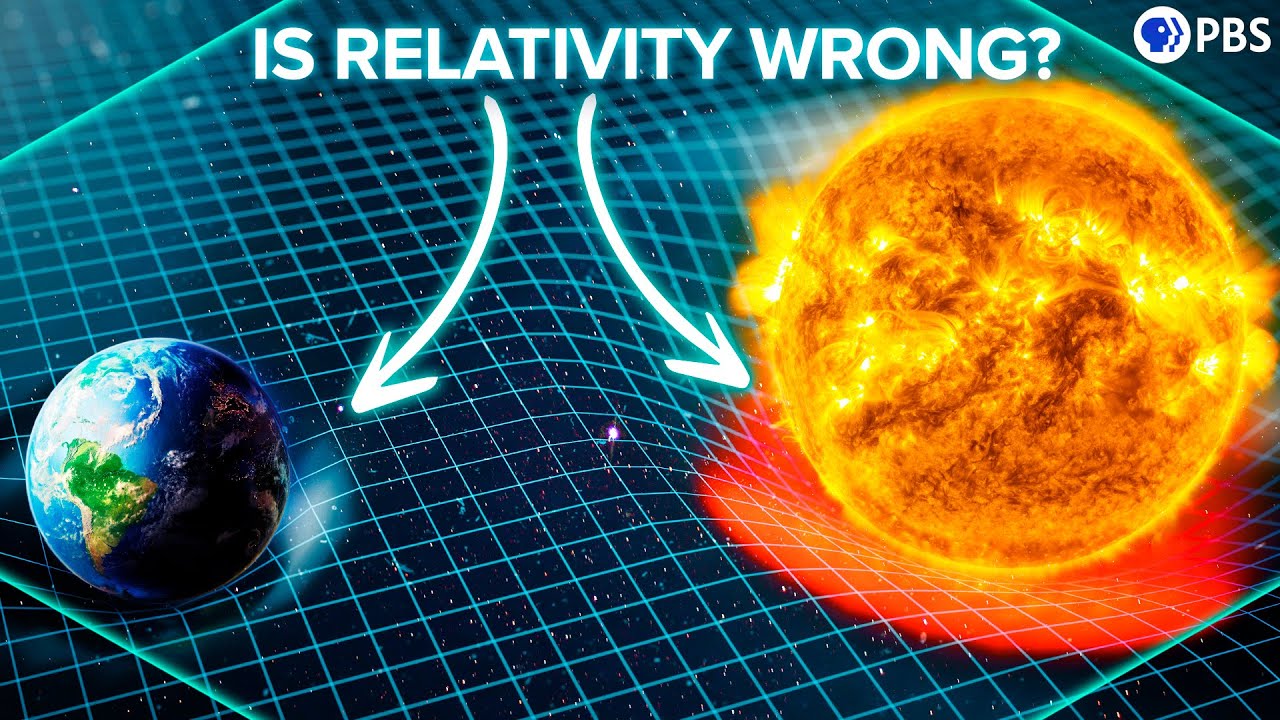
The title accurately reflects the content, which explores the possibility that our understanding of gravity is incomplete and discusses MOND as an alternative to dark matter.
Quality & Reliability
8/10
The video presents a balanced overview of MOND and its relativistic extensions, clearly distinguishing between established physics and speculative proposals. It cites specific researchers and papers, and acknowledges uncertainties. However, it does not provide direct citations to primary sources, and some claims (e.g., the status of RelMOND) may be simplified.
Key Moments
Markers derived by PSI from the transcript: the creator did not define chapters.
- Introduction to the dark matter problem and the possibility of modified gravity.
- Explanation of galaxy rotation curves and the need for dark matter.
- Introduction to MOND and its basic premise.
- Evaluation of MOND against other dark matter evidence, including galaxy clusters.
- Discussion of MOND's compatibility with conservation laws and general relativity.
- MOND's prediction of the Tully-Fisher relation.
- Bekenstein's TeVeS theory and its problems.
- New RelMOND proposal by Skordis and Złosnik.
- The Bullet Cluster as a challenge to MOND.
- Conclusion on the debate and the importance of uncertainty.
Cited Sources
- CuriosityStream — Sponsor and additional content.
- PBS Vitals — Promotion of a related PBS show.
- Space Time Merch Store — Merchandise.
- Mailing list — Newsletter signup.
- End Credits Music by J.R.S. Schattenberg — Music credit.
Concurring Sources
- Modified Newtonian dynamics — General overview of MOND.
- Tully–Fisher relation — Empirical relation predicted by MOND.
Dissenting Sources
- Bullet Cluster — Observations of the Bullet Cluster are often cited as strong evidence for dark matter, as they show separation between visible matter and gravitational lensing.
Contribution & Novelties
The video provides a clear and accessible synthesis of the MOND hypothesis, including its historical development and recent relativistic extensions. It highlights the key scientific criteria for evaluating such theories and presents the current state of the debate. The video does not present new research but serves as an excellent educational resource.
Pour aller plus loin :
- Modified Newtonian dynamics — Overview of MOND and its variants.
- Tully–Fisher relation — The empirical relation that MOND predicts.
- Bullet Cluster — A major challenge to modified gravity theories.
- Jacob Bekenstein — Physicist who developed TeVeS.
- Cosmic microwave background — Evidence for dark matter from the early universe.
105 words
Radar Profile
The radar profile shows high scores in information quantity, quality, and reliability, with a slightly lower score in technical level, indicating that the video is accessible but still technically informative. The overall profile suggests a well-balanced and reliable educational content.
💬 Très positif. Sur les 30 commentaires analysés, les spectateurs expriment une forte appréciation pour la clarté des explications, l'humour et l'attitude scientifique du présentateur, avec plusieurs commentaires soulignant la valeur de l'incertitude scientifique.