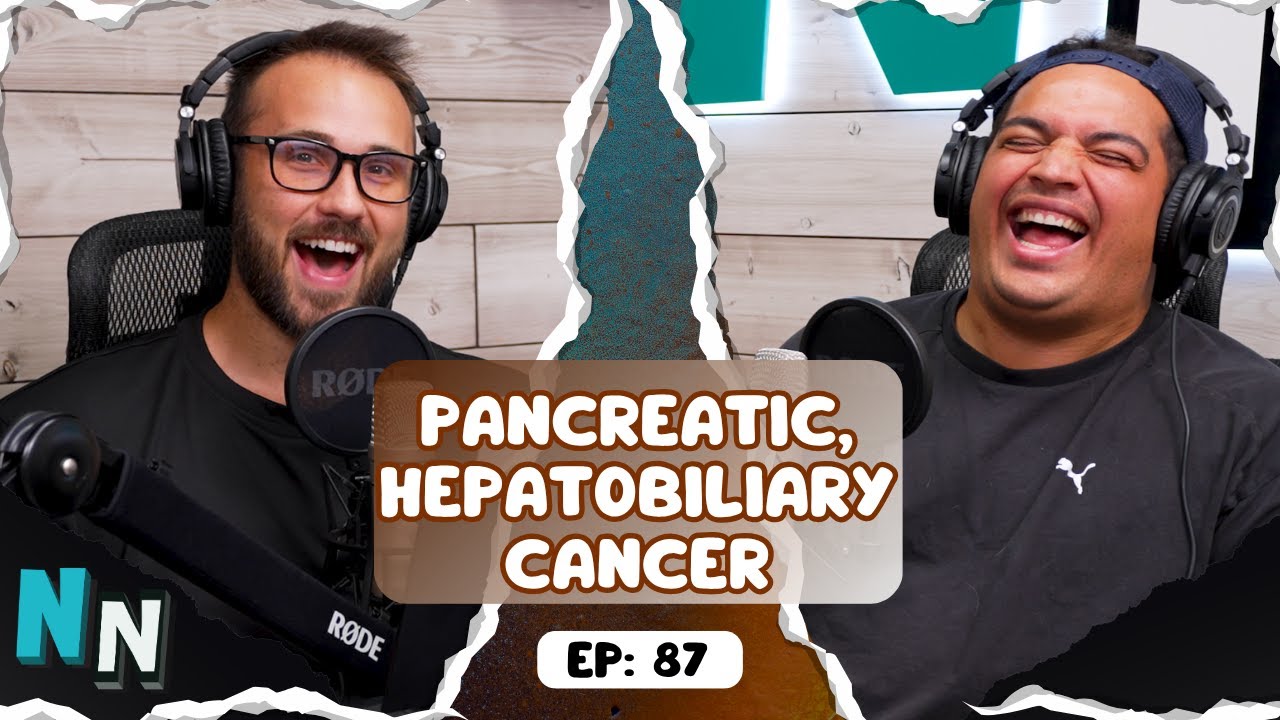
Pancreatic & Hepatobiliary Cancer | Podcast
Keywords
Summary
157 words
Critical Evaluation
Value of the Information & Strength of the Argument
The podcast provides valuable clinical insights into the diagnosis and management of pancreatic and hepatobiliary cancers. The hosts use a case-based approach, which effectively illustrates the reasoning process from initial presentation to diagnostic workup and treatment planning. They emphasize key clinical pearls, such as Courvoisier’s sign, the use of tumor markers like CA19-9 and AFP, and the importance of imaging modalities like ultrasound, CT, and MRCP. The argumentation is logical and follows a stepwise approach, but it is presented as expert opinion rather than evidence-based review. The hosts occasionally make unsupported claims, such as the assertion that pancreatic cancer rarely metastasizes distantly, which may oversimplify the disease. Overall, the content is informative for medical students and professionals, but it lacks rigorous citation of sources.
Scientific Rigor, Source Quality, Title Accuracy
The scientific rigor is moderate. The hosts are knowledgeable and provide accurate information that aligns with standard medical guidelines, but they do not cite specific studies or sources. The quality of sources is limited to the hosts’ expertise and the podcast’s educational reputation. The title accurately reflects the content, which is a discussion of pancreatic and hepatobiliary cancers. The podcast does not include any formal references, but the description provides links to the Ninja Nerd website and social media, which may offer additional resources. The content is suitable for medical education, but it should not be used as a sole reference for clinical decisions.
243 words
Title / Content Match
The title accurately reflects the content, which focuses on pancreatic and hepatobiliary cancers through case discussions.
Quality & Reliability
8/10
The podcast is presented by medical educators (Zach and Rob) with clear clinical reasoning, but it is an informal discussion without formal citations or peer review. The content aligns with established medical guidelines, but the lack of references and the conversational format limit its reliability for academic purposes.
Key Moments
Markers derived by PSI from the transcript: the creator did not define chapters.
- Introduction to the podcast and overview of the four cases.
- Case 1: 63-year-old man with painless jaundice; discussion of differential diagnosis.
- Case 1: Workup with ultrasound, CT, and EUS-FNA; diagnosis of pancreatic adenocarcinoma.
- Case 1: Management with Whipple procedure and adjuvant chemotherapy.
- Case 2: 58-year-old man with cirrhosis and liver lesion; diagnosis of HCC.
- Case 2: Treatment options including RFA, resection, and transplant.
- Case 3: 48-year-old woman with PSC and Klatskin tumor; diagnostic workup.
- Case 3: Management and surgical considerations.
- Case 4: 72-year-old woman with porcelain gallbladder and gallbladder carcinoma.
- Summary of diagnostic strategies and closing remarks.
Cited Sources
- Ninja Nerd Website — Official website providing additional educational resources.
- Ninja Nerd Podcast — Podcast platform for this episode.
- Ninja Nerd LinkedIn — Social media page for the channel.
Concurring Sources
- NCCN Guidelines for Pancreatic Adenocarcinoma — Guidelines that align with the diagnostic and management approach discussed in the podcast.
- AASLD Guidelines for HCC — Guidelines supporting the diagnostic criteria and treatment options for HCC.
Dissenting Sources
- UpToDate: Clinical manifestations and diagnosis of pancreatic cancer — UpToDate provides more nuanced information on metastatic patterns, which may contradict the podcast's claim that pancreatic cancer rarely metastasizes distantly.
External References
Contribution & Novelties
The podcast offers a practical, case-based approach to pancreatic and hepatobiliary cancers, which is valuable for medical education. It reinforces the importance of a systematic diagnostic workup and highlights key clinical signs and imaging findings. The discussion is accessible yet detailed, making it useful for learners at various levels. However, it does not present novel research or unique perspectives beyond standard clinical knowledge.
Pour aller plus loin :
- Pancreatic cancer - Wikipedia — Overview of pancreatic cancer, including risk factors, diagnosis, and treatment.
- Hepatocellular carcinoma - Wikipedia — Comprehensive information on HCC, including diagnostic criteria and management.
- Cholangiocarcinoma - Wikipedia — Details on bile duct cancers, including Klatskin tumors.
- Milan criteria - Wikipedia — Criteria for liver transplant eligibility in HCC patients.
- Courvoisier’s sign - Wikipedia — Explanation of this clinical sign and its significance.
135 words
Radar Profile
The radar profile shows high scores in quantity and quality of information, with moderate technical level and reliability. This indicates a well-structured educational content with strong clinical relevance, but with room for improvement in citing sources and providing evidence-based references.
💬 Sur les 0 commentaires analysés, aucune tendance n'est disponible.