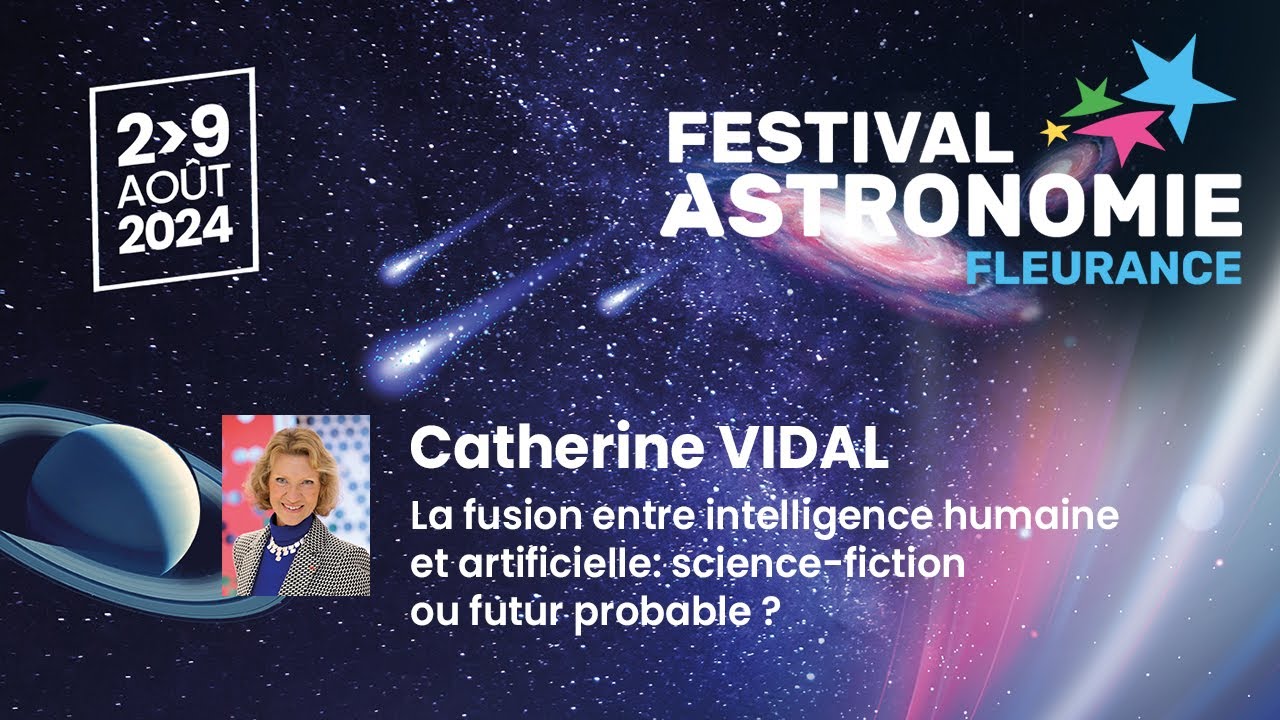
Fusion entre intelligence humaine et artificielle : science-fiction ou futur probable ?
Keywords
Summary
215 words
Critical Evaluation
The talk provides a clear and accessible overview of the current state of brain-machine interfaces and neuroplasticity, grounded in the expertise of a respected neurobiologist. Vidal effectively uses concrete examples from neuroscience research to illustrate the concept of neuroplasticity, such as the cortical changes in pianists and jugglers, which strengthens the scientific credibility of her arguments. She carefully distinguishes between what is proven, probable, and utopian, which is a rigorous approach. However, the talk is relatively high-level and does not delve into the technical details of the neurotechnologies discussed, which might leave some viewers wanting more depth. The critique of Neuralink is well-founded, highlighting the lack of novelty and ethical concerns regarding clinical trial registration, but it could have been more balanced by acknowledging potential future developments. The speaker’s authority is evident, but she does not provide specific citations for the studies mentioned, which reduces the verifiability of her claims. The title is well-matched to the content, and the talk successfully debunks exaggerated transhumanist predictions while emphasizing the real medical benefits of neurotechnologies. Overall, the talk is informative and scientifically sound, though it could benefit from more detailed references and a deeper exploration of the ethical and societal implications.
199 words
Title / Content Match
The title accurately reflects the content, which explores the feasibility of brain-computer fusion from a neuroscience perspective.
Quality & Reliability
8/10
The speaker is a neurobiologist with strong credentials, and the content is based on established neuroscience research. However, some claims are simplified and the talk is a general overview rather than a detailed scientific review.
Key Moments
Markers derived by PSI from the transcript: the creator did not define chapters.
- Introduction to the topic and Ray Kurzweil's predictions about brain-computer fusion.
- Explanation of neuroplasticity and its discovery through brain imaging.
- Examples of neuroplasticity: pianists, mathematicians, and jugglers.
- Discussion of deep brain stimulation for Parkinson's disease and its limitations.
- Neuroprosthetics: cochlear implants and artificial retinas, requiring patient training.
- Brain-machine interfaces: how they work with neurofeedback and AI algorithms.
- Critique of Elon Musk's Neuralink and the 2024 announcement, lack of novelty and ethical issues.
- Conclusion: current neurotechnologies are for medical repair, not for cognitive enhancement or consciousness transfer.
Cited Sources
- Neuralink official website — Mentioned as the source of Elon Musk's claims about brain implants.
Concurring Sources
- Neuroplasticity — Supports the concept of brain plasticity as described in the talk.
- Brain–computer interface — Provides background on the technology and its applications.
Dissenting Sources
- Ray Kurzweil's predictions — The talk challenges Kurzweil's optimistic timeline for brain-computer fusion, arguing it is not supported by current neuroscience.
Contribution & Novelties
The talk provides a clear, evidence-based perspective on the feasibility of brain-computer fusion, debunking transhumanist myths while highlighting real medical applications. It emphasizes the importance of neuroplasticity and the active role of the patient in neurotechnologies.
Pour aller plus loin :
- Neuroplasticity — Overview of the concept central to the talk.
- Brain–computer interface — Detailed information on the technology discussed.
- Deep brain stimulation — Medical procedure mentioned for Parkinson’s disease.
70 words
Radar Profile
The radar profile shows high scores in quality and reliability, reflecting the speaker's expertise and evidence-based approach, while quantity and technical level are moderate, indicating a general audience focus.