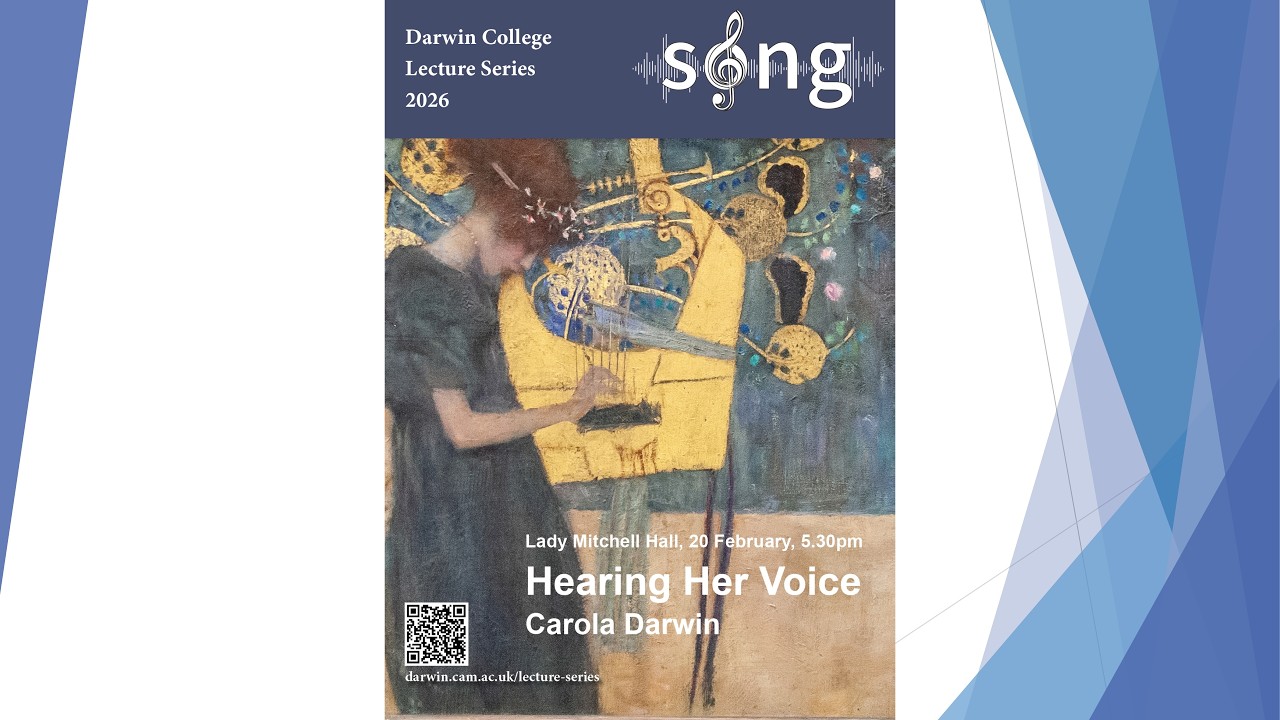
Hearing Her Voice: Women musicians in Vienna 1900 | Carola Darwin
Keywords
Summary
139 words
Critical Evaluation
Value of the Information & Strength of the Argument
The lecture provides valuable insights into the lives and works of lesser-known women composers and performers, offering a corrective to traditional music history that focuses on male figures. Darwin’s argument is well-supported by historical evidence, including primary sources like letters and reviews, and she effectively demonstrates the importance of social and political context in shaping musical careers. The inclusion of live performances enriches the presentation and allows the audience to directly experience the music. The argumentation is solid, though some interpretations may be open to debate, and the lecture is more of an overview than a deep dive into any single figure.
Scientific Rigor, Source Quality, Title Accuracy
Darwin demonstrates scientific rigor by grounding her talk in archival research and scholarly publications. She cites specific sources, such as her own chapters in ‘The Routledge Companion to Women and Musical Leadership’ and ‘Elizabeth Maconchy in Context’, and mentions the BBC Radio 3 ‘Forgotten Women Composers’ project. The title accurately reflects the content, and the lecture is well-structured with clear sections. The inclusion of musical performances adds authenticity. The sources are credible, though the lecture format limits the depth of citation. The title is appropriate and not misleading.
205 words
Title / Content Match
The title accurately reflects the content, which focuses on women musicians in Vienna around 1900, and the lecture indeed gives voice to these women through music and historical narrative.
Quality & Reliability
8/10
The lecture is delivered by a trained musicologist and singer, with a PhD, and is based on her own research, including published chapters and a forthcoming book. The content is well-structured, historically grounded, and includes musical performances. However, it is a public lecture, not a peer-reviewed publication, and some interpretations may be subjective.
Chapters
Cited Sources
- The Routledge Companion to Women and Musical Leadership: The Nineteenth Century and Beyond — Darwin contributed a chapter to this volume, which is relevant to her research on women musicians.
- Elizabeth Maconchy in Context — Darwin has a forthcoming chapter in this book, indicating her ongoing scholarship.
- BBC Radio 3 - Forgotten Women Composers — Darwin's research on Johanna Müller-Hermann was part of this project.
Concurring Sources
- The Routledge Companion to Women and Musical Leadership — This volume, to which Darwin contributed, aligns with the lecture's themes of women's musical leadership.
- BBC Radio 3 - Forgotten Women Composers — This project supports the lecture's aim to rediscover women composers.
Contribution & Novelties
This lecture contributes to the growing field of feminist musicology by bringing attention to four women musicians who have been largely overlooked in traditional music history. It provides a nuanced understanding of the social and political constraints they faced, as well as their creative achievements. The lecture also highlights the importance of networks and collaboration in musical life, offering a more holistic view of Vienna’s artistic culture.
Pour aller plus loin :
- Women in Music (Wikipedia) — Provides an overview of the historical and contemporary roles of women in music.
- Johanna Müller-Hermann (Wikipedia) — A dedicated page on one of the composers discussed.
- Mathilde Kralik (Wikipedia) — A page on another composer featured in the lecture.
- Vienna Secession (Wikipedia) — Contextualizes the artistic movements of the period.
127 words
Radar Profile
The radar profile shows high scores in information quantity, quality, and reliability, with a slightly lower but still strong score in technical level. This indicates a well-researched and informative lecture that is accessible to a general audience while maintaining scholarly depth.
💬 No comments were provided for analysis.