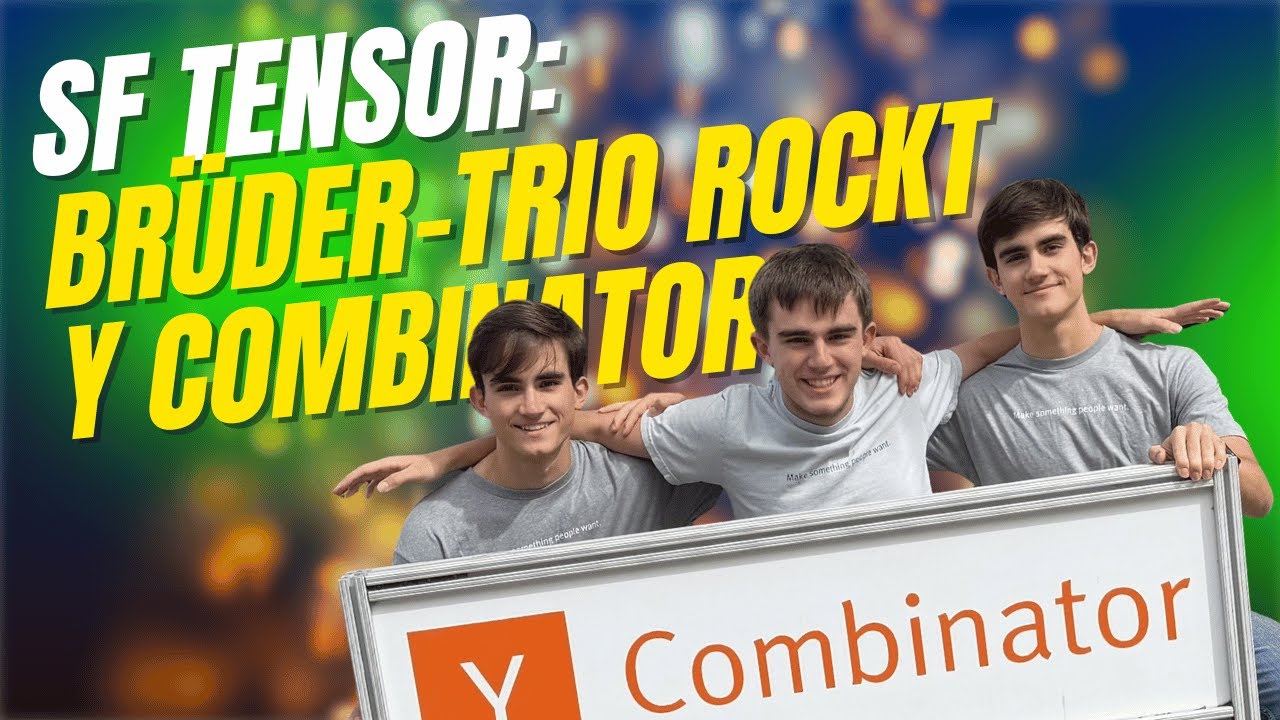
Mit 19 im Y Combinator: Ben Koska über SF Tensor & Silicon Valley - AI Talk 58
Keywords
Summary
171 words
Critical Evaluation
Value of the Information & Strength of the Argument
The video provides valuable firsthand insights into the AI startup ecosystem, particularly the Y Combinator experience and the challenges of building AI infrastructure. Ben’s arguments are coherent and grounded in his practical experience, such as the low GPU utilization rates and the high costs of training large models. He effectively argues for the need for abstraction layers to democratize AI model training. The discussion on trends for 2026 is speculative but informed, offering a reasonable perspective on the industry’s direction. The hosts contribute with relevant questions, enhancing the depth of the conversation.
Scientific Rigor, Source Quality, Title Accuracy
The video is an interview, so the primary source is Ben Koska’s personal experience. While no external sources are cited, the information is presented as firsthand knowledge, which is appropriate for the format. The title accurately reflects the content, focusing on Ben’s Y Combinator journey and SF Tensor. The discussion is generally rigorous, though some claims, such as the percentage of Austrian founders in the batch, are anecdotal and not verified. The hosts’ expertise adds credibility, but the lack of external references limits the scientific rigor.
193 words
Title / Content Match
The title accurately reflects the content, focusing on Ben Koska's experience at Y Combinator and his startup SF Tensor, with discussions on Silicon Valley and AI trends.
Quality & Reliability
7/10
The video is an interview with a young founder, providing firsthand insights into Y Combinator and AI infrastructure. While the information is anecdotal and not peer-reviewed, it offers valuable perspectives on current industry trends and startup operations. The hosts are experienced in the AI field, adding credibility.
Key Moments
Markers derived by PSI from the transcript: the creator did not define chapters.
- Introduction and presentation of Ben Koska and SF Tensor
- Founding team: three brothers (16 and 19 years old)
- What SF Tensor does: AWS for AI training
- Harald Zumpf and the gifted track at HTL Spengergasse
- Y Combinator: application, daily life, and the 'Mecca' of startups
- Location choice: why San Francisco is indispensable
- Funding and hardware costs
- AI trends 2026: the end of pure LLM scaling?
- Energy hunger and nuclear power
Contribution & Novelties
The video offers a unique perspective from a very young founder in Y Combinator, providing insights into the AI infrastructure market and the startup ecosystem. It highlights the importance of abstraction layers for AI training and the shift towards specialized models. The discussion on energy consumption and hardware competition adds value.
Pour aller plus loin :
- Y Combinator — Official website for Y Combinator, the startup accelerator mentioned.
- Nvidia — Nvidia’s official site, relevant to the hardware discussion.
- AMD — AMD’s official site, another hardware player mentioned.
- Tensor Processing Unit (TPU) — Wikipedia article on TPUs, relevant to the hardware platforms discussed.
102 words
Radar Profile
The radar chart shows a balanced profile with slightly higher scores in information quantity and quality, reflecting the interview's rich content. The technical level is moderate, suitable for a general audience, while reliability is decent given the firsthand nature of the information.