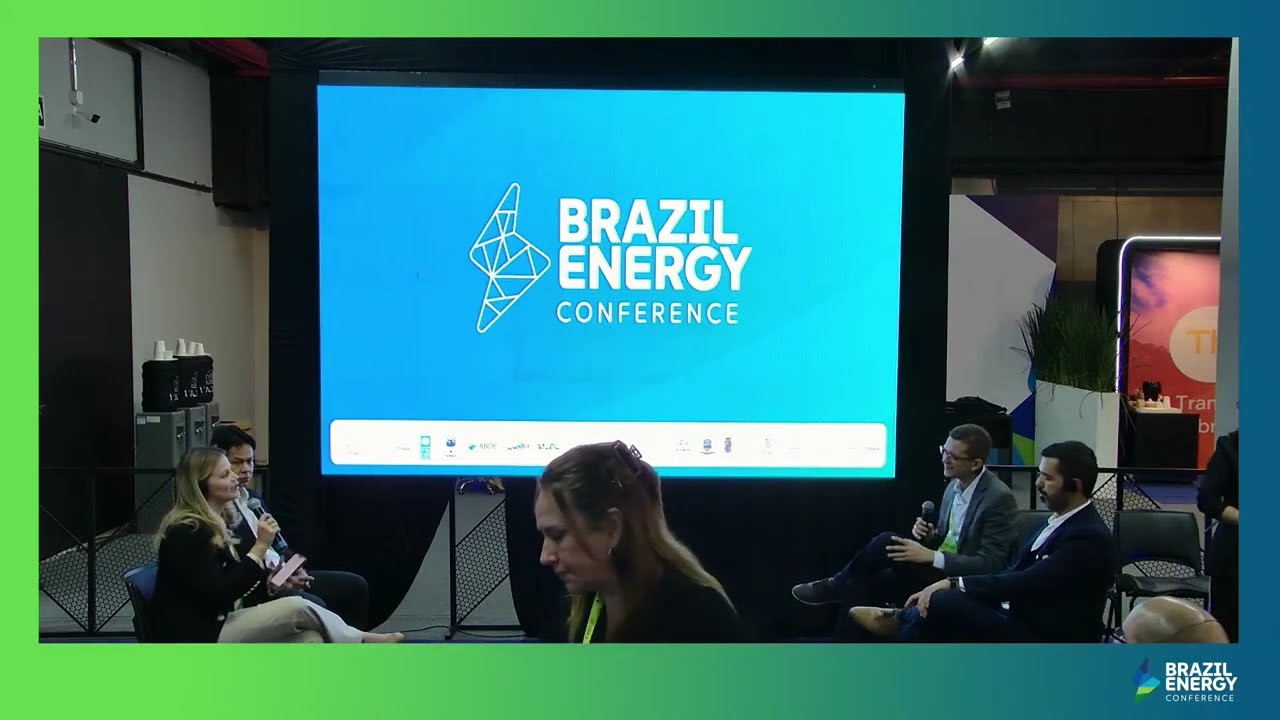
Painel 19: Políticas Públicas para Transição Energética | Brazil Energy Conference
Keywords
Summary
123 words
Critical Evaluation
Value of the Information & Strength of the Argument
The panel provides a valuable overview of green hydrogen and its regulatory context in Brazil, particularly for a non-specialist audience. The argumentation is coherent and logically structured, moving from basic concepts to regulatory considerations. However, the discussion remains at an introductory level, with limited critical analysis or in-depth examination of challenges and trade-offs. The speakers present information in a persuasive manner, but the lack of specific data and detailed case studies weakens the overall argumentation.
Scientific Rigor, Source Quality, Title Accuracy
The scientific rigor is moderate. The speakers reference general concepts and some national policies, but they do not cite specific studies, reports, or data sources in detail. The quality of sources is not explicitly addressed, and the discussion relies more on general knowledge and institutional perspectives. The title accurately reflects the content, and the panel stays on topic. No comments were provided for analysis.
154 words
Title / Content Match
The title accurately reflects the content: a panel on public policies for energy transition, focusing on regulatory frameworks for green hydrogen.
Quality & Reliability
6/10
The panel provides a general overview of green hydrogen and regulatory frameworks, with speakers from regulatory and academic backgrounds. However, the discussion is largely introductory and lacks detailed technical depth or rigorous source citation. Claims about costs and projects are not substantiated with specific references, and the regulatory analysis is high-level.
Key Moments
Markers derived by PSI from the transcript: the creator did not define chapters.
- Introduction and opening remarks by the moderator, Thaís Araripe, about the panel and AGRESP.
- Thaís Araripe introduces the regulatory agency AGRESP and its role in energy regulation in Piauí.
- Adriano Batista Silva begins his presentation on green hydrogen, explaining its definition and production.
- Discussion of the 'rainbow' of hydrogen colors and the taxonomy of green hydrogen.
- Adriano presents global cost projections and the potential of Brazil and Piauí for green hydrogen production.
- Jonathas Hiron begins his talk on regulatory frameworks for green hydrogen in Brazil and Piauí.
- Discussion of national energy planning and the role of AGRESP in regulating the sector.
- Further elaboration on public policies and the importance of regulatory clarity for investment.
- Q&A session and concluding remarks, though the transcription ends before the full conclusion.
Cited Sources
- No specific sources cited in the description or transcription. — The video description only lists speakers and sponsors, and the transcription does not mention specific external sources.
Concurring Sources
- IEA - Global Hydrogen Review 2024 — Provides global data on hydrogen projects and costs, aligning with the panel's discussion.
Dissenting Sources
- No discordant sources identified — The panel did not present conflicting viewpoints or sources.
Contribution & Novelties
The panel offers a regional perspective on green hydrogen regulation, highlighting the specific context of Piauí and its renewable energy potential. It underscores the importance of regulatory frameworks in enabling the energy transition. While not groundbreaking, it provides a useful overview for stakeholders interested in Brazilian energy policy.
Pour aller plus loin :
- Green hydrogen — Overview of green hydrogen production and uses.
- Brazilian Energy Research Office (EPE) — Official source for Brazilian energy planning and hydrogen studies.
- National Hydrogen Program of Brazil — Information on Brazil’s national hydrogen program.
90 words
Radar Profile
The radar profile shows moderate scores across all dimensions, indicating a balanced but not highly specialized discussion. The panel is informative for a general audience but lacks deep technical or critical analysis.