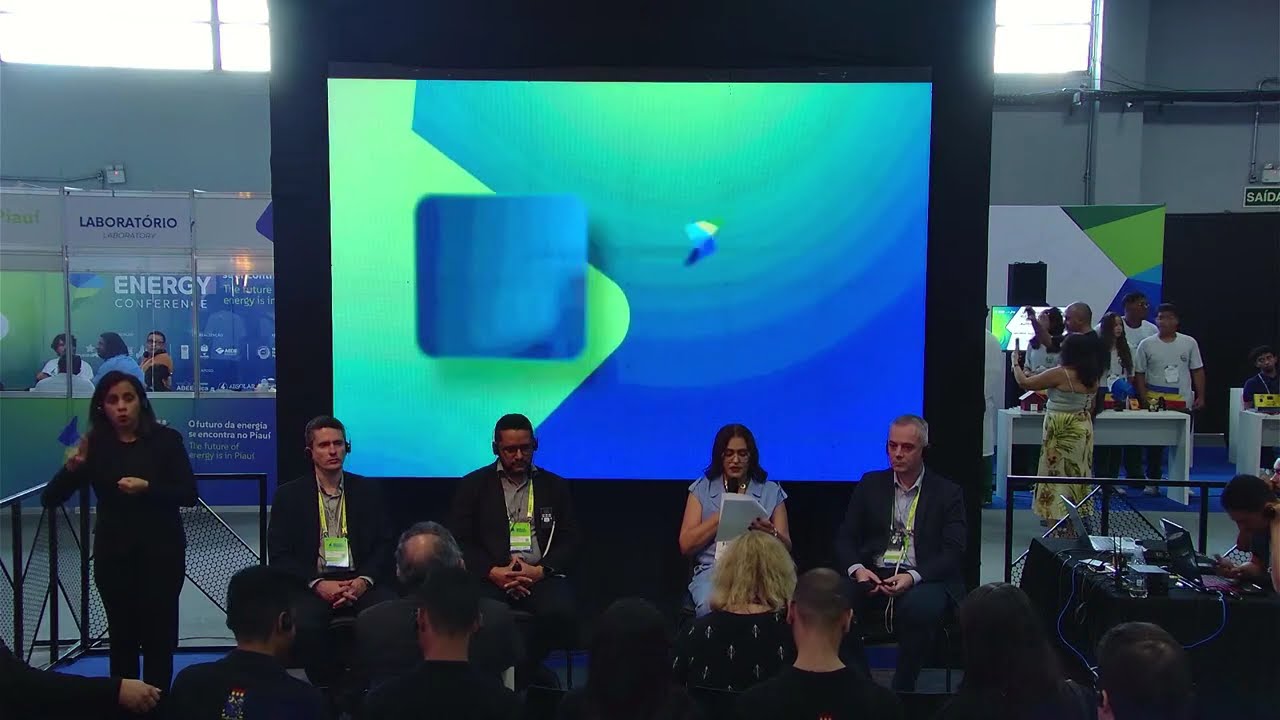
Panel 21: Challenges and Opportunities in the Production of Biofuels and SAF in Brazil and the World
Keywords
Summary
175 words
Critical Evaluation
Value of the Information & Strength of the Argument
The panel provides valuable insights into the practical aspects of biofuel production, particularly from the perspective of a company investing in a new ethanol plant. Rafael Brun’s presentation offers concrete data on production capacity, potential market growth, and the economic impact on the region. The argumentation is persuasive, emphasizing the benefits of adding value to local resources and the potential to shift the regional fuel matrix. However, the discussion lacks deep scientific analysis and relies more on anecdotal evidence and general trends. The academic speakers, Professor Bruno and Professor Assis, contribute with broader perspectives on SAF and the energy transition, but their presentations are less detailed and more general. Overall, the value lies in the practical insights and the strategic vision presented, though the scientific rigor could be enhanced with more data and references.
Scientific Rigor, Source Quality, Title Accuracy
The panel is a debate format, so the scientific rigor is moderate. The speakers are experts in their fields, but the discussion is more conversational than technical. The sources cited are primarily the speakers’ own experiences and general knowledge, with no specific academic references mentioned. The title accurately reflects the content, which focuses on the challenges and opportunities in biofuel and SAF production. The adequacy between title and content is good, as the panel addresses both challenges (e.g., infrastructure, market acceptance) and opportunities (e.g., potential for growth, job creation). No comments were provided for analysis.
244 words
Title / Content Match
The title accurately reflects the content, which focuses on the challenges and opportunities in biofuel and SAF production in Brazil and globally.
Quality & Reliability
6/10
The panel features experts from academia and industry, providing a balanced view. However, the discussion is largely qualitative and lacks rigorous data citations, with some claims presented without direct evidence.
Key Moments
Markers derived by PSI from the transcript: the creator did not define chapters.
- Introduction of the panel topic and speakers by the moderator.
- Rafael Brun presents BRASBIO's corn and sorghum ethanol plant in Piauí, highlighting production capacity and by-products.
- Discussion on the low ethanol consumption in the Northeast compared to the Center-West, with potential for growth.
- Rafael Brun explains the RenovaBio program and CBIOs as incentives for biofuel production.
- Professor Bruno discusses SAF as a drop-in fuel and the challenges of transitioning from fossil jet fuel.
- Professor Assis shares his perspective on the role of biofuels in the energy transition and the importance of innovation.
- Q&A session with the audience, addressing questions on logistics, policy, and market acceptance.
Cited Sources
- RenovaBio Program — Mentioned as a national program that incentivizes biofuel producers through CBIOs.
Concurring Sources
- IEA Bioenergy — International organization providing data and analysis on bioenergy, supporting the potential of biofuels.
Dissenting Sources
- Critique of corn ethanol's sustainability — Some studies question the environmental benefits of corn ethanol, citing land-use change and water usage.
Contribution & Novelties
The panel provides a practical perspective on the challenges and opportunities of biofuel production in a specific region of Brazil, highlighting the potential for corn and sorghum ethanol to transform the local energy matrix and economy. It emphasizes the importance of adding value to agricultural products and the role of public policies in supporting this transition.
Pour aller plus loin :
- Sustainable Aviation Fuel (SAF) — Overview of SAF production routes and its role in aviation decarbonization.
- RenovaBio — Explanation of Brazil’s biofuel policy and CBIOs.
- Ethanol fuel in Brazil — Context on Brazil’s ethanol industry and its history.
99 words
Radar Profile
The radar profile shows moderate scores across all dimensions, with slightly higher scores in quantity of information and technical level, reflecting the panel's focus on practical insights and industry experience. The lower scores in quality and reliability indicate a need for more rigorous data and citations.