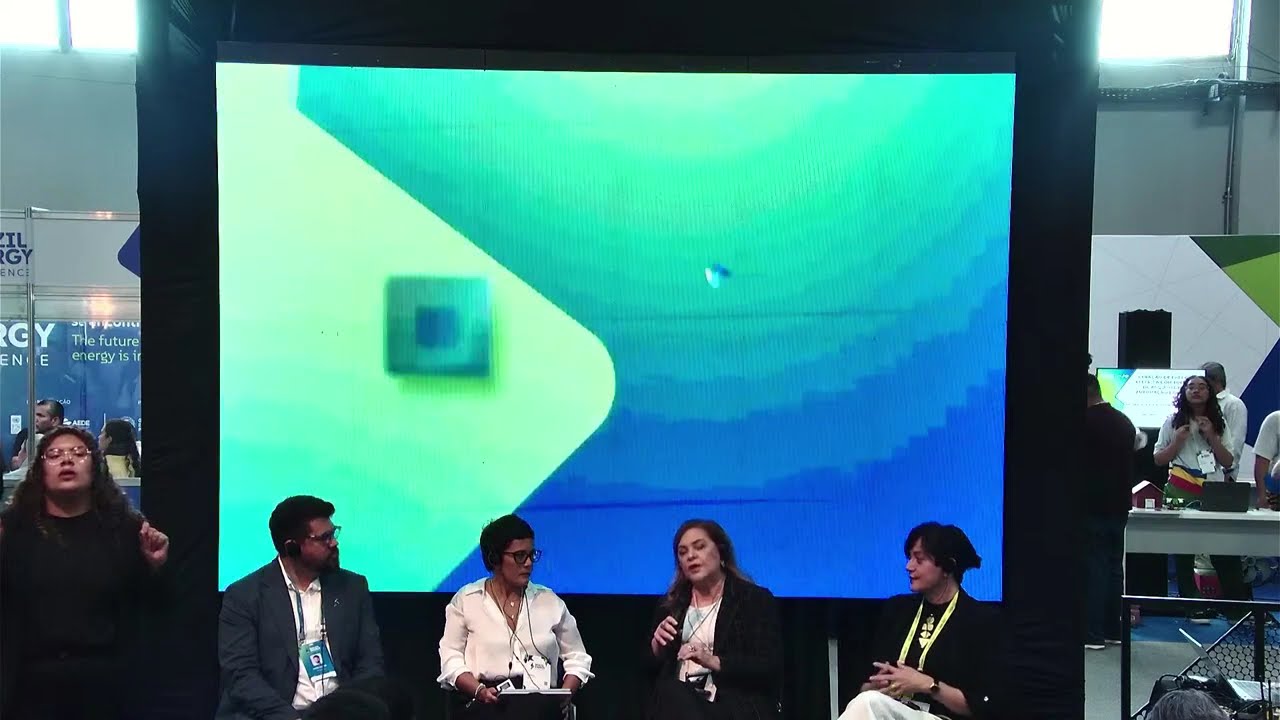
Painel 11: O Papel da Comunicação na Era da Transição Energética Sustentável
Keywords
Summary
165 words
Critical Evaluation
Value of the Information & Strength of the Argument
The value of the information lies in the diverse perspectives of the speakers, who combine academic research, professional journalism experience, and educational insights. They provide concrete examples, such as Piauí’s ranking in wind and solar energy capacity, to contextualize the discussion. The argumentation is coherent and emphasizes the need for critical, contextualized journalism that addresses both benefits and drawbacks of renewable energy projects. The speakers argue that effective communication requires understanding the audience, avoiding technical jargon, and fostering a cultural shift towards sustainability. They also highlight the importance of holding power accountable and ensuring that communities affected by energy projects are informed and respected. The arguments are persuasive and well-structured, though they rely more on anecdotal evidence and general observations than on empirical data.
Scientific Rigor, Source Quality, Title Accuracy
The scientific rigor is moderate; the speakers reference their own research and professional experiences but do not cite specific studies or data. The quality of sources is limited to personal expertise and general knowledge, with no external references provided. The title accurately reflects the content, which focuses on communication’s role in sustainable energy transition. The discussion is relevant and timely, especially given the upcoming COP30 in Brazil. However, the lack of concrete citations and the reliance on opinion weaken the overall rigor. The panel does not engage with contradictory evidence or alternative viewpoints, which could have strengthened the analysis.
238 words
Title / Content Match
The title accurately reflects the panel's focus on communication's role in sustainable energy transition, though the discussion extends to broader social and environmental concerns.
Quality & Reliability
7/10
The panel features three communication professionals and academics discussing the role of journalism in sustainable energy transition. They provide contextual data on Piauí's renewable energy capacity and raise critical points about environmental and social impacts. However, the discussion is largely opinion-based with limited concrete data or citations, and no formal fact-checking is performed.
Key Moments
Markers derived by PSI from the transcript: the creator did not define chapters.
- Introduction of panelists and topic
- Ana Regina Rêgo discusses the critical role of journalists in environmental issues
- Cinthia Lages highlights Piauí's renewable energy statistics and the challenge of communicating complex topics
- Sammara Jericó emphasizes the need for education and cultural change in sustainability
- Discussion on COP30 and media agenda in Brazil
- Ana Regina critiques the hidden costs of renewable energy, such as lithium and cobalt extraction
- Cinthia discusses generational differences and the role of Generation Z in sustainability
- Sammara talks about the importance of ethical journalism and alternative media
- Q&A session begins, focusing on fact-checking and misinformation
Contribution & Novelties
The panel provides a unique perspective on the intersection of communication and sustainable energy transition, emphasizing the need for critical journalism that addresses both positive and negative impacts. It highlights the specific context of Piauí, Brazil, and the upcoming COP30, offering insights into how local media can better communicate complex energy topics. The discussion also touches on the role of education and cultural change in fostering sustainability.
Pour aller plus loin :
- Journalism ethics — Relevant to the discussion on ethical journalism.
- Energy transition — Provides background on the concept of energy transition.
- Climate communication — Relevant to the challenges of communicating climate and energy issues.
106 words
Radar Profile
The radar profile shows moderate scores across all dimensions, with slightly higher quality of information and lower technical level. This indicates a balanced discussion that is informative but not highly technical, suitable for a general audience interested in communication and sustainability.