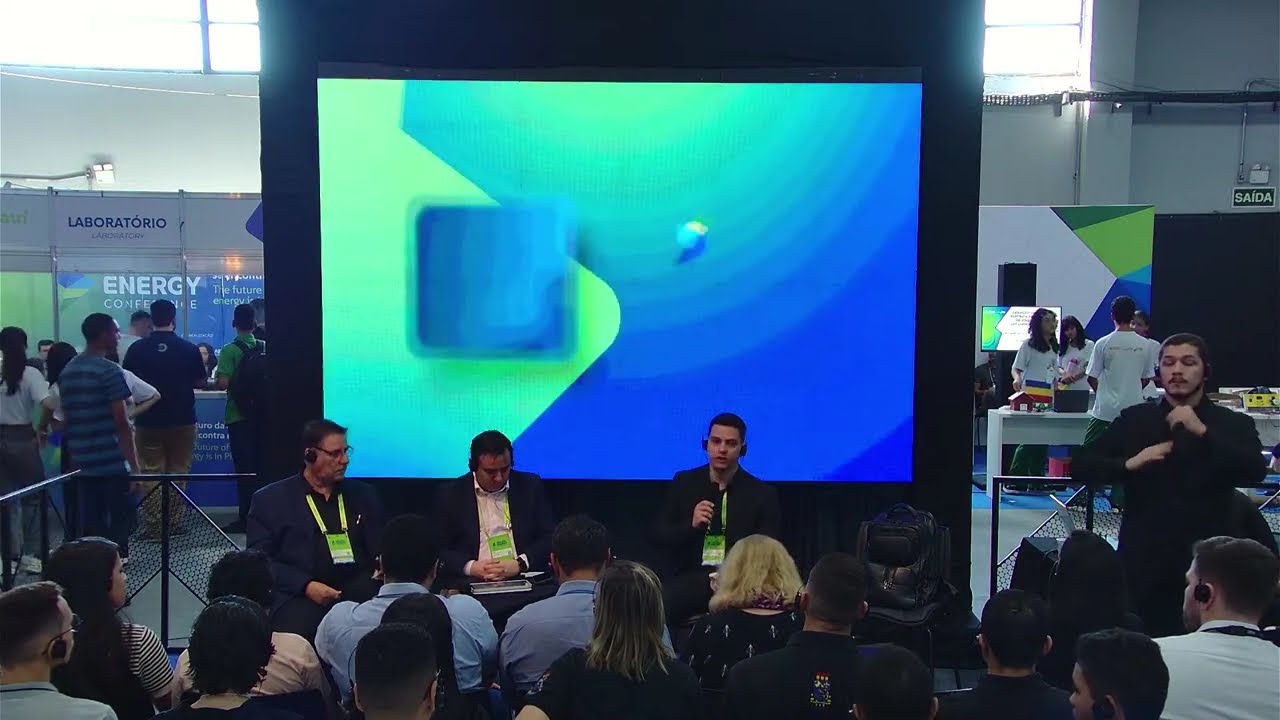
Panel 17: Innovation in Technologies in the Green Hydrogen Production Chain and Storage
Keywords
Summary
201 words
Critical Evaluation
Value of the Information & Strength of the Argument
The panel provides valuable insights into the technological challenges and innovations in Brazil’s green hydrogen sector. The speakers present a coherent argument for developing local technologies, such as the chitosan-based membrane, to reduce import dependence and enhance sustainability. The discussion is grounded in practical research experiences, adding credibility. However, the argumentation is largely qualitative, with limited quantitative data or detailed technical comparisons. The economic analysis is brief, and the potential scalability of the proposed innovations is not thoroughly examined.
88 words
Title / Content Match
The title accurately reflects the content, which focuses on innovation and technology in the green hydrogen production chain and storage.
Quality & Reliability
7/10
The panel features experts from academia and research institutions (UFC, SENAI CIMATEC) discussing technological challenges and innovations in green hydrogen. The content is largely based on expert opinions and ongoing research, with some specific technical details (e.g., Nafion membranes, PEM electrolyzers). However, the discussion is high-level and lacks detailed citations or data, limiting its scientific rigor.
Key Moments
Markers derived by PSI from the transcript: the creator did not define chapters.
- Introduction to the panel and topic of green hydrogen innovation.
- Discussion on Brazil's potential as a low-cost producer and the challenge of importing over 90% of supply chain inputs.
- Magno Fonseca Santos highlights the need for infrastructure and integration between research, government, and industry.
- Ênio Pontes de Deus discusses the development of a chitosan-based membrane from shrimp and crab shells as an alternative to Nafion.
- Discussion on the use of artificial intelligence for characterizing membranes and the economic viability of new materials.
- Emphasis on the need for local technology development and the role of universities and research centers in the Northeast.
- Discussion on the importance of reducing dependence on critical materials and the potential of biomaterials.
- Conclusion and final remarks on the future of green hydrogen in Brazil.
Contribution & Novelties
The panel provides an original perspective on the development of a sustainable membrane for PEM electrolyzers using chitosan from shrimp and crab shells, a waste product abundant in Brazil. This innovation could reduce dependence on imported Nafion membranes and contribute to a more sustainable hydrogen production chain. The discussion also highlights the integration of artificial intelligence in materials characterization, which is an emerging application.
Pour aller plus loin :
- Green hydrogen production — Overview of green hydrogen and its production methods.
- PEM electrolysis — Technical details on PEM electrolyzers and their components.
- Chitosan — Information on chitosan, its sources, and applications.
- Nafion — Background on Nafion membranes used in fuel cells and electrolyzers.
113 words
Radar Profile
The radar profile shows relatively high scores in information quantity and quality, with moderate technical depth and reliability. This indicates a balanced discussion that is informative but not deeply technical or heavily sourced.