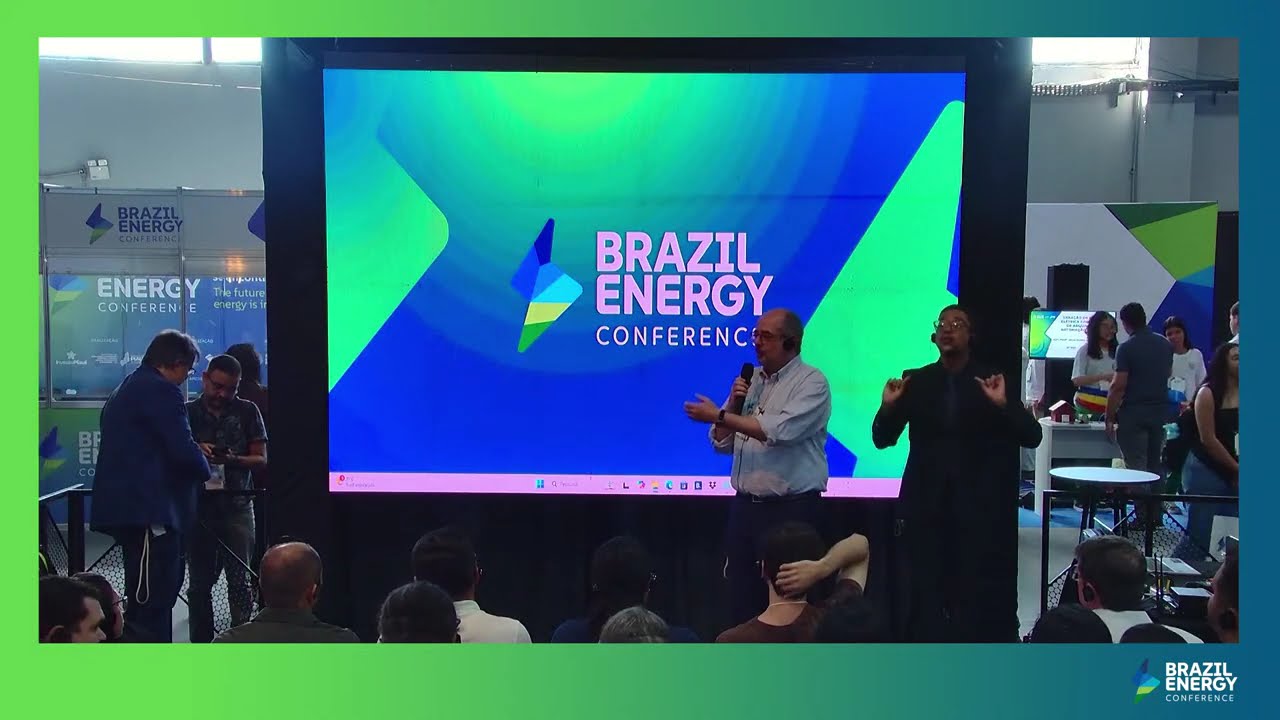
Panel 4: Formation et développement du capital humain pour la transition énergétique et la nouvelle matrice
Keywords
Summary
154 words
Critical Evaluation
Value of the Information & Strength of the Argument
The panel provides valuable insights into the practical aspects of workforce development for the energy transition, with concrete examples from Piauí. The argumentation is largely based on institutional perspectives and personal experiences, which adds credibility but also introduces potential bias. The speakers present data on training numbers and employment rates, but these are self-reported and lack independent verification. The discussion is more descriptive than analytical, focusing on initiatives and challenges rather than evaluating their effectiveness. The value lies in the firsthand accounts of industry and education leaders, which offer a realistic view of the current state and future needs of the sector.
111 words
Title / Content Match
The title accurately reflects the panel's focus on human capital formation for the energy transition.
Quality & Reliability
6/10
The panel provides concrete data and institutional perspectives, but lacks independent verification and relies on self-reported figures.
Key Moments
Markers derived by PSI from the transcript: the creator did not define chapters.
- Introduction and first speaker Marcelo Martins (Elecnor) presents the company's training center for transmission line workers.
- Roger Correia Jacob (SENAI-PI) discusses the global labor shortage and SENAI's role in vocational training.
- Viviane Carvalhedo (SEDUC) presents the University of Piauí's distance learning programs and the integration of technical education in high schools.
- Q&A session begins; a question about future training offerings for the energy transition is addressed.
- Juan de Aguiar Gonçalves (NUFPERPI) discusses specialized courses and the role of the nucleus in renewable energy research.
Cited Sources
- SENAI — Mentioned as the largest professional training network in the Americas.
- Elecnor — Company building a training center in Piauí.
- SEDUC-PI — State education department responsible for high school education.
- Universidade Aberta do Piauí — Distance learning university offering courses in renewable energy.
Concurring Sources
- IRENA - Renewable energy employment — Global data on employment in renewable energy, supporting the need for workforce development.
Dissenting Sources
- Critique of vocational training effectiveness — OECD reports suggest that vocational training programs may not always align with labor market needs, contrasting with the optimistic view presented.
Contribution & Novelties
The panel provides a unique perspective on the intersection of education and energy transition in a specific Brazilian state, highlighting innovative public-private partnerships. It offers concrete examples of how to address the skilled labor shortage in the renewable energy sector.
Pour aller plus loin :
- Energy transition in Brazil — Overview of Brazil’s energy policies and transition efforts.
- Human capital theory — Theoretical framework for understanding investment in education and training.
- Renewable energy in Brazil — Context on the country’s renewable energy landscape.
83 words
Radar Profile
The radar profile shows moderate scores across all dimensions, with a slight peak in information quantity. This indicates a balanced but not exceptional presentation, with room for improvement in technical depth and source reliability.
💬 No comments were provided for analysis.