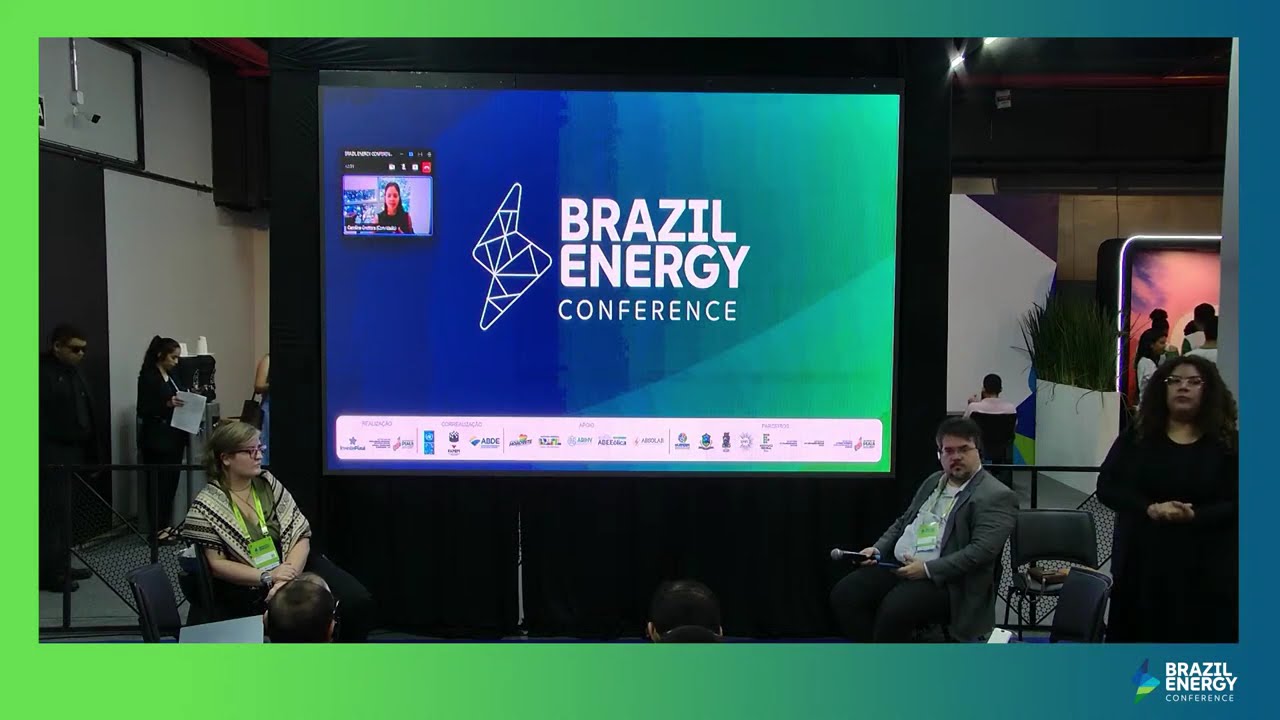
Painel 15: Plano Nordeste de Transformação Ecológica | Brazil Energy Conference
Keywords
Summary
169 words
Critical Evaluation
Value of the Information & Strength of the Argument
The value of the information lies in its authoritative presentation of current policy initiatives and regional strategies. The speakers provide concrete examples of federal and consortium-level actions, such as the EcoInvest auctions and the regulation of green hydrogen. The argumentation is coherent, emphasizing the need for integrated approaches and social inclusion. However, the discussion remains largely descriptive, with limited critical analysis or empirical evidence to support claims about effectiveness. The speakers advocate for a balanced approach that combines economic development with social and environmental safeguards, but they do not delve into potential conflicts or trade-offs.
Scientific Rigor, Source Quality, Title Accuracy
The scientific rigor is moderate; the speakers are credible experts, but they do not cite specific studies or data to substantiate their claims. The sources are primarily policy documents and institutional initiatives, which are relevant but not independently verified. The title accurately reflects the content, though the discussion is more of an overview than a detailed analysis. No comments were provided, so no public reception analysis is possible.
178 words
Title / Content Match
The title accurately reflects the panel's focus on the Northeast Ecological Transformation Plan, though the content is more of a general overview than a deep dive.
Quality & Reliability
6/10
The panel features expert speakers from government and consultancy backgrounds, providing credible insights into policy frameworks. However, the discussion is largely descriptive and lacks critical evaluation or data-driven evidence, limiting its scientific rigor.
Key Moments
Markers derived by PSI from the transcript: the creator did not define chapters.
- Introduction of panelists and moderator.
- Carolina Groteira presents the federal Ecological Transformation Plan and its six axes.
- Discussion on green hydrogen potential and regulatory framework.
- Mention of sustainable aviation fuel (SAF) and feedstocks like macaúba and agave.
- Diego Pessoa discusses the Northeast Consortium's role and social impacts of renewable energy.
- Emphasis on social safeguards and inclusive development in energy transition.
- Discussion on EcoInvest program and its focus on degraded areas, including the Caatinga.
- Mention of the SAFRA plan and sustainable agriculture policies.
- Closing remarks and call for regional cooperation.
Cited Sources
- Plano de Transformação Ecológica — Mentioned by Carolina Groteira as the federal plan coordinated by the Ministry of Finance.
- Consórcio Nordeste — Mentioned by Diego Pessoa as the regional consortium promoting sustainable development.
- Programa EcoInvest — Mentioned as a program to attract private investment for degraded area recovery.
Concurring Sources
- Plano de Transformação Ecológica — The federal plan's official page aligns with the panel's description.
Contribution & Novelties
The panel provides an overview of the Northeast Ecological Transformation Plan, highlighting regional strategies for energy transition and sustainable development. It emphasizes the importance of territorializing national policies and addressing social inequalities. The discussion offers insights into specific initiatives like green hydrogen, SAF, and EcoInvest, but does not present novel research or data.
Pour aller plus loin :
- Plano de Transformação Ecológica — Official page of the federal plan.
- Consórcio Nordeste — Official site of the Northeast Consortium.
- Programa EcoInvest — Information on the EcoInvest program.
- Green Hydrogen in Brazil — National Hydrogen Program.
- Sustainable Aviation Fuel — ANP resolution on SAF.
102 words
Radar Profile
The radar profile shows moderate scores across all dimensions, indicating a balanced but not outstanding presentation. The content is informative but lacks depth in technical detail and critical analysis.