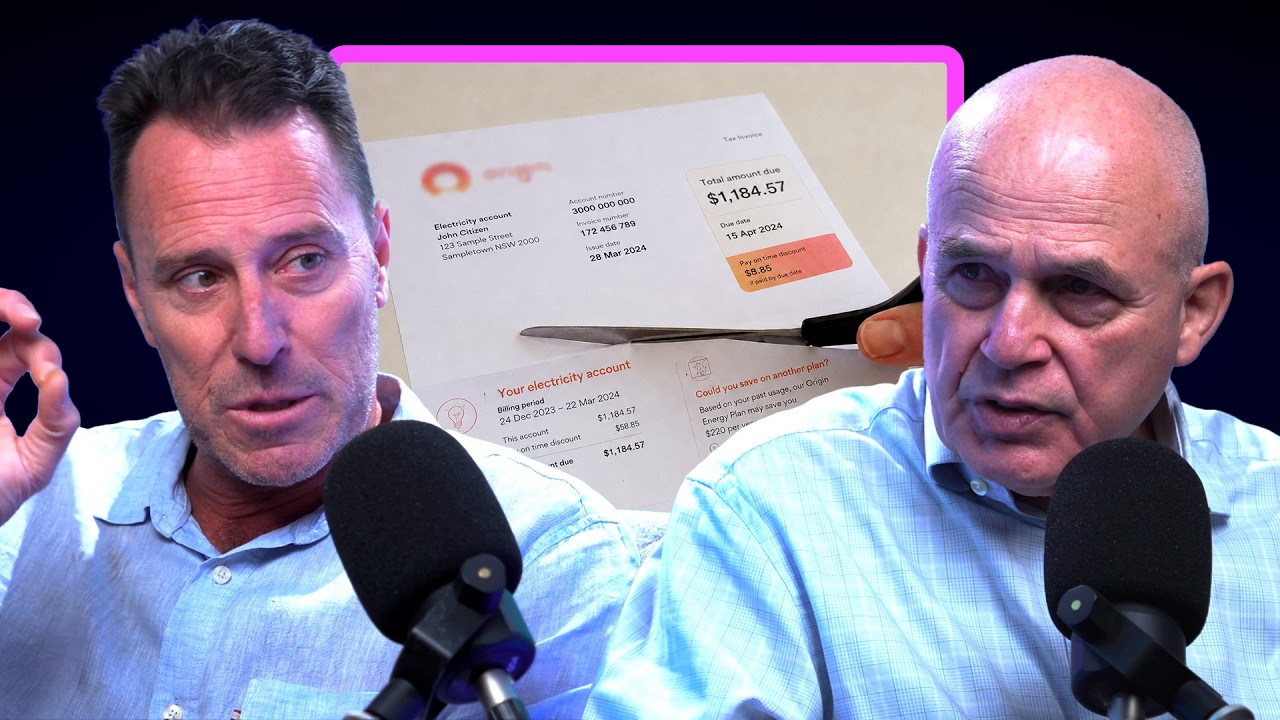
Cut Power Bills Fast: The 3 Things That Actually Work
Keywords
Summary
167 words
Critical Evaluation
Value of the Information & Strength of the Argument
The video offers valuable, actionable advice for homeowners looking to reduce energy costs. The argumentation is based on the speaker’s extensive field experience, which lends credibility to the recommendations. The discussion of insulation gaps and the impact on thermal performance is compelling and easy to understand. The advice on hot water systems, including the use of diverters with solar PV, is practical and cost-effective. However, the argumentation relies heavily on anecdotal evidence and personal opinion rather than scientific studies or official data. The speaker’s skepticism towards government rebates and cheap heat pumps is presented as fact, but lacks supporting evidence. Overall, the value lies in the practical, real-world insights, but the lack of rigorous sourcing weakens the argumentation.
Scientific Rigor, Source Quality, Title Accuracy
The video does not cite specific scientific sources or studies, relying instead on the speaker’s professional experience. The description includes links to the channel’s website and a related article, which may provide additional information but are not independent sources. The title accurately reflects the content, focusing on three key strategies. The discussion of insulation and hot water is consistent with general energy efficiency principles, but the lack of citations reduces the scientific rigor. The video does not present original research or data, but rather offers practical advice based on industry knowledge. The adequacy between title and content is good, as the video delivers on its promise to discuss effective ways to cut power bills.
247 words
Title / Content Match
The title accurately reflects the content, which focuses on three key strategies: understanding bills, shopping around, and improving energy efficiency, with a detailed discussion of insulation and hot water systems.
Quality & Reliability
6/10
The video provides practical advice based on the speaker's 20 years of experience in home energy audits. While the information is plausible and aligns with general energy efficiency principles, it lacks citations to specific studies or official sources. The claims about insulation gaps and hot water energy use are presented as general knowledge, but no empirical evidence is provided. The discussion of government rebates and heat pump quality is anecdotal and may reflect personal bias.
Chapters
- The top 3 starting points: understand your bill, shop around, and improve energy efficiency
- Why insulation and draft-proofing are often the cheapest wins
- How a tiny 5% insulation gap can cut effectiveness by half
- Hot water: the hidden energy sucker in many homes
- Using solar, electric storage hot water and diverters to reduce bills dramatically
Cited Sources
- Your Energy Answers - Home Energy Audits in Australia — The full article mentioned in the video description, providing more detailed information on home energy audits.
- Full Episode — The full episode of the interview, which may contain additional context and discussion.
- Your Energy Answers Website — The channel's website, offering tools, calculators, and information on energy efficiency.
- Your Energy Media LinkedIn — The company's LinkedIn page, providing professional background and updates.
Concurring Sources
- Your Energy Answers - Home Energy Audits in Australia — The article likely expands on the video's points and provides additional guidance.
Contribution & Novelties
The video provides a practical, experience-based overview of energy efficiency measures for Australian households, emphasizing the importance of insulation and hot water systems. It offers specific advice on using thermal cameras to identify insulation gaps and recommends electric storage hot water with diverters for solar PV owners. The discussion of the 5% insulation gap rule is a memorable and useful tip. However, the content is not highly novel, as similar advice is widely available from energy efficiency organizations. The video’s contribution lies in its accessible presentation and real-world examples.
Pour aller plus loin :
- Insulation - Wikipedia — Provides background on insulation types and thermal performance.
- Heat pump - Wikipedia — Explains how heat pumps work and their efficiency.
- Solar water heating - Wikipedia — Discusses solar hot water systems and their benefits.
133 words
Radar Profile
The radar profile shows moderate scores across all dimensions, with slightly higher scores in quantity of information and reliability. This indicates that the video provides a decent amount of practical information, but the quality and technical depth are moderate, and the overall reliability is acceptable but not outstanding.
💬 No comments were provided for analysis.