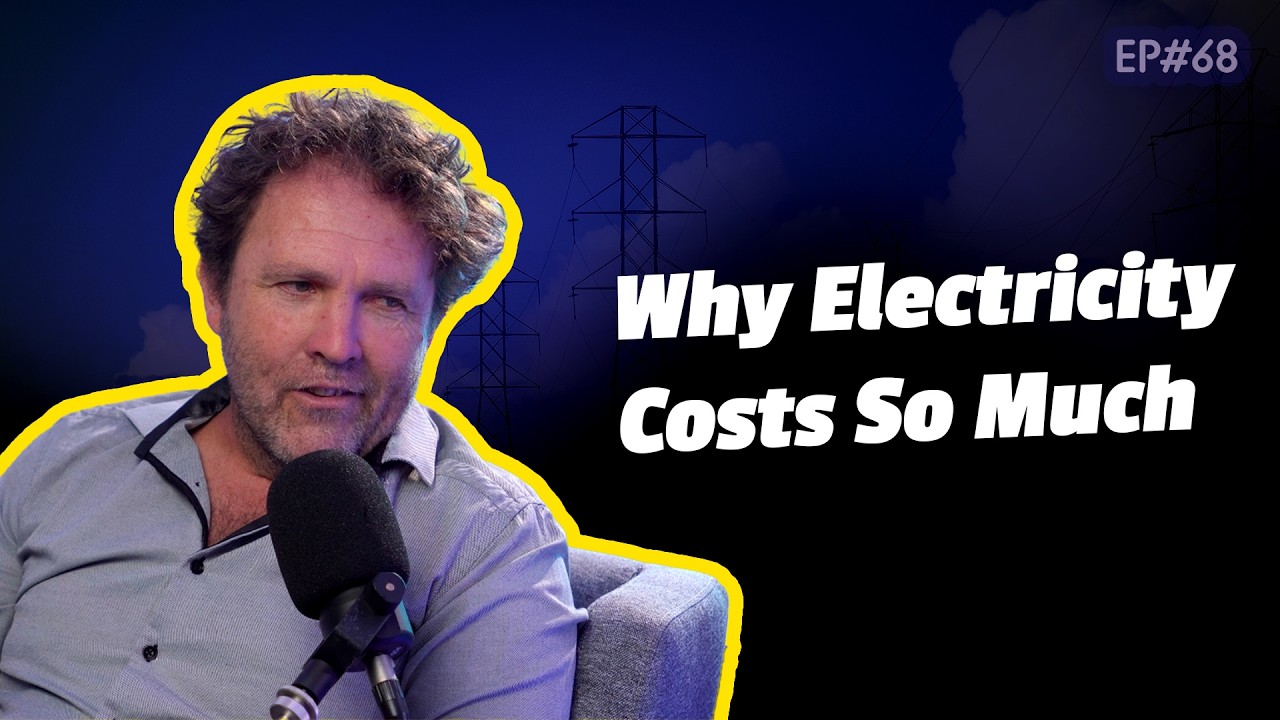
Could Home Electrification Solve Australia’s Energy Crisis?
Keywords
Summary
144 words
Critical Evaluation
Value of the Information & Strength of the Argument
The interview provides valuable insights into the economic benefits of home electrification, backed by Griffith’s expertise and modeling from Rewiring Australia. The argumentation is strong, with clear reasoning and data on cost savings. Griffith effectively debunks common myths about the cost of electrification and highlights the structural flaws in the current energy market. The host’s challenges add depth, though Griffith’s responses are sometimes assertive. Overall, the value is high for understanding the potential of electrification, but it is primarily an advocacy piece rather than a neutral analysis.
Scientific Rigor, Source Quality, Title Accuracy
The scientific rigor is moderate: Griffith cites his own work and general data, but specific sources are not always provided. The quality of sources is decent, with references to his website and Rewiring Australia. The title accurately reflects the content. The interview is well-structured and covers key topics, but the lack of formal citations and reliance on opinion may reduce its scientific credibility. The host’s critical questions help balance the discussion, but the overall approach is more persuasive than academic.
182 words
Title / Content Match
The title accurately reflects the core topic: the potential of home electrification to address Australia's energy crisis, as discussed throughout the interview.
Quality & Reliability
8/10
The interview features Saul Griffith, a recognized expert in renewable energy and electrification, with a strong track record. The discussion is grounded in economic and technical arguments, though it is primarily opinion and advocacy rather than peer-reviewed research. The host challenges some points, adding balance. The content is well-structured and references specific policies and data, but lacks formal citations.
Chapters
- Introduction
- Introducing Saul Griffith
- Australia’s electrification opportunity
- The three hours of free electricity plan
- How electricity privatisation increased prices
- Could electrification save households $4,000 a year?
- Confusing electricity plans and retailer profits
- What home electrification actually involves
- Does gas still have a role in the energy transition?
- China’s dominance of clean-energy technology
- Could Australia rebuild renewable manufacturing?
- Choosing quality solar and battery products
- Saul Griffith’s position on nuclear power
- Saul’s books and Rewiring Australia
Cited Sources
- Saul Griffith's website — Mentioned as the guest's official site, likely containing his books and research.
- Your Energy Answers — The channel's website, providing additional resources and context.
- Find an installer — Resource for finding quality local installers, mentioned in the description.
- Article on Saul Griffith and electrification — Related article on the topic, likely summarizing key points.
- Your Energy Media LinkedIn — Company LinkedIn page, providing background on the channel.
Concurring Sources
- Rewiring Australia — Organization founded by Saul Griffith, providing research and advocacy for electrification, likely supporting the claims made.
Dissenting Sources
- Australian Energy Market Operator (AEMO)
Contribution & Novelties
The interview offers a compelling case for home electrification as a solution to Australia’s energy crisis, emphasizing economic savings and structural market reforms. It provides a clear critique of privatization and highlights the need for policy changes to support household investments. The discussion is particularly valuable for its focus on the Australian context and the role of rooftop solar and batteries.
Pour aller plus loin :
- Rewiring Australia — Non-profit organization founded by Saul Griffith, providing research and advocacy for electrification.
- Electrification of buildings — Overview of the concept and benefits.
- Heat pump — Technology central to home electrification, with efficiency and cost details.
104 words
Radar Profile
The radar profile shows high scores in information quantity, quality, and reliability, with a slightly lower technical level. This indicates a well-informed and credible discussion that is accessible to a general audience, but not deeply technical.
💬 Positif. Sur les 30 commentaires analysés, la majorité exprime une forte approbation de l'interview et des idées de Saul Griffith, avec des anecdotes personnelles sur les économies réalisées grâce à l'électrification.