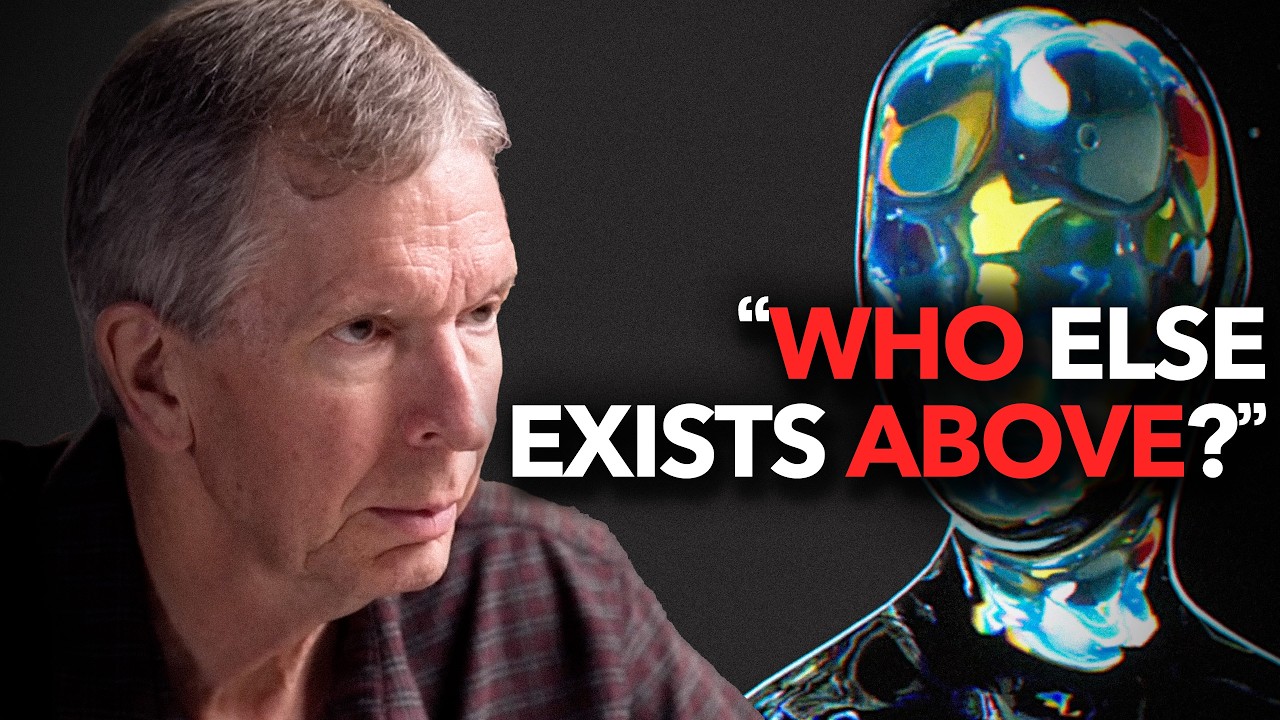
Otherworldly CONSCIOUSNESS Beyond Our Space-Time | Per Donald Hoffman
Keywords
Summary
143 words
Critical Evaluation
The video provides a compelling and accessible introduction to Donald Hoffman’s controversial theory of conscious agents. It effectively uses vivid examples like tetrachromacy and alien hand syndrome to illustrate the limitations of human perception and the possibility of multiple consciousnesses. The mathematical concepts of Markov processes and kernel flow are introduced clearly, though without deep technical detail, making them understandable to a general audience. However, the video presents Hoffman’s ideas as established fact rather than as a speculative hypothesis, without acknowledging the significant scientific criticism they face. For instance, Hoffman’s claim that spacetime is an interface and consciousness is fundamental is not widely accepted in neuroscience or physics, and the video does not mention alternative viewpoints or the lack of empirical evidence. The sources cited are minimal, with only a membership link provided, and no direct references to Hoffman’s publications or supporting research. The adéquation between title and content is good, as the video indeed explores consciousness beyond spacetime. The production quality is high, with engaging visuals and clear narration. Overall, the video is thought-provoking and informative for a lay audience, but its uncritical presentation of speculative ideas limits its scientific rigor.
192 words
Title / Content Match
The title accurately reflects the content, which explores consciousness beyond spacetime as proposed by Donald Hoffman.
Quality & Reliability
6/10
The video presents a mix of established scientific concepts (tetrachromacy, Markov processes, alien hand syndrome) and speculative theories by Donald Hoffman. While the scientific concepts are accurately described, the central thesis (consciousness as fundamental, spacetime as interface) is highly speculative and not widely accepted. The video lacks citations to primary literature, and the reliance on Hoffman's ideas without critical counterbalance reduces reliability.
Chapters
- Introduction: Seeing Colors You've Never Imagined
- An Experiment in Imagining New Colors
- Tetrachromacy: A Fourth Color Dimension
- How Animals Perceive Beyond Human Senses
- Donald Hoffman: Reality Beyond Particles and Atoms
- Markov Processes and the Mathematics of Change
- Kernel Flow and Evolving States of Mind
- Is Spacetime Just an Interface?
- Imagining Alien Perception and Senses
- Charlie Puth and the Concreteness of Perfect Pitch
- Total Transparency: A Scene from The Three-Body Problem
- Alien Hand Syndrome and the Split Brain
- Two Consciousnesses in Video Games
- Try It Yourself: A Perception Experiment
- An Infinite Hierarchy of Consciousness
- The Egg: Living Every Human Life at Once
- Closing Thoughts: Consciousness as an Unending Game
Cited Sources
- Beeyond Ideas Membership — Support channel and access perks
Concurring Sources
- Tetrachromacy in humans — Supports the existence of tetrachromacy in humans.
- Alien hand syndrome — Supports the phenomenon of alien hand syndrome.
Dissenting Sources
- Critique of Hoffman's theory — Presents counterarguments from physicists and philosophers to Hoffman's claims.
Contribution & Novelties
The video synthesizes diverse scientific phenomena (tetrachromacy, Markov processes, alien hand syndrome) to illustrate Donald Hoffman’s theory of consciousness as fundamental. It offers a novel visual and narrative approach to making abstract ideas accessible.
Pour aller plus loin :
- Donald Hoffman’s official website — Overview of his research and publications.
- Conscious Agents and the Hard Problem — A paper by Hoffman and Prakash on conscious agents.
- The Case Against Reality — An article discussing Hoffman’s ideas and criticisms.
78 words
Radar Profile
The radar profile shows high scores in quantity and quality of information, moderate technical level, and lower reliability, reflecting the video's engaging presentation but speculative nature.
💬 Positive: The 30 comments analyzed are overwhelmingly positive, with viewers expressing fascination and appreciation for the content, often sharing personal experiences related to the perception experiment.