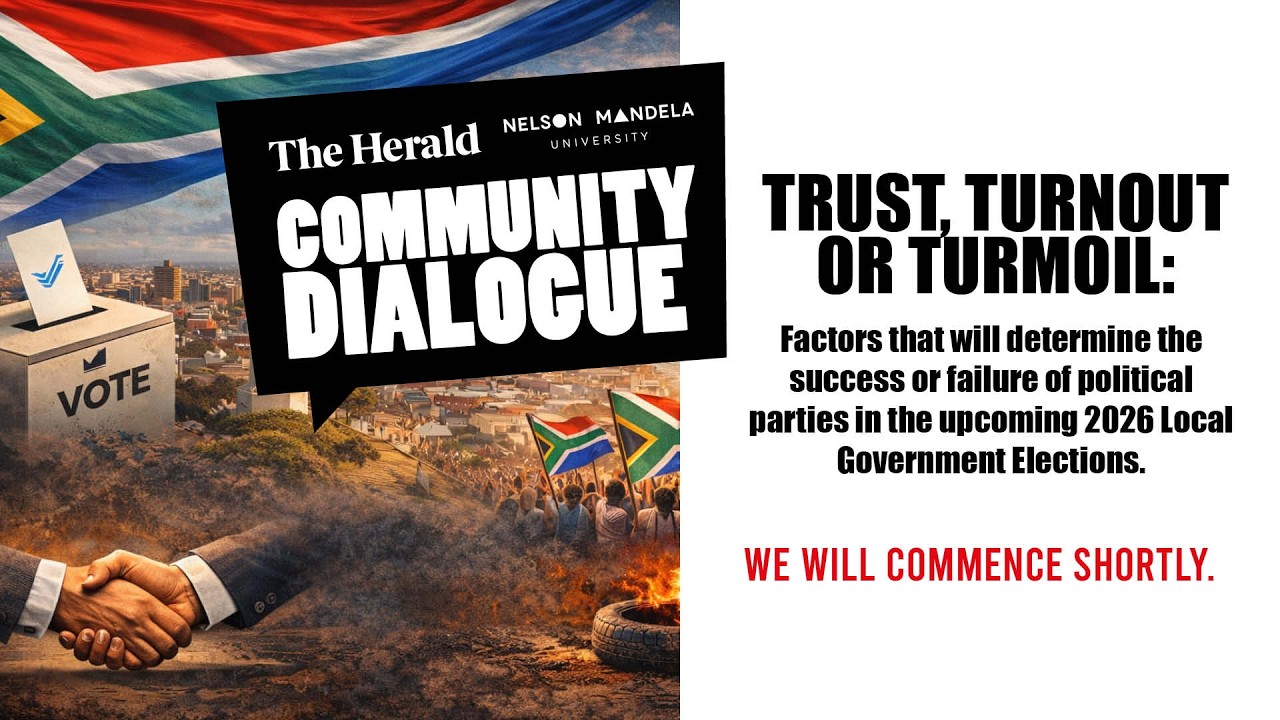
THE HERALD COMMUNITY DIALOGUE
Keywords
Summary
164 words
Critical Evaluation
Value of the Information & Strength of the Argument
The dialogue provides valuable insights into the current political climate in South Africa, particularly the decline in democratic trust and the challenges of coalition governance. The speakers offer a mix of empirical observations and strategic advice, grounding their arguments in recent events such as the 2024 elections and the IEC’s voter participation survey. The argumentation is generally coherent, with each speaker building a case for why trust, service delivery, and youth engagement are pivotal. However, some claims are asserted without strong evidence, and the discussion sometimes veers into opinion rather than rigorous analysis. The interactive format allows for diverse perspectives, but the depth of argumentation varies across speakers.
Scientific Rigor, Source Quality, Title Accuracy
The dialogue references credible sources, including the IEC’s voter participation survey and the HSRC’s research, which lend authority to the discussion. However, specific citations are not systematically provided, and some statements rely on anecdotal evidence. The title accurately reflects the content, focusing on trust, turnout, and turmoil as central themes. The event is a public dialogue rather than a formal academic presentation, so the rigor is appropriate for the format but not exhaustive. The presence of political party representatives adds practical perspectives, but potential biases are not explicitly addressed.
212 words
Title / Content Match
The title accurately reflects the content: a community dialogue on factors influencing the 2026 local government elections, focusing on trust, turnout, and turmoil.
Quality & Reliability
7/10
The dialogue features credible speakers including academics and a representative from the National Youth Development Agency, and references empirical data from the IEC and HSRC. However, claims are largely anecdotal and not systematically sourced, and the discussion is a public forum rather than a peer-reviewed analysis.
Key Moments
Markers derived by PSI from the transcript: the creator did not define chapters.
- Introduction by the caretaker, outlining the context of the 2026 local government elections and the dialogue's purpose.
- Welcome remarks from the university representative, emphasizing the importance of local government and democratic participation.
- First speaker (NYDA) discusses campaign strategies, service delivery, and youth mobilization.
- Second speaker (political scientist) focuses on Nelson Mandela Bay, linking trust and turnout, and citing the mayor's controversies.
- Third speaker (HSRC) presents survey data on declining trust in democracy and implications for the elections.
- Open floor for questions from the audience, with responses from panelists.
- Further discussion on coalition politics and the role of new political parties.
- Concluding remarks and call to action for citizens to participate in the elections.
Cited Sources
- IEC Voter Participation Survey — Referenced by the caretaker as a recent report showing a decline in popular support for democracy from 65% to 36%.
- HSRC Research — Mentioned as the organization that assisted in conducting the survey on voter participation.
Concurring Sources
- IEC Voter Participation Survey — The survey's finding of declining support for democracy aligns with the dialogue's central concern about trust.
Dissenting Sources
- No discordant sources identified — The dialogue did not present conflicting sources; however, some claims about the mayor's conduct are based on allegations and not verified.
Contribution & Novelties
The dialogue offers a timely and community-centered analysis of the upcoming 2026 local government elections, highlighting the interplay between trust, turnout, and turmoil. It brings together diverse perspectives from academia, youth development, and research institutions, providing a multifaceted view of the challenges facing South African democracy. The emphasis on youth engagement and the impact of coalition politics adds contemporary relevance.
Pour aller plus loin :
- South African local government elections — Overview of the electoral system and historical context.
- Voter turnout in South Africa — Data and analysis on voter participation trends.
- Coalition government in South Africa — Discussion of coalition politics and its implications.
- National Youth Development Agency — Official site of the NYDA, relevant to youth engagement strategies.
120 words
Radar Profile
The radar profile shows a balanced performance across all dimensions, with slightly higher scores in information quantity and reliability, reflecting the dialogue's substantive content and credible speakers. The lower technical level indicates that the discussion is accessible to a general audience, while the overall quality is solid.
💬 No comments were provided for analysis.