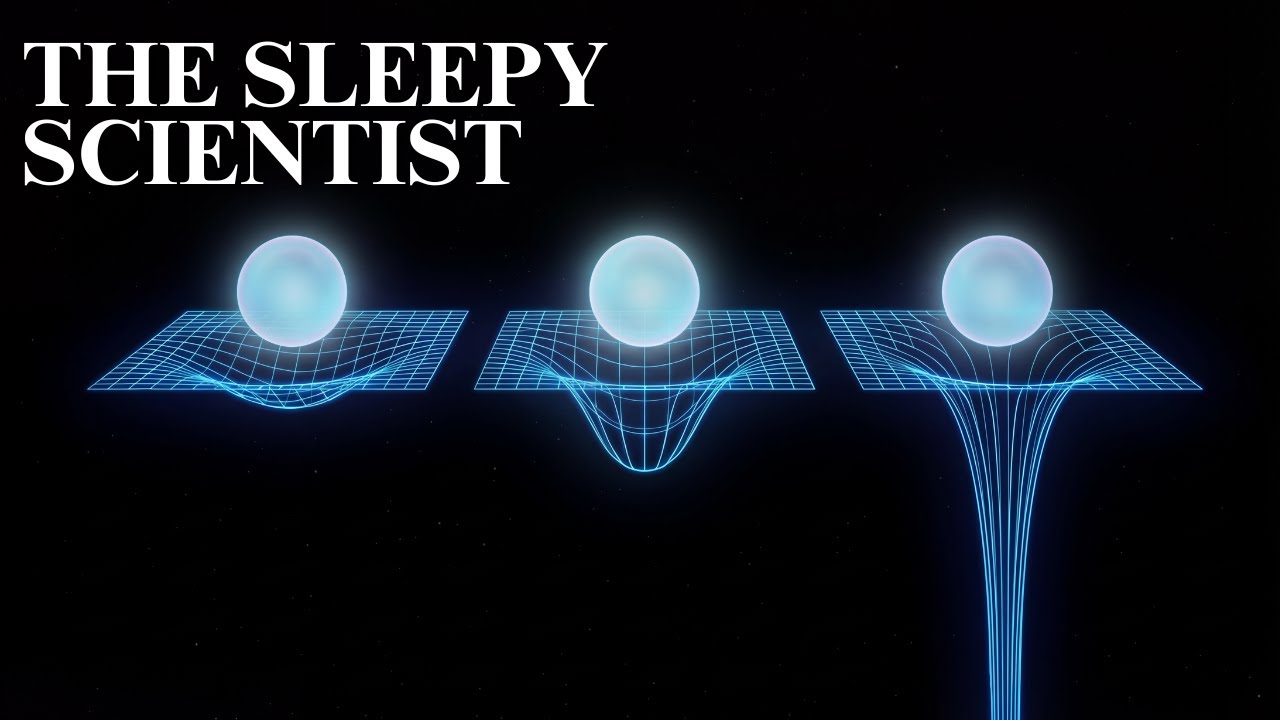
How Gravity Works Around The Universe
Keywords
Summary
138 words
Critical Evaluation
The video provides a scientifically accurate and accessible introduction to gravity, effectively bridging everyday experience with cosmic phenomena. It correctly distinguishes between Newtonian gravity and Einstein’s general relativity, explaining that Newton’s model is an approximation valid for weak fields, while general relativity is necessary for strong gravity and extreme precision. The explanation of spacetime curvature and geodesics is clear and intuitive, using analogies that aid understanding. The video also correctly notes that gravity affects time, a key prediction of general relativity, and mentions gravitational lensing and orbital precession as evidence. However, the content is limited to a conceptual overview; it does not delve into the mathematical formalism or quantitative details, which may leave advanced viewers wanting more depth. The lack of citations to specific scientific sources is a weakness, as viewers cannot easily verify or explore the topics further. The video’s slow pace and soothing narration are well-suited for its intended purpose of relaxation, but may not engage viewers seeking a more dynamic presentation. Overall, the video is a reliable and informative resource for those new to the topic, though it does not break new ground or offer novel insights.
190 words
Title / Content Match
The title accurately reflects the content, which explores gravity across different cosmic scales.
Quality & Reliability
7/10
The video provides a clear and accurate overview of gravity, from Newtonian to Einsteinian perspectives, with correct scientific explanations. However, it lacks citations to specific sources and does not delve into advanced details, limiting its depth for expert audiences.
Key Moments
Markers derived by PSI from the transcript: the creator did not define chapters.
- Introduction to the video's aim: exploring gravity across the universe.
- Discussion of gravity as a familiar force on Earth and its perceived constancy.
- Explanation of Newton's universal gravitation and its historical significance.
- Introduction to Einstein's general relativity and the concept of spacetime curvature.
- Explanation of how gravity affects time and the need for relativistic corrections in GPS.
- Discussion of gravitational lensing and orbital precession as evidence for general relativity.
- Exploration of gravity on other planets and moons, showing variation with mass and size.
- Consideration of gravity at cosmic scales, including galaxies and large-scale structures.
- Conclusion emphasizing that gravity is a universal interaction with local variations.
Cited Sources
- The Sleepy Scientist website — The creator's website, mentioned in the description, likely contains additional resources and related content.
Concurring Sources
- NASA - What Is Gravity? — NASA's educational page on gravity, which aligns with the video's explanation of gravity as a fundamental force.
Contribution & Novelties
The video offers a unique approach by combining scientific explanation with a calming, sleep-friendly presentation style. It synthesizes well-established concepts of gravity into a coherent narrative that emphasizes the variability of gravity across different scales, which is often overlooked in popular science. The focus on the local nature of Earth’s gravity as a specific case rather than a universal constant is a refreshing perspective.
Pour aller plus loin :
- General relativity — Wikipedia article providing a comprehensive overview of Einstein’s theory.
- Gravitational lensing — Wikipedia article explaining the bending of light by massive objects.
- Geodesics in general relativity — Wikipedia article on the paths followed by objects in curved spacetime.
110 words
Radar Profile
The radar profile shows a balanced performance across all dimensions, with slightly higher scores in quality of information and reliability, reflecting the video's accurate but introductory content. The lower score in technical level indicates that the video avoids advanced mathematics, making it accessible to a general audience.