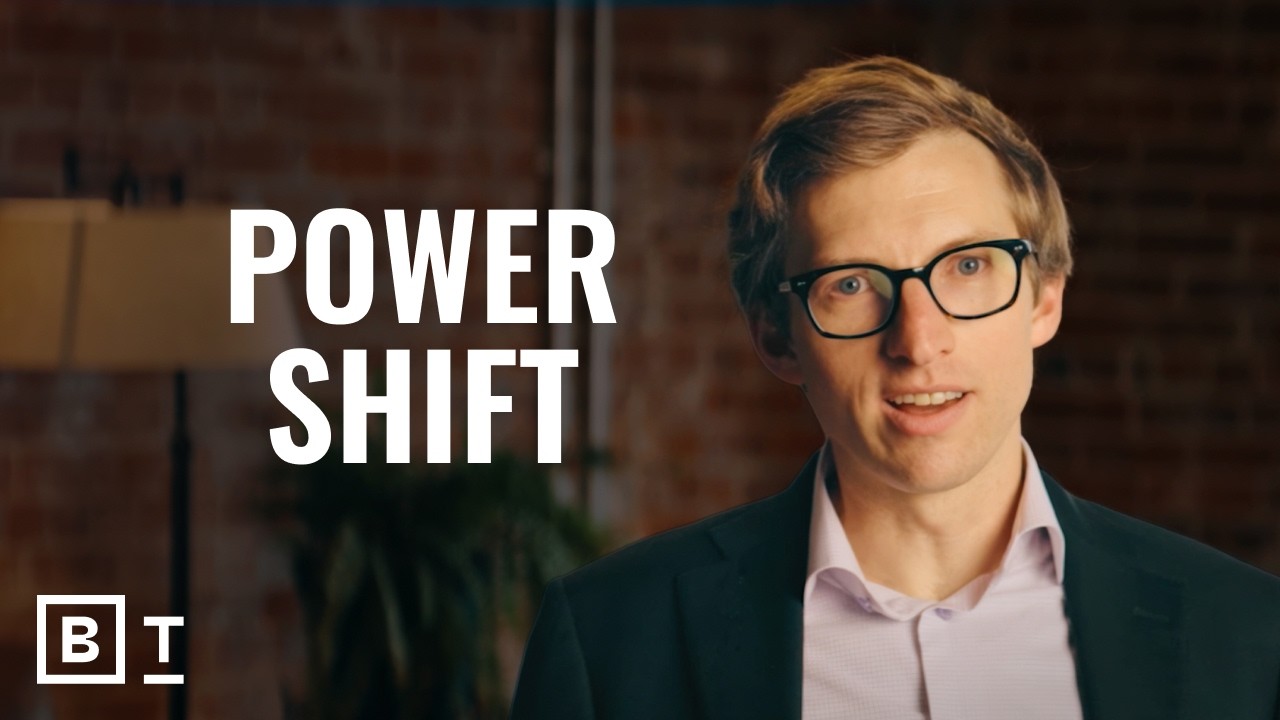
The strange reason the US lost control of chip manufacturing | Chris Miller
Keywords
Summary
157 words
Critical Evaluation
Value of the Information & Strength of the Argument
The video provides valuable insights into the historical and geopolitical factors shaping the semiconductor industry. Miller’s argumentation is coherent, tracing the evolution from Bell Labs to the current globalized supply chain. He effectively explains complex concepts like Moore’s Law and EUV lithography in an accessible manner. However, the narrative is somewhat one-sided, focusing primarily on US and Western perspectives, and omits detailed discussion of US coercive actions in trade disputes, which some commenters pointed out. The argument that the industry’s globalization is ‘inevitable’ due to specialization is presented without fully exploring alternative scenarios or the role of political decisions.
Scientific Rigor, Source Quality, Title Accuracy
The video is based on Miller’s book ‘Chip War’, which lends it authority, but no specific sources or references are cited within the video. The description only includes a membership link, not additional resources. The title is somewhat misleading as the video covers a broad history rather than focusing on the ‘strange reason’ for US loss of control. The content is generally accurate but includes some simplifications and potential biases, such as downplaying US political pressure on allies. The video does not engage with counterarguments or alternative interpretations, which affects its scientific rigor. The comments show a mix of appreciation and criticism, with some accusing the video of political bias.
224 words
Title / Content Match
The title is somewhat misleading as the video covers the broader history and globalization of chip manufacturing rather than focusing specifically on the 'strange reason' the US lost control.
Quality & Reliability
8/10
The video presents a well-structured historical narrative by an expert author, but lacks explicit citations or references to primary sources, and contains some politically charged interpretations.
Key Moments
Markers derived by PSI from the transcript: the creator did not define chapters.
- Introduction to Bell Labs and the invention of the transistor
- Explanation of the first integrated circuit and its significance
- Rise of Silicon Valley and Fairchild Semiconductor
- Intel's founding and focus on microprocessors
- Japan's consumer electronics boom and Sony Walkman
- ASML's bet on EUV lithography and its success
- TSMC's foundry model and Morris Chang's vision
- China's current position and efforts to catch up
Cited Sources
- Big Think Membership — Promotional link in video description, not a source for content
Concurring Sources
- Chip War: The Fight for the World's Most Critical Technology — The book by Chris Miller, which provides a detailed account of the semiconductor industry's history and geopolitics.
Dissenting Sources
- Comment on US coercion in semiconductor business — Several commenters argue that the video glosses over US coercive actions, such as pressuring Japan and others, which contradicts the narrative of natural globalization.
Contribution & Novelties
The video offers a concise and engaging overview of the semiconductor industry’s history, synthesizing key events and technological developments. It highlights the role of policy, such as Bell Labs’ regulated monopoly, in shaping the industry’s trajectory. The discussion of ASML’s EUV lithography and TSMC’s foundry model provides valuable context for understanding current supply chain dynamics.
Pour aller plus loin :
- Chip War: The Fight for the World’s Most Critical Technology — The book by Chris Miller that this video is based on, offering a comprehensive analysis.
- Moore’s Law — The observation that the number of transistors on a chip doubles approximately every two years, central to the industry’s progress.
- Extreme ultraviolet lithography — The technology that ASML commercialized, enabling advanced chip manufacturing.
122 words
Radar Profile
The radar profile shows high scores in information quantity and quality, reflecting the video's comprehensive coverage and expert presentation. The technical level is moderate, making it accessible to a general audience. The reliability score is slightly lower due to the lack of explicit citations and potential political bias.
💬 Mixed to negative: On the 30 comments analyzed, many praise the clarity and expertise, but a significant number criticize the video for political bias and omission of US coercion in trade disputes.