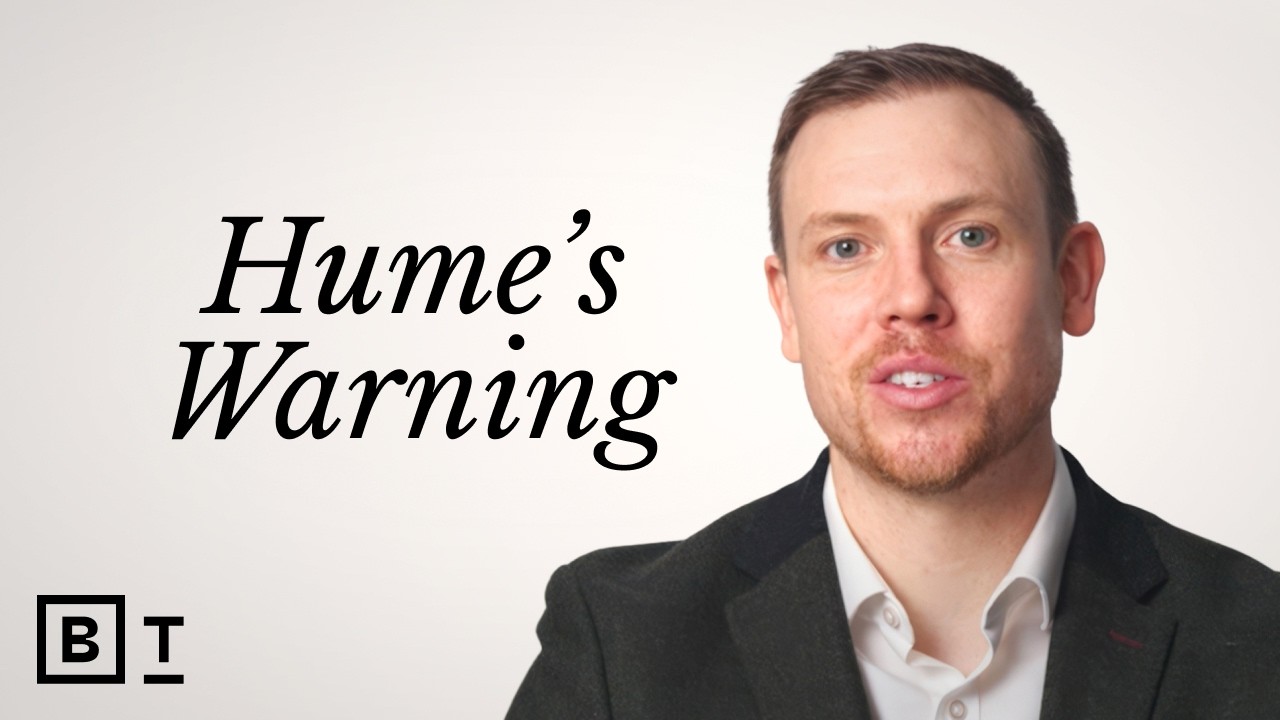
Historical patterns fall short in a rapidly changing world | Brian Klaas
Keywords
Summary
188 words
Critical Evaluation
Value of the Information & Strength of the Argument
The video provides a valuable critique of traditional social science methodology, articulating a compelling case for adopting complex systems thinking. The argument is well-structured, moving from specific flawed assumptions to broader implications for forecasting and decision-making. Klaas uses accessible analogies (Swiss watch vs. traffic) and vivid historical examples (Arab Spring, 9/11, pandemic) to illustrate his points, making the argument persuasive. However, the argumentation relies heavily on anecdotal evidence and does not engage with counterarguments or alternative perspectives. The claim that complex systems theory will be ’the future of 21st century thinking’ is presented as an assertion rather than a demonstrated conclusion. The value lies in its conceptual clarity and its challenge to conventional wisdom, but it lacks empirical depth and a systematic review of existing literature.
Scientific Rigor, Source Quality, Title Accuracy
The scientific rigor is moderate. The video is an expert opinion piece, not a peer-reviewed study. It references established concepts (complex systems theory, Hume’s problem of induction) and historical events, but does not cite specific academic sources or data. The quality of sources is limited to the speaker’s own expertise and the examples he chooses. The title accurately reflects the content, which is a focused argument about the limitations of historical patterns. The video does not present a balanced review of the literature, but rather a persuasive essay. The lack of citations and the absence of any discussion of potential limitations of complex systems theory reduce the overall rigor.
250 words
Title / Content Match
The title accurately reflects the core argument: historical patterns are insufficient for predicting change in a rapidly evolving world. The content directly addresses this thesis.
Quality & Reliability
7/10
The content is an expert opinion by a political scientist with relevant academic credentials. It draws on established concepts (complex systems theory, Hume's problem of induction) but lacks empirical data or citations to specific studies. The argument is coherent and well-illustrated with historical examples, but the lack of verifiable sources and the reliance on anecdotal evidence reduce the overall reliability.
Key Moments
Markers derived by PSI from the transcript: the creator did not define chapters.
- Introduction: The problem of using past patterns to predict the future in a rapidly changing world.
- First flawed assumption: clear-cut causes. Example of atomic bomb and infinite causes.
- Second flawed assumption: understanding components equals understanding the system. Distinction between complicated and complex systems.
- Third flawed assumption: past patterns predict future ones. Hume's problem of induction and the Arab Spring example.
- Linear vs. nonlinear dynamics. The role of computing power in perpetuating linear models.
- The mirage of regularity and black swan events (9/11, financial crisis, pandemic).
- Radical uncertainty and the need to separate questions we must answer from those we can avoid.
Cited Sources
- Big Think Membership — Promotional link in the video description, not a scientific source.
- Full Interview with Brian Klaas — Link to the full interview from which this clip is taken.
Concurring Sources
- Complex system — Supports the definition and characteristics of complex systems as described in the video.
- Problem of induction — Directly relates to the video's discussion of Hume's critique of using past patterns.
Dissenting Sources
- No specific discordant sources were cited in the video. — The video does not present counterarguments or alternative perspectives, so no discordant sources are identified.
Contribution & Novelties
The video offers a clear and accessible synthesis of complex systems theory applied to social science, emphasizing the inadequacy of linear models and historical patterns. Its original contribution lies in framing these ideas as a fundamental critique of social science methodology, using vivid examples to make the abstract concepts tangible. The call to separate ‘must-answer’ from ‘can-avoid’ questions is a practical takeaway.
Pour aller plus loin :
- Complex systems — Provides a foundational overview of complex systems, including properties like emergence and adaptation.
- Problem of induction — David Hume’s philosophical challenge to the assumption that past patterns predict future ones, central to Klaas’s argument.
- Black swan theory — Nassim Taleb’s concept of unpredictable events with massive impact, which Klaas references implicitly.
- Butterfly effect — A key concept in chaos theory illustrating how small changes can lead to large effects, relevant to nonlinear dynamics.
143 words
Radar Profile
The radar profile shows a balanced but moderate performance across all dimensions. The video scores highest on quantity of information and technical level, reflecting its dense conceptual content. Quality of information and overall reliability are slightly lower, due to the lack of empirical evidence and reliance on anecdotal examples. This suggests a thought-provoking but not rigorously evidence-based presentation.