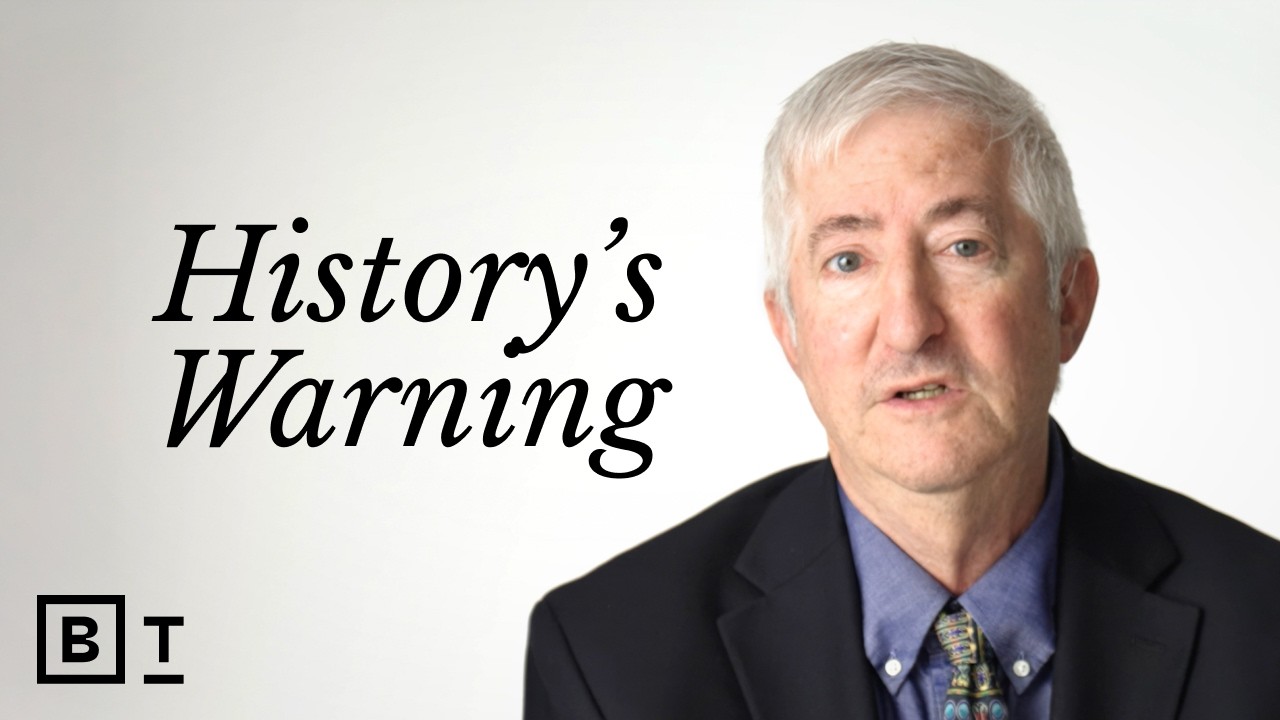
Collapse isn't coming, it's already scheduled | Eric Cline
Keywords
Summary
189 words
Critical Evaluation
Value of the Information & Strength of the Argument
The video provides valuable insights by drawing parallels between the Late Bronze Age collapse and contemporary risks. Cline’s argument is well-structured, moving from historical analysis to practical lessons. He supports his points with specific examples, such as the role of water resources and leadership, and he acknowledges the complexity of the collapse, avoiding oversimplification. The argumentation is solid, though it relies heavily on his own interpretations and common-sense conclusions rather than presenting new research.
Scientific Rigor, Source Quality, Title Accuracy
The content is based on Eric Cline’s expertise and his published works, which are well-regarded in the field. However, the video does not cite specific sources or studies, limiting its scientific rigor. The title accurately reflects the content’s focus on the inevitability of collapse, though it may be slightly sensationalized. The description provides a link to Big Think membership, but no direct references to academic sources.
155 words
Title / Content Match
The title is somewhat provocative but accurately reflects the core message that societal collapse is inevitable and may be imminent.
Quality & Reliability
8/10
Eric Cline is a recognized archaeologist and historian, and the content is based on his expertise and published works. However, the video is an interview/opinion piece with limited direct citation of sources.
Key Moments
Markers derived by PSI from the transcript: the creator did not define chapters.
- Introduction to the Late Bronze Age and its globalized nature.
- Discussion on the role of water resources in the survival of civilizations.
- Importance of leadership during crises, with examples from Egypt and the Hittites.
- Seven lessons from the Late Bronze Age collapse, including redundancy and innovation.
- Warning signs of modern collapse and the inevitability of societal transformation.
Cited Sources
- Big Think Membership — Link to the channel's membership page, not a direct source for the content.
Concurring Sources
- 1177 B.C.: The Year Civilization Collapsed — Eric Cline's book that forms the basis of his argument.
Contribution & Novelties
The video offers a compelling synthesis of historical evidence and modern parallels, emphasizing that collapse is not a question of ‘if’ but ‘when’. It provides a practical framework of seven lessons that could be applied to contemporary society. The discussion on the role of water and leadership adds depth to the analysis.
Pour aller plus loin :
- Late Bronze Age collapse — Overview of the historical event.
- Societal collapse — General concept and examples.
- Tipping point (climatology) — Relevant to the discussion of warning signs.
85 words
Radar Profile
The radar profile shows high scores in information quality and reliability, reflecting the expert's credibility, but lower scores in technical level and quantity of information, as the video is more of an opinion piece than a detailed academic lecture.
💬 Sur les 30 commentaires analysés, la tendance est négative, avec de nombreux commentaires exprimant un sentiment d'impuissance et de critique envers les dirigeants actuels, tout en trouvant des parallèles avec les avertissements de la vidéo.