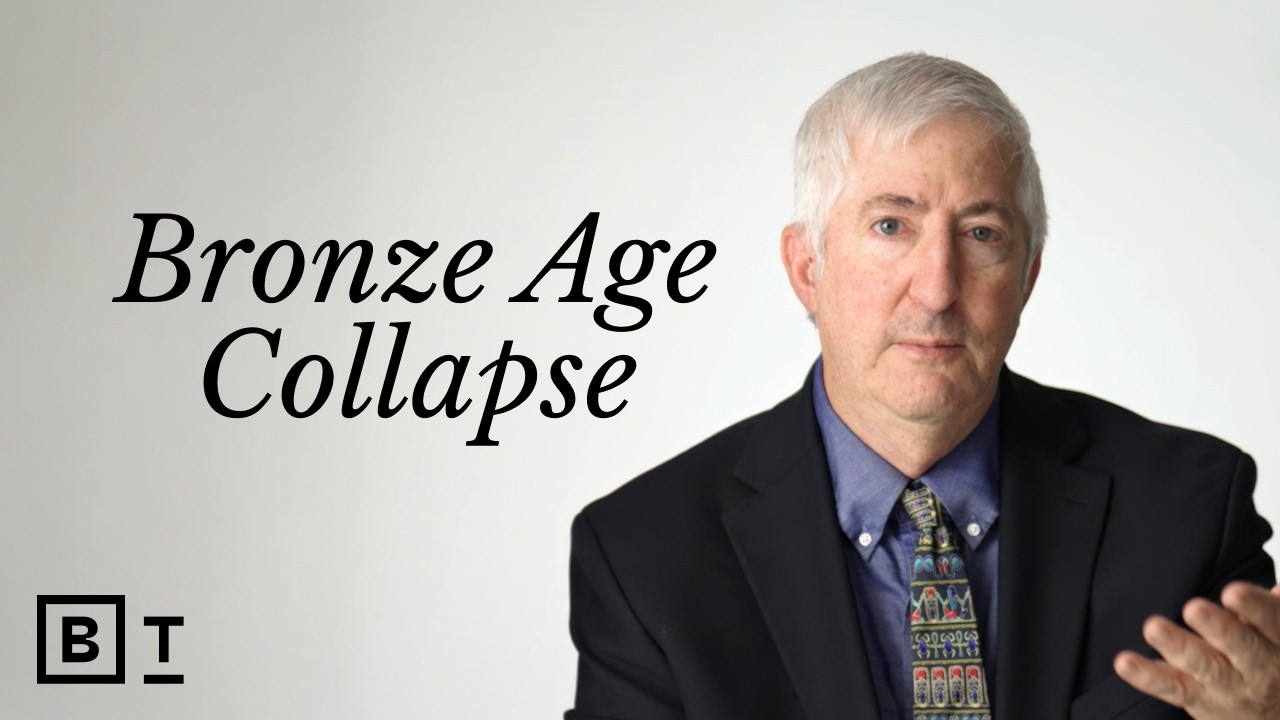
The 300-year drought that ended the ancient world | Eric Cline
Keywords
Summary
171 words
Critical Evaluation
Value of the Information & Strength of the Argument
The video provides a comprehensive and up-to-date overview of the Late Bronze Age collapse, synthesizing decades of research and recent discoveries. Cline’s argumentation is rigorous: he systematically presents evidence for each factor (drought, famine, invasions, earthquakes, disease) and acknowledges uncertainties. He uses a ‘perfect storm’ model, arguing that no single cause suffices, but their combination created a polycrisis. The use of computer simulations adds a novel, quantitative dimension to the analysis. The presentation is well-structured, moving from specific evidence to broader systemic interpretations, and is accessible without oversimplifying.
Scientific Rigor, Source Quality, Title Accuracy
Cline demonstrates high scientific rigor by citing specific archaeological sites, texts (e.g., Ugarit tablets), and scientific data (pollen, stalagmites). He distinguishes between established facts and hypotheses, and references his own books (‘1177 BC’, ‘After 1177 BC’) as well as scholarly debates. The title accurately reflects the content’s focus on the drought as a major factor. The video is an expert opinion piece, not a peer-reviewed study, but it is grounded in a strong evidence base. The provided description includes a link to Big Think membership, not to specific sources, but the video itself mentions key references.
199 words
Title / Content Match
The title accurately reflects the central thesis of the video: a mega-drought lasting up to 300 years as a key factor in the Late Bronze Age collapse.
Quality & Reliability
9/10
Eric Cline is a recognized archaeologist and historian, professor at George Washington University, with extensive field experience and publications. The presentation is grounded in current scientific evidence (drought data, texts, destructions) and he clearly distinguishes established facts from hypotheses.
Chapters
Cited Sources
- Big Think Membership — Link in the video description, likely for additional content.
Concurring Sources
- 1177 B.C.: The Year Civilization Collapsed — Cline's book, which presents the same thesis of a multi-causal collapse.
Dissenting Sources
- Alternative theories on the Sea Peoples — Some scholars still argue for a more direct role of the Sea Peoples in the collapse, as opposed to Cline's view of them as victims.
Contribution & Novelties
The video’s original contribution lies in its synthesis of recent scientific evidence (e.g., new Ugarit tablets, drought data) into a coherent ‘perfect storm’ model, and in presenting the results of computer simulations that identify the critical nodes in the collapse network. It also challenges the traditional ‘Sea Peoples’ narrative, reframing them as migrants.
Pour aller plus loin :
- Late Bronze Age collapse — Wikipedia article providing a broad overview.
- Sea Peoples — Wikipedia article on the Sea Peoples, their identity and role.
- Systems theory — Relevant for understanding network collapse and resilience.
- 1177 B.C.: The Year Civilization Collapsed — Cline’s book, a key reference for the topic.
107 words
Radar Profile
The radar profile shows high scores in information quantity, quality, and reliability, with a slightly lower technical level, indicating a content that is both dense and accessible. The balance between scientific depth and clarity makes it a valuable resource for a broad audience.
💬 Très positif. Sur les 30 commentaires analysés, les spectateurs expriment une admiration unanime pour la clarté, la passion et l'expertise d'Eric Cline, saluant la qualité de la présentation et la richesse des informations.