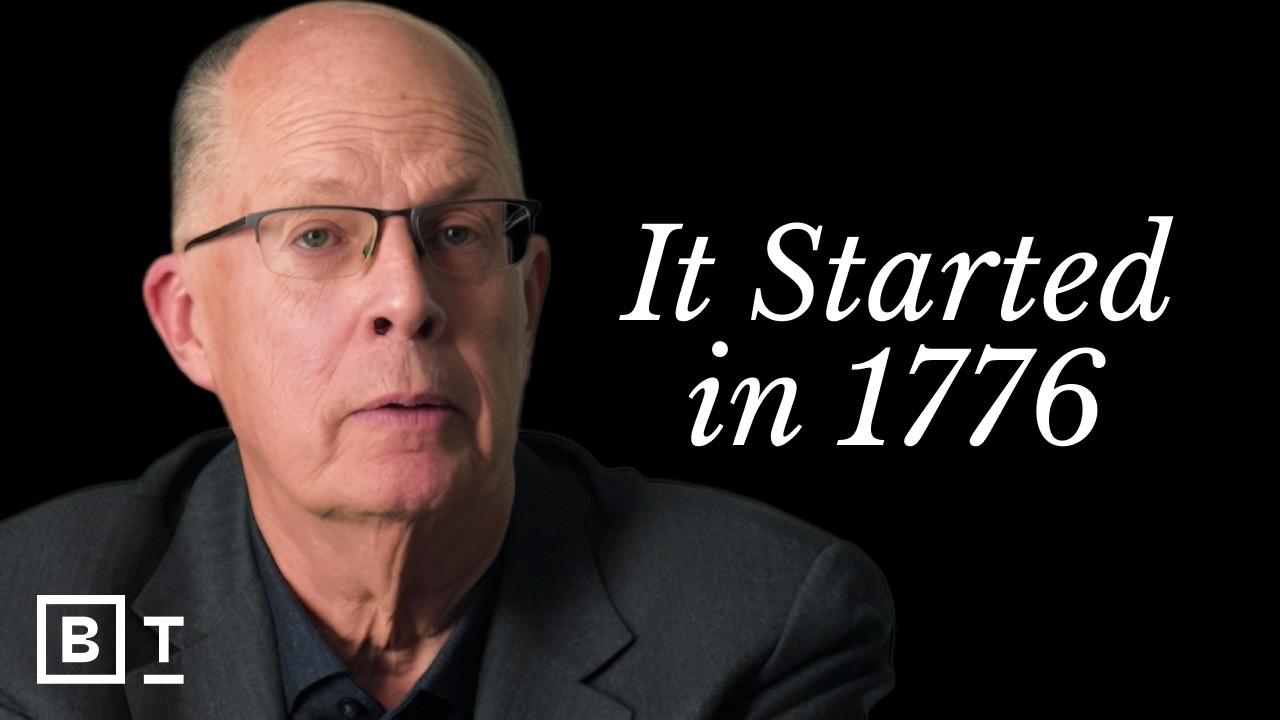
The computing revolution that secretly began in 1776 | David Alan Grier
Keywords
Summary
190 words
Critical Evaluation
Value of the Information & Strength of the Argument
The video provides a valuable historical perspective on the origins of computing, challenging the common narrative that it began with electronics. Grier’s argument is well-structured, using concrete examples like the Nautical Almanac and the work of human computers to illustrate the principles of division of labor and error correction. He effectively connects these early practices to modern computing concepts, such as algorithms and systematization. The argumentation is persuasive, though it relies on anecdotal evidence and historical narrative rather than rigorous data analysis. The speaker’s expertise adds credibility, but the lack of formal citations limits the scientific rigor.
Scientific Rigor, Source Quality, Title Accuracy
The talk is based on Grier’s book ‘When Computers Were Human’, which is a well-regarded historical account. However, the video itself does not cite specific sources, and the narrative is presented as a personal interpretation. The title accurately reflects the content, which is a historical argument about the origins of computing. The content is generally accurate, but some simplifications are made for a general audience, such as the claim that the computing revolution ‘secretly began in 1776’, which is a rhetorical device rather than a precise historical fact. The speaker’s credentials as an IEEE Fellow and author on the topic lend authority, but the lack of direct citations in the video reduces its scientific rigor.
227 words
Title / Content Match
The title accurately reflects the content, which argues that the computing revolution began in 1776 with the systematization of calculation, not with electronic computers.
Quality & Reliability
8/10
The speaker is a recognized expert (IEEE Fellow, author of 'When Computers Were Human'), and the content is historically grounded, referencing key figures and events. However, the talk is an opinion-based narrative without formal citations or peer-reviewed sources, and some claims are simplified for a general audience.
Key Moments
Markers derived by PSI from the transcript: the creator did not define chapters.
- Introduction: The computing revolution began in 1776 with the systematization of calculation.
- The Industrial Revolution and Adam Smith's 'Wealth of Nations' as a framework for systematization.
- Astronomy as the first field to require massive data processing, leading to the need for human computers.
- The prediction of Halley's Comet return as an early example of division of labor in computation.
- The Nautical Almanac and the challenge of calculating longitude, requiring error-checking and systematic methods.
- Surveying and mapping the United States, another data-intensive task that relied on human computers.
- Charles Babbage's interest in mechanizing calculation, inspired by the need for reliable tables.
- Babbage's Difference Engine and the concept of reducing complex calculations to additions.
- The role of clockwork technology in providing precision and control for early computing devices.
- The legacy of Babbage and the connection to Boolean algebra and modern computing.
Cited Sources
- Big Think Membership — Promotional link in the video description, not a source for the content.
Concurring Sources
- When Computers Were Human — The book by the speaker, which provides a detailed account of human computers and aligns with the video's narrative.
Dissenting Sources
- The Myth of the 'First Computer' — Some historians argue that the term 'computer' should be reserved for electronic devices, and that earlier mechanical calculators are not true computers. This perspective contrasts with Grier's broad definition.
Contribution & Novelties
The video offers a fresh perspective by framing the history of computing within the Industrial Revolution, emphasizing the role of human computers and systematization rather than focusing solely on electronic inventions. It highlights the importance of error-checking and division of labor as foundational principles. This historical context is often overlooked in popular narratives.
Pour aller plus loin :
- When Computers Were Human — The book by David Alan Grier that provides a detailed history of human computers.
- Difference Engine — Charles Babbage’s mechanical calculator, a key example of early computing hardware.
- Nautical Almanac — The publication that required extensive human computation for navigation.
- Division of labour — The economic concept that underpins the systematization of work, as discussed by Adam Smith.
121 words
Radar Profile
The radar profile shows high scores in information quantity and quality, reflecting the rich historical content and expert presentation. The technical level is moderate, as the talk is accessible to a general audience but includes some technical concepts. The overall reliability is high due to the speaker's expertise, though the lack of formal citations is a minor weakness.