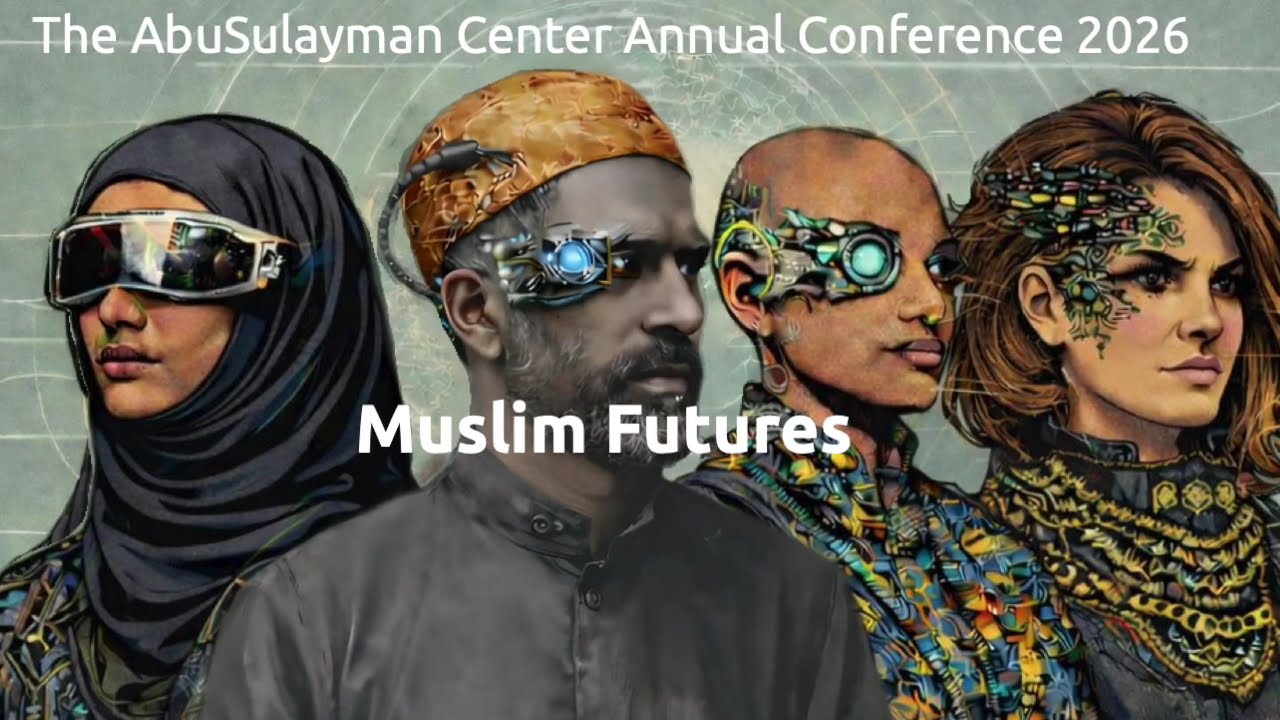
Muslim Futures: Keynote speaker Saks Afridi
Keywords
Summary
184 words
Critical Evaluation
Value of the Information & Strength of the Argument
The talk offers valuable insights into the creative process of a multidisciplinary artist working at the intersection of Islamic culture and contemporary technology. Afridi’s argumentation is based on personal experience and specific examples of his work, which lends authenticity. He effectively demonstrates how art can serve as a form of activism, as seen in ‘Not a Bug Splat’, and how traditional art forms can be reimagined with modern tools like AI. His discussion of the parallels between Islamic geometry and circuit boards is thought-provoking, though not deeply scientifically substantiated. The argumentation is coherent and persuasive, but it is primarily anecdotal rather than data-driven.
Scientific Rigor, Source Quality, Title Accuracy
The talk is a personal keynote, so scientific rigor is not the primary focus. However, Afridi references specific works and artists, such as Herbert Marcuse and the qawwali musician Nusrat Fateh Ali Khan, which adds credibility. He does not cite academic sources, but the conference context suggests an academic audience. The title accurately reflects the content, as it is a keynote at a conference on Muslim futures. The speaker’s professional background in advertising and art supports his authority on the subject. No comments were provided for analysis.
205 words
Title / Content Match
The title accurately reflects the content: a keynote presentation at a conference on Muslim futures, delivered by Saks Afridi.
Quality & Reliability
7/10
The speaker is a practicing artist and creative director with 20 years of experience, providing first-hand accounts of his work and creative process. The talk is a personal keynote, not a peer-reviewed scientific presentation, but it offers authentic insights into the intersection of art, technology, and Islamic culture. The speaker's credibility is supported by his professional achievements and the institutional context of the conference.
Key Moments
Markers derived by PSI from the transcript: the creator did not define chapters.
- Introduction and explanation of the name 'Saks' and its connection to futurism.
- Discussion of early career in advertising and transition to art.
- Presentation of 'Not a Bug Splat' project against drone attacks.
- Explanation of 'Code Switching' lenticular piece and celebration of South Asian creators.
- Discussion of UFO rug and the insider-outsider experience.
- Exploration of Islamic geometry and circuit board parallels, and AI experiments in art.
Cited Sources
- Not a Bug Splat — Art project against drone attacks in Pakistan.
- Code Switching — Lenticular art piece celebrating South Asian creators.
- The Great Refusal — Sculpture inspired by Herbert Marcuse's term.
- Gravity Paintings — Series of paintings deconstructing miniature paintings, incorporating AI.
Concurring Sources
- Islamic geometric patterns — Supports the discussion of Islamic geometry in art.
- Sufism — Provides context for the Sufi elements in Afridi's work.
Contribution & Novelties
The talk provides a unique perspective on the intersection of Islamic art and speculative fiction, introducing the concept of ‘sci-fi Sufism’. Afridi’s work demonstrates how traditional art forms can be reimagined with contemporary technology, such as AI, and how art can serve as a form of activism. The discussion of parallels between Islamic geometry and circuit boards offers a novel way of seeing connections between Islamic culture and modern technology.
Pour aller plus loin :
- Islamic geometric patterns — Provides background on the mathematical and artistic tradition referenced in the talk.
- Sufism — Explains the mystical Islamic tradition that inspires Afridi’s work.
- Artificial intelligence art — Discusses the use of AI in art, a key theme in the talk.
- Herbert Marcuse — Philosopher whose concept of ‘The Great Refusal’ is referenced in the talk.
134 words
Radar Profile
The radar profile shows high scores in quantity and quality of information, reflecting the rich personal experience and detailed descriptions of artworks. The technical level is moderate, as the talk is accessible to a general audience. The global reliability is good, given the speaker's expertise, though it is not a scientific presentation.