Grupo de Estudio | Intensivo de Invierno - Epistemología A Parte 2
Keywords
Summary
190 words
Critical Evaluation
Value of the Information & Strength of the Argument
The video provides a clear and accessible explanation of Harré’s concepts, making complex philosophical ideas understandable for students. The presenter uses relatable examples and analogies, such as the enologist and plate tectonics, to illustrate abstract points. The argumentation is coherent and follows the structure of the text, but it is primarily a summary rather than a critical analysis. The presenter does not engage deeply with potential criticisms or alternative interpretations, which limits the depth of the discussion. However, the value lies in its pedagogical effectiveness for students preparing for exams.
Scientific Rigor, Source Quality, Title Accuracy
The video is based on Rom Harré’s work, specifically chapters 2 and 3, which are not explicitly cited but are the foundation of the content. The presenter does not provide external sources or references, relying solely on the text. The title accurately reflects the content, as it is a study group session on epistemology. The presentation is rigorous in its adherence to the text, but it lacks critical engagement with the material. The presenter’s explanations are consistent with Harré’s ideas, but there is no verification of claims against other scholarly sources.
196 words
Title / Content Match
The title accurately reflects the content: a study group session on epistemology, part 2, covering chapters 2 and 3 of Harré.
Quality & Reliability
7/10
The video is a study group session led by a teaching assistant, providing a structured overview of Harré's chapters 2 and 3. It is educational and based on the text, but it is not peer-reviewed and reflects the presenter's interpretation. The content is accurate in its main points, but lacks depth and critical analysis.
Key Moments
Markers derived by PSI from the transcript: the creator did not define chapters.
- Introduction and welcome, explanation of the intensive course structure.
- Review of previous session: Harré's proposal for psychology as a cognitive science.
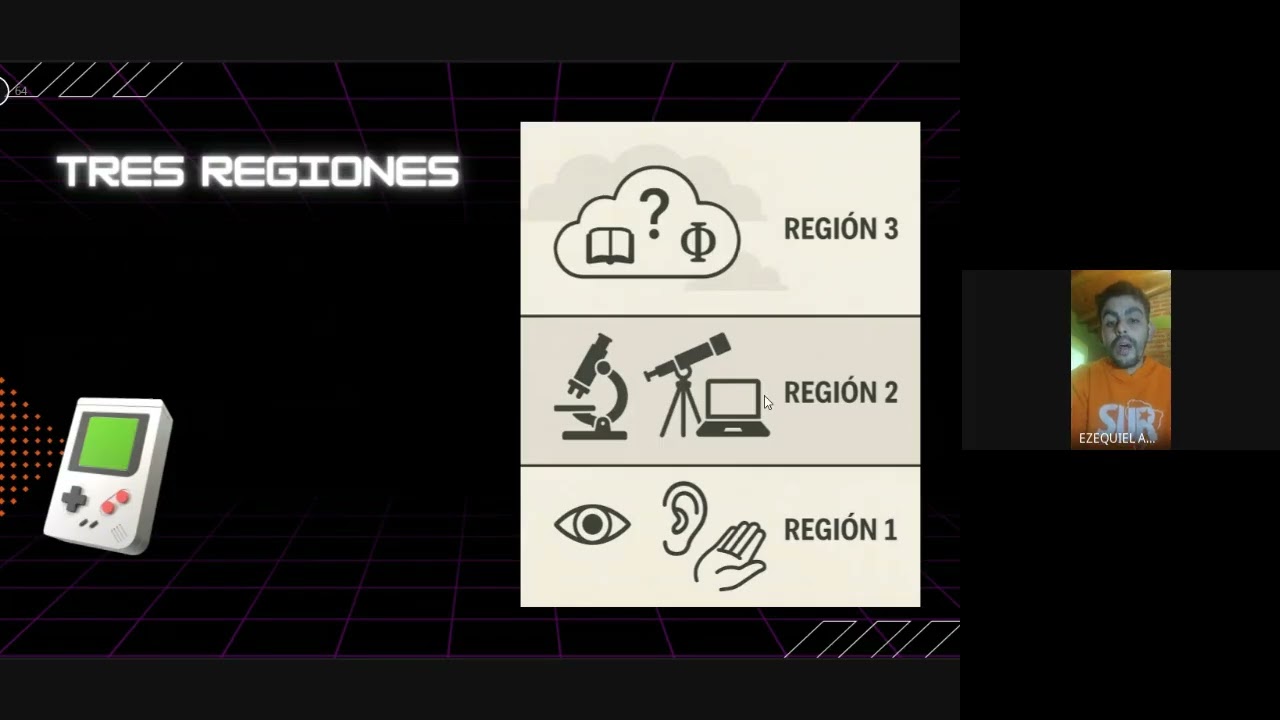
- Introduction to the three regions of knowledge: region 1 (senses), region 2 (instruments), region 3 (ideas).
- Explanation of positivism: only region 1 is valid, based on senses and logic.
- Discussion of realism: accepts all three regions, with controlled imagination and indirect experimentation.
- Example of the enologist to illustrate how knowledge can expand perception within region 1.
- Explanation of 'regularity experienced' in positivism, linked to behaviorism.
- Discussion of the role of analogies and models in accessing region 3.
- Example of plate tectonics to illustrate how scientific theories are constructed.
- Wrap-up and reminder of the simulation exam.
Cited Sources
- Harré, R. (chapters 2 and 3) — The video is based on these chapters, but no specific edition or URL is provided.
Concurring Sources
- Harré, R. (chapters 2 and 3) — The video's content aligns with the text, but no external sources are cited.
Contribution & Novelties
The video offers a structured and accessible summary of Harré’s epistemology, particularly the three regions and the positivism-realism debate. It is valuable for students as a study aid, but it does not present original research or novel interpretations. The presenter’s examples and explanations help clarify difficult concepts.
Pour aller plus loin :
- Positivism — Overview of positivism, its history, and criticisms.
- Scientific realism — Discussion of realism in science, including its main arguments.
- Rom Harré — Biography and contributions of the philosopher.
82 words
Radar Profile
The radar profile shows balanced scores across all dimensions, with slightly lower technical depth. This indicates a solid introductory overview suitable for students, but not an advanced or critical analysis.
💬 No comments were provided for analysis.