Grupo de Estudio - Episte Catedra A -PARTE 2-
Keywords
Summary
152 words
Critical Evaluation
Value of the Information & Strength of the Argument
The video provides a clear and structured explanation of Harré’s concepts, making complex epistemological ideas accessible. The argumentation is solid, as the presenter systematically contrasts positivist and realist approaches, using concrete examples from psychology and other sciences. The discussion of models and their role in scientific explanation is particularly valuable, as it clarifies how scientists use idealizations to understand unobservable phenomena. The presenter also highlights the importance of community validation, which strengthens the scientific rigor of the content.
Scientific Rigor, Source Quality, Title Accuracy
The video is based on Harré’s chapter, but no specific editions or page numbers are cited. The presenter references other authors like Freud and Pasteur, but without detailed citations. The title accurately reflects the content, which is a study group session on epistemology. The video does not include formal sources or references, but it is pedagogically sound and aligns with the course material. The lack of explicit citations reduces its scientific rigor, but the content is consistent with established epistemological theories.
174 words
Title / Content Match
The title accurately reflects the content, which is the second part of a study group session on epistemology.
Quality & Reliability
7/10
The video is a study group session led by a teaching assistant, providing a structured review of epistemological concepts from Harré's chapter. It is informative and pedagogically oriented, but lacks formal citations and rigorous verification of sources.
Key Moments
Markers derived by PSI from the transcript: the creator did not define chapters.
- Introduction and welcome, mention of university funding issue.
- Start of the main topic: explanation in science according to Harré.
- Critique of positivist explanation: correlation and causality.
- Introduction of models as a way to go beyond observable phenomena.
- Distinction between analytical and explanatory models.
- Discussion on disciplined imagination and community validation.
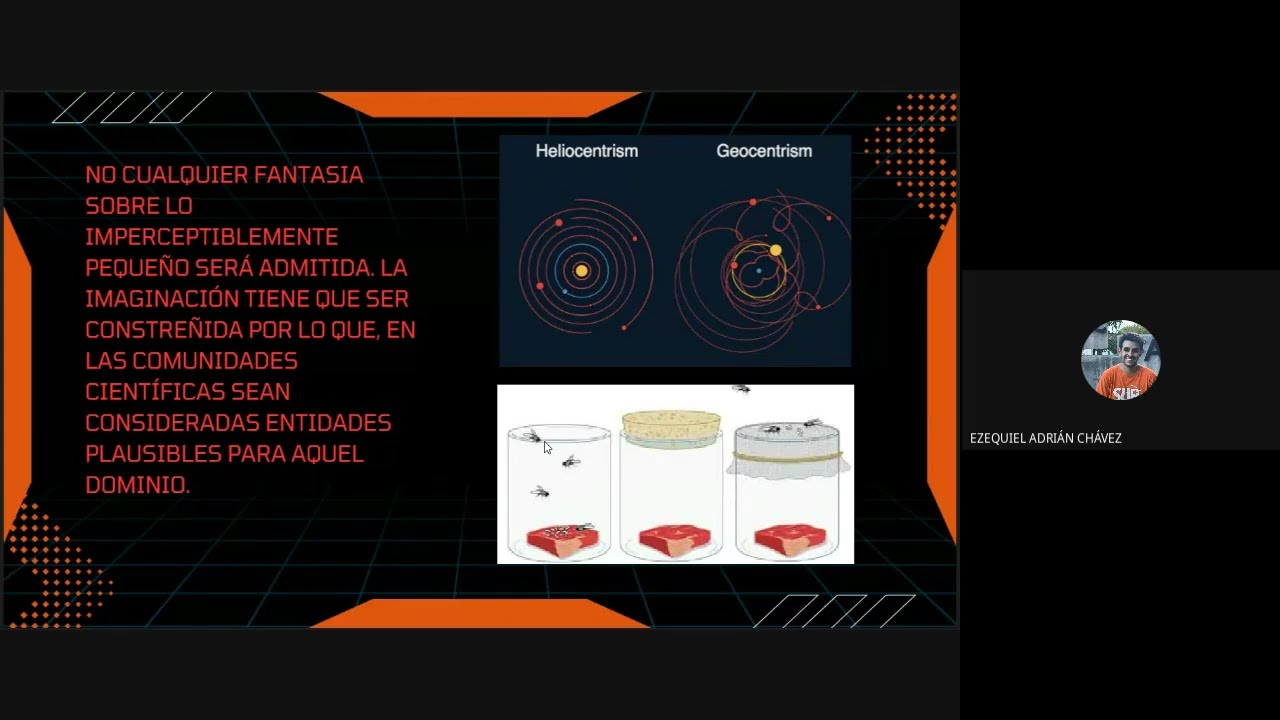
- Examples of failed models: geocentrism, spontaneous generation, phrenology.
- Application to psychology: Freud's evolving theories and pseudoscientific explanations.
- Q&A and interactive discussion with participants.
- Conclusion and study tips for the exam.
Cited Sources
- Harré, R. (Chapter 3, Section 2) — Main text being discussed, focusing on explanation in science.
Concurring Sources
- Harré, R. (Chapter 3, Section 2) — The video directly follows Harré's text, which is the primary source.
Contribution & Novelties
The video offers a pedagogical synthesis of Harré’s ideas, making them accessible to psychology students. It provides concrete examples and connects epistemological concepts to psychological practice. The interactive format encourages active learning.
Pour aller plus loin :
- Scientific realism — Overview of scientific realism, relevant to Harré’s position.
- Model-based science — Discussion of models in science, directly related to the video’s focus.
- Positivism — Background on positivism, which Harré critiques.
70 words
Radar Profile
The radar profile shows high scores in information quantity and quality, with moderate technical level and reliability. This indicates a well-structured educational content that is accessible but not deeply technical, and relies on the presenter's interpretation rather than formal citations.
💬 No comments were provided for analysis.