Grupo de Estudio Técnicas Psicométricas B 📚
Keywords
Summary
251 words
Critical Evaluation
Value of the Information & Strength of the Argument
The video provides a comprehensive and well-structured review of psychometric concepts, making it valuable for students preparing for exams. The presenter effectively explains complex topics such as measurement levels, test classification, and validity evidence, using clear examples and analogies. The argumentation is solid, as she consistently ties concepts back to the course material and emphasizes key points. However, the presentation is largely based on the presenter’s interpretation and lacks formal citations, which limits its scientific rigor. The interactive format allows for clarification of doubts, enhancing understanding.
Scientific Rigor, Source Quality, Title Accuracy
The video demonstrates a good understanding of psychometric principles, but it does not cite specific sources or references, relying instead on general knowledge and course content. The title accurately reflects the content, as it is a study group session on psychometric techniques. The session is well-organized, covering major topics systematically. However, the lack of explicit citations and the informal nature of the presentation reduce its scientific rigor. The presenter does mention some tests and theories by name, but without providing references. The video is suitable for students seeking a review, but not for those requiring in-depth academic sources.
199 words
Title / Content Match
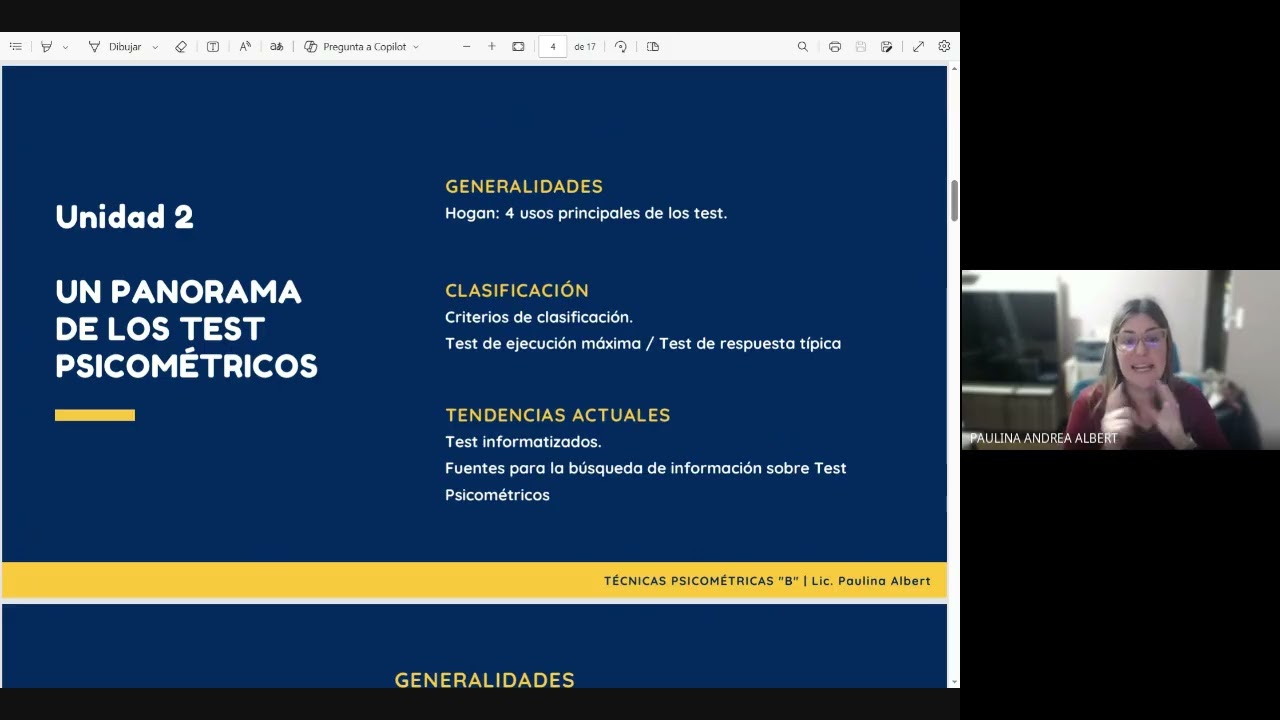
The title accurately reflects the content, as it is a study group session on psychometric techniques.
Quality & Reliability
7/10
The video is a study group session led by a psychology student, providing a structured review of psychometric techniques. It covers key concepts accurately, but lacks formal citations and is based on the presenter's interpretation of course material.
Key Moments
Markers derived by PSI from the transcript: the creator did not define chapters.
- Introduction and overview of the study group session.
- Explanation of measurement in psychology and levels of measurement.
- Discussion of problems in psychological measurement.
- Definition and classification of psychometric tests.
- Overview of maximum performance tests (intelligence, aptitudes, neuropsychological).
- Overview of typical response tests (personality, attitudes, self-efficacy, interests).
- Introduction to validity and its importance.
- Detailed explanation of validity evidence based on content and internal structure.
- Discussion of other validity evidence and summary of recommended tests.
Contribution & Novelties
The video provides a structured and accessible review of psychometric techniques, specifically tailored to the course curriculum. It synthesizes key concepts and highlights important tests, making it a useful study resource. The interactive format allows for clarification of doubts, which is beneficial for students. However, it does not present original research or new findings.
Pour aller plus loin :
- Psychometrics — Overview of the field.
- Validity (statistics) — Explanation of validity in measurement.
- Reliability (statistics) — Explanation of reliability in measurement.
- Wechsler Adult Intelligence Scale — Details on the WAIS.
- Big Five personality traits — Theory behind NEO-PI-R.
98 words
Radar Profile
The radar chart shows high scores in quantity of information and moderate scores in quality, technical level, and reliability. This indicates that the video provides a substantial amount of information, but its technical depth and reliability are moderate, likely due to the informal study group format and lack of formal citations.