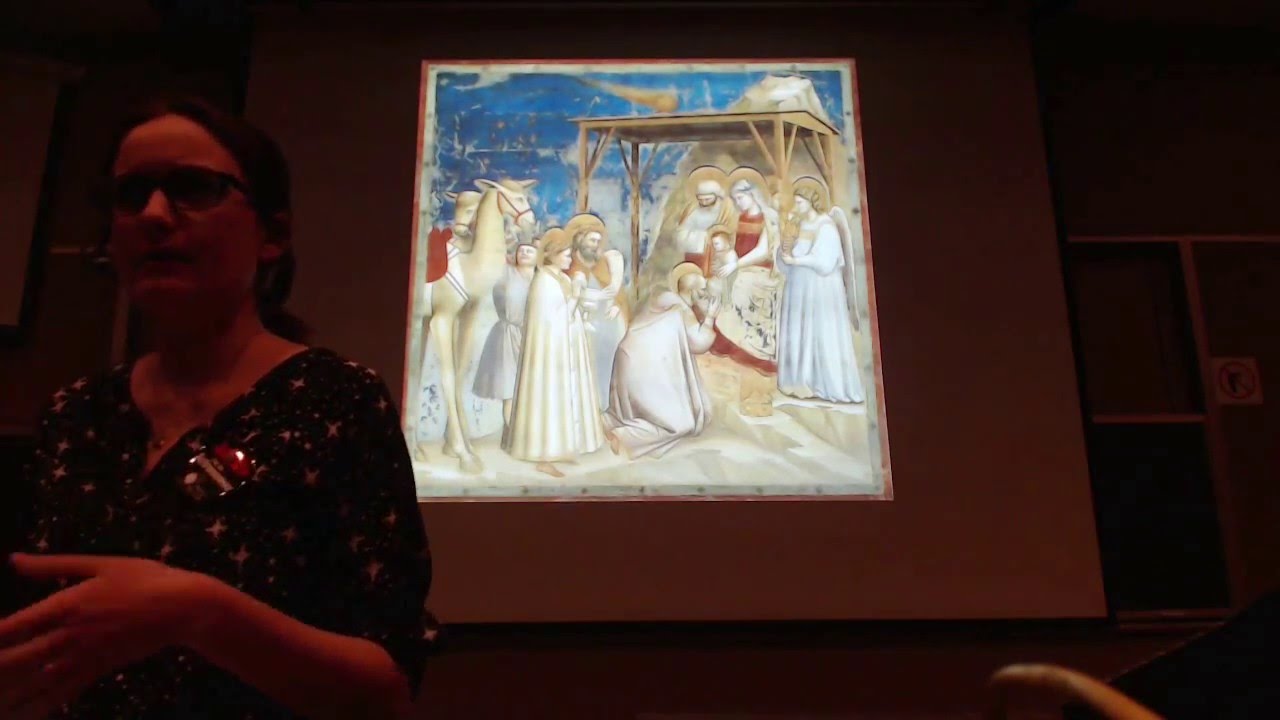
AstroMcGill Public Astro Night: Comets, From Harbingers of Doom to the Scientific Revolution
Keywords
Summary
160 words
Critical Evaluation
Value of the Information & Strength of the Argument
The talk provides a valuable historical narrative that connects the study of comets to the development of modern physics. The argumentation is solid, as it follows a logical progression from ancient superstitions to the scientific revolution, using specific examples and historical figures. The speaker effectively explains complex concepts like parallax and orbital mechanics in an accessible manner. The inclusion of primary sources, such as Tycho Brahe’s notes and Halley’s table, adds credibility. The talk also highlights the importance of the scientific method and the role of collaboration and publication in advancing knowledge.
Scientific Rigor, Source Quality, Title Accuracy
The talk demonstrates scientific rigor by relying on well-documented historical events and established scientific principles. The speaker cites specific historical records, such as Chinese astronomical observations and the Bayeux Tapestry, and accurately describes the contributions of key figures like Tycho Brahe, Kepler, Newton, and Halley. The sources are appropriate for a public lecture and are presented without distortion. The title accurately reflects the content, which focuses on the historical shift in understanding comets from omens to scientific objects. The talk does not include any commercial or promotional content.
195 words
Title / Content Match
The title accurately reflects the content, which focuses on the historical shift in understanding comets from omens to scientific objects, culminating in the work of Newton and Halley.
Quality & Reliability
8/10
The talk is based on well-established historical facts and scientific principles, presented by an expert (Dr. Kelly Lepo). The content aligns with current scientific understanding, and the historical narrative is accurate. Minor simplifications for a public audience do not compromise the overall reliability.
Key Moments
Markers derived by PSI from the transcript: the creator did not define chapters.
- Introduction to the night sky and the historical significance of comets as omens.
- Discussion of ancient Chinese records of comets and the first observation that comet tails point away from the Sun.
- Aristotle's cosmology and the medieval view of comets as bad omens, with examples from the Bayeux Tapestry and folk rhymes.
- Tycho Brahe's parallax observations of the 1577 comet, proving it was farther than the Moon.
- Kepler's laws of planetary motion and his view that comets travel in straight lines.
- The 1680 comet and its observation by Edmond Halley, leading to his consultation with Isaac Newton.
- Newton's work on gravity, the publication of the Principia, and the concept of orbits illustrated by Newton's cannon.
- Halley's prediction of the comet's return in 1758, its confirmation, and the validation of Newton's theory.
Cited Sources
- AstroMcGill Public Astro Night: Comets, From Harbingers of Doom to the Scientific Revolution — The video itself, which contains the talk and its description.
Concurring Sources
- Halley's Comet - Wikipedia — Confirms the historical observations and Halley's prediction.
- Tycho Brahe - Wikipedia — Supports the account of Tycho Brahe's parallax observations and his contributions.
Contribution & Novelties
The talk provides a comprehensive historical overview of comets, emphasizing their role in the scientific revolution. It effectively connects the work of Newton and Halley to the development of modern physics. The narrative is engaging and accessible, making it a valuable resource for science communication.
Pour aller plus loin :
- Halley’s Comet - Wikipedia — Provides detailed information on the comet’s history and orbital characteristics.
- Newton’s cannonball - Wikipedia — Explains the thought experiment used to illustrate orbital motion.
- Rosetta (spacecraft) - Wikipedia — Details the recent mission that studied a comet, providing insights into the solar system’s formation.
99 words
Radar Profile
The radar profile shows high scores in information quantity, quality, and reliability, with a moderate technical level. This indicates a well-balanced talk that is both informative and accessible, suitable for a general audience interested in astronomy and history.