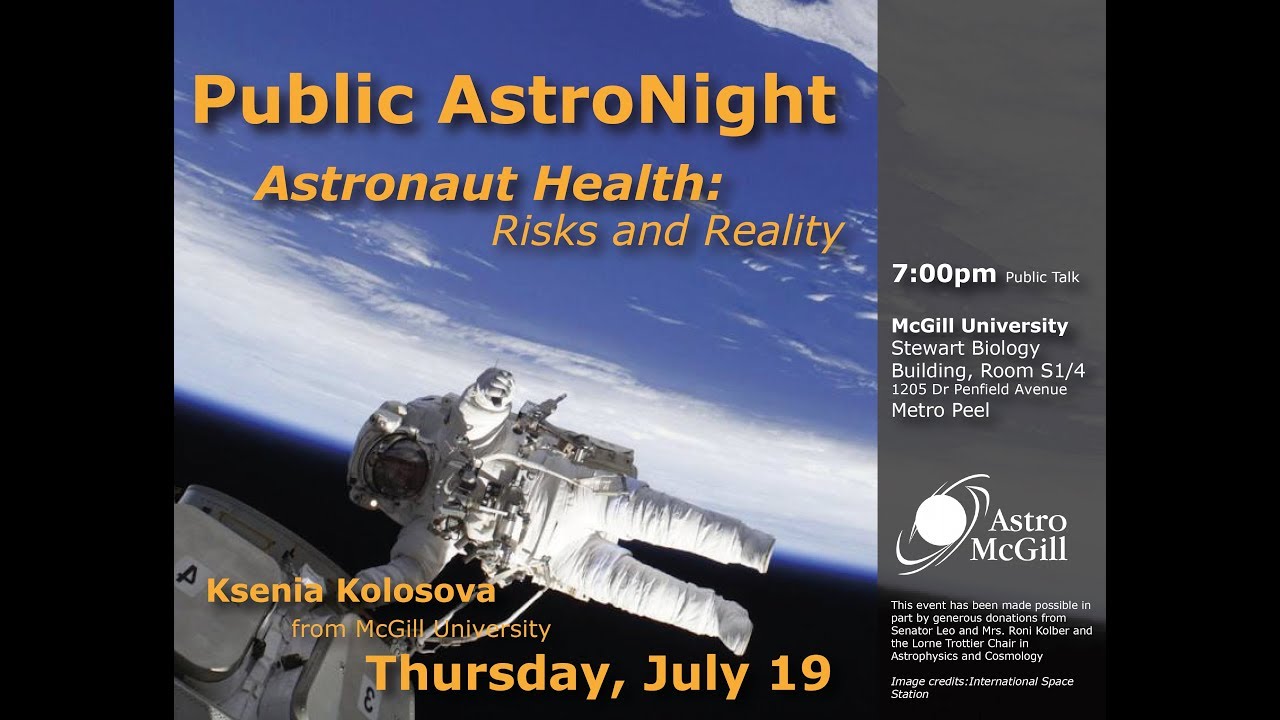
AstroNight: Astronaut Health: Risks and Reality
Keywords
Summary
158 words
Critical Evaluation
Value of the Information & Strength of the Argument
The talk provides a comprehensive overview of space medicine, covering both physiological and psychological aspects. The speaker effectively uses case studies to illustrate real-world scenarios, which enhances the practical value. The argumentation is logical, moving from basic survival needs to specific health risks and then to case-based applications. However, the talk lacks depth in some areas, such as the mechanisms of radiation damage, and relies on general knowledge rather than presenting novel research. The interactive format with audience questions adds value, but the lack of specific data and citations weakens the scientific rigor.
Scientific Rigor, Source Quality, Title Accuracy
The talk is scientifically sound, based on established knowledge in space medicine. The speaker references NASA systems and known physiological effects, but does not cite specific studies or sources. The title accurately reflects the content, which is a broad overview of astronaut health risks. The description provides a link to the AstroMcGill website, which may contain further resources, but no specific references are given. The talk is suitable for a general audience and does not delve into technical details, which may limit its scientific depth.
193 words
Title / Content Match
The title accurately reflects the content, which covers health risks and realities of space travel.
Quality & Reliability
7/10
The talk is based on established space medicine knowledge, referencing NASA systems and known physiological effects. However, it lacks explicit citations and detailed data, and the audio issues may affect completeness.
Key Moments
Markers derived by PSI from the transcript: the creator did not define chapters.
- Introduction and overview of talk topics
- Audio begins; discussion of basic survival requirements
- Oxygen generation and air circulation on ISS
- Water and food provisions in space
- Microgravity effects: fluid shifts and vision problems
- Radiation risks and dosimetry
- Case study: cancer survivor for long-duration mission
- Toxins and microbes in spacecraft
- Noise and hearing protection
- Case study: carbon monoxide poisoning on ISS
- Cardiovascular and musculoskeletal effects
- Psychological challenges and case study
- Carbon dioxide pocket case and conclusion
Cited Sources
- AstroMcGill Website — Mentioned in the video description as a source for more information about the lecture series.
Concurring Sources
- NASA Human Research Program — Aligns with the talk's coverage of space health risks and ongoing research.
Contribution & Novelties
The talk provides a broad, accessible overview of space medicine, synthesizing known risks and presenting case-based scenarios. It highlights the importance of considering individual health history in astronaut selection and the challenges of long-duration missions. The interactive format engages the audience in decision-making, which is valuable for education.
Pour aller plus loin :
- NASA Human Research Program — Official NASA resource on space health research.
- Visual Impairment and Intracranial Pressure (VIIP) Syndrome — NASA page on VIIP, a key condition discussed.
- Space Medicine Association — Professional organization for space medicine.
- Microgravity and Bone Loss — NASA research on bone density loss in microgravity.
103 words
Radar Profile
The radar profile shows balanced scores across information quantity, quality, technical level, and reliability, with a slight emphasis on quality and reliability. This indicates a well-rounded presentation suitable for a general audience, with a solid foundation in established science.