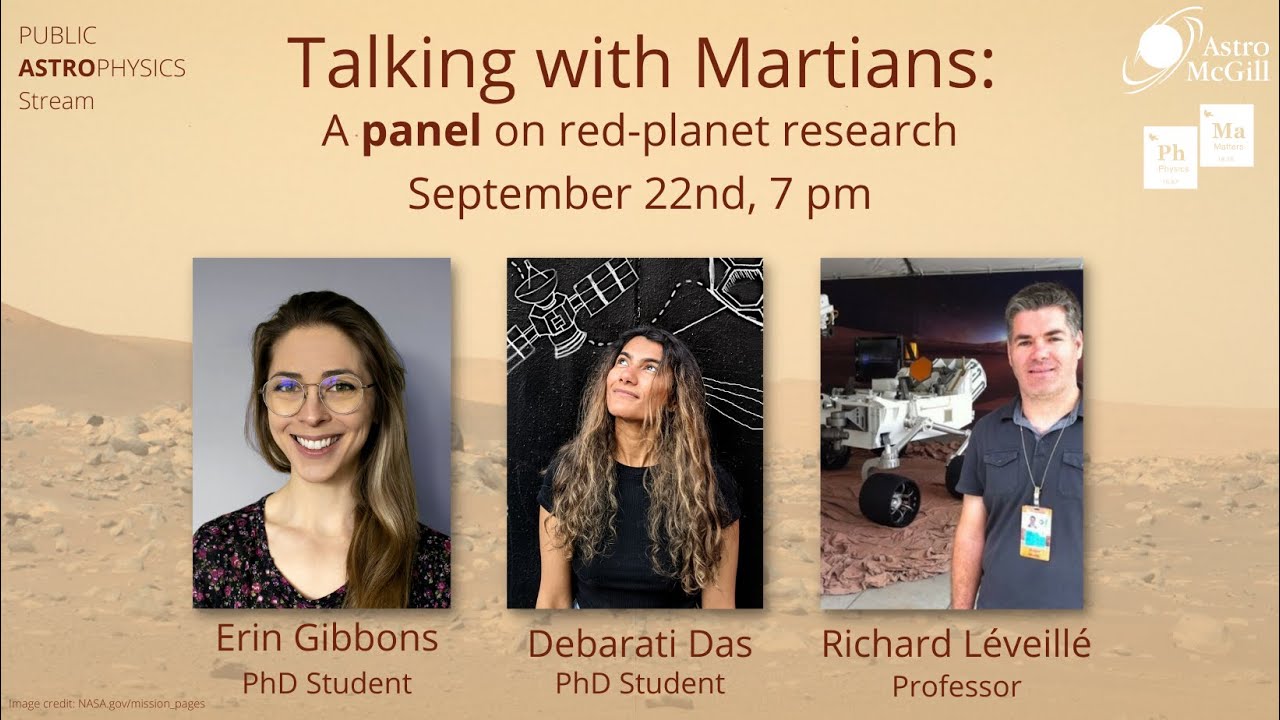
Talking With Martians: A Panel on Red Planet Research
Keywords
Summary
159 words
Critical Evaluation
Value of the Information & Strength of the Argument
The value of the information is high for a general audience, as it provides an accessible overview of current Mars research, including the scientific goals of the Perseverance and Curiosity missions. The panelists present their own research and mission experiences, lending credibility. The argumentation is solid but not deeply technical; they explain concepts like boron as a water proxy and biosignatures in a simplified manner. The panel format allows for multiple perspectives, and the Q&A section addresses audience questions, enhancing the interactive value. However, the depth is limited by the outreach nature, and some claims are presented without detailed evidence.
Scientific Rigor, Source Quality, Title Accuracy
The scientific rigor is adequate for a public lecture. The panelists are active researchers with direct involvement in NASA missions, so their statements are based on their own work and mission data. However, they do not cite specific publications or external sources, relying on their expertise. The title accurately reflects the content. The description provides links to the AstroMcGill website and a feedback form, but no direct scientific references. The discussion is consistent with current scientific understanding of Mars, but simplified for a general audience.
200 words
Title / Content Match
The title accurately reflects the content: a panel discussion on Mars research with three experts.
Quality & Reliability
7/10
The panel features three researchers from McGill University with direct involvement in NASA Mars missions (Curiosity, Perseverance). They present their own research and mission operations, providing credible first-hand insights. However, the format is a public outreach event, so technical depth is limited and some claims are simplified. No external sources are cited beyond the panelists' own work.
Key Moments
Markers derived by PSI from the transcript: the creator did not define chapters.
- Introduction of panelists and event structure.
- Devarati Das presents her research on boron in Gale Crater using ChemCam.
- Erin Gibbons discusses astrobiology and her work with the BASALT project.
- Erin Gibbons explains the Perseverance mission and Jezero Crater.
- Richard Léveillé talks about the collaborative nature of planetary exploration and biosignatures.
- Q&A session begins, covering topics like sample return and life on Mars.
Cited Sources
- AstroMcGill Website — Mentioned in the description as a resource for more information about the group.
- Feedback Form — Provided in the description for audience feedback.
Concurring Sources
- NASA Mars Exploration — Official NASA Mars mission information, consistent with the panel's discussion.
Contribution & Novelties
The panel provides a unique opportunity to hear from early-career researchers directly involved in current Mars missions, offering personal insights into the scientific process and mission operations. The discussion highlights the importance of Earth analogs and the collaborative nature of planetary exploration. The novelty lies in the combination of perspectives from different mission teams and the emphasis on the search for life.
Pour aller plus loin :
- Mars Science Laboratory (Curiosity) — Overview of the Curiosity rover mission.
- Perseverance (rover) — Details on the Perseverance mission and its objectives.
- Biosignature — Concept of biosignatures and their detection.
- Jezero (crater) — Information on the landing site of Perseverance.
- Laser-induced breakdown spectroscopy — Technique used by ChemCam and SuperCam.
117 words
Radar Profile
The radar profile shows a balanced performance across all dimensions, with slightly higher scores in information quantity and reliability, reflecting the panel's credible content and moderate technical depth. The lower technical score indicates the content is accessible to a general audience.
💬 No comments were provided for analysis.