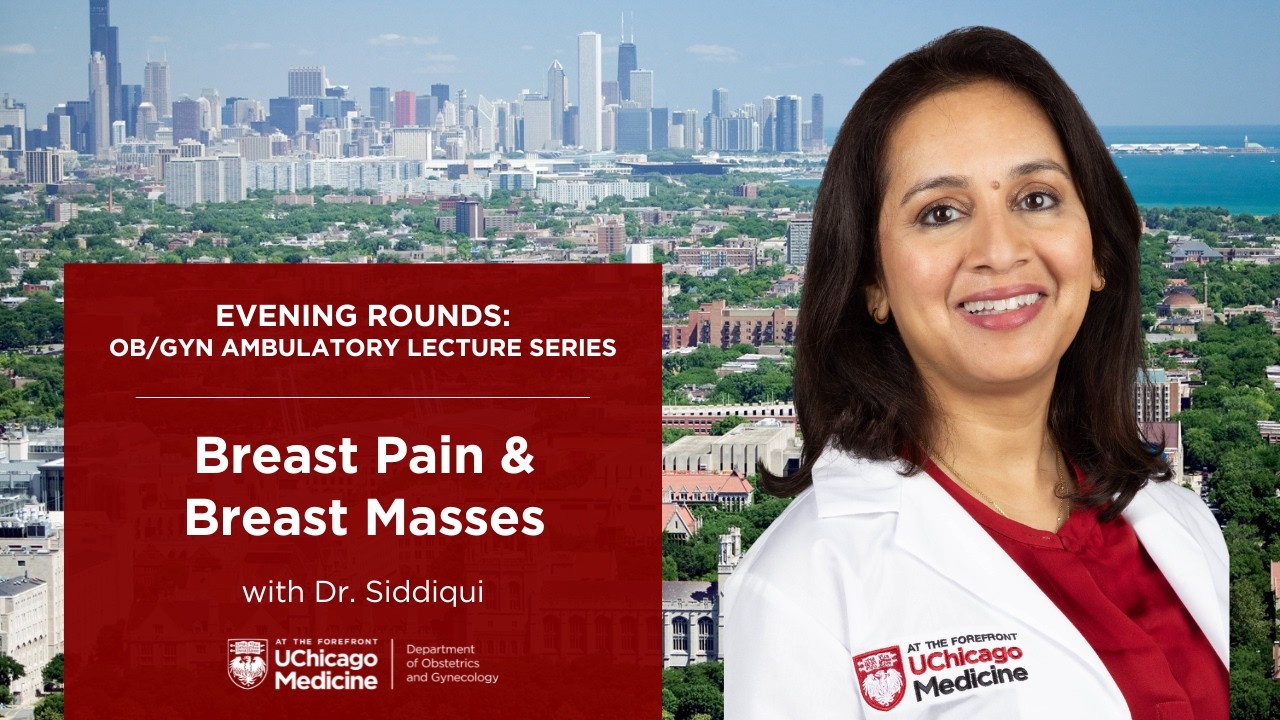
Breast Pain & Breast Masses, Dr. Maryam Siddiqui | Evening Rounds: Ambulatory Lecture Series
Keywords
Summary
136 words
Critical Evaluation
Value of the Information & Strength of the Argument
The video provides valuable clinical information on a common complaint, offering a structured approach to evaluation. The argumentation is based on clinical experience and established guidelines, with a clear emphasis on red flags and appropriate workup. The inclusion of a UK study adds evidence-based support for the management of breast pain. However, the presentation is largely anecdotal and lacks detailed citations to specific studies or guidelines, which limits its scientific rigor. The speaker effectively communicates the importance of a team-based approach and patient education.
93 words
Title / Content Match
The title accurately reflects the content, which focuses on breast pain and breast masses in an ambulatory setting.
Quality & Reliability
8/10
The lecture is delivered by a section chief in OB/GYN, based on clinical expertise and established guidelines. It includes references to a UK study and standard diagnostic approaches. However, it lacks explicit citations to recent literature or guidelines, and the presentation is primarily anecdotal and experience-based.
Key Moments
Markers derived by PSI from the transcript: the creator did not define chapters.
- Introduction and learning objectives
- Motivating patient cases
- Red flag symptoms and physical exam findings
- Benign breast masses and triple assessment
- Breast pain: cyclical vs non-cyclical
- Extra-mammary causes of breast pain
- UK study on breast pain and cancer risk
- Treatment approach to breast pain
- Breast density overview and risk assessment
Cited Sources
- UK study on breast pain and cancer risk — Referenced in the lecture as a study of nearly 11,000 patients with breast pain alone, showing a cancer rate of 0.4%.
Concurring Sources
- ACOG Practice Bulletin on Breast Masses — Aligns with the triple assessment and management recommendations.
Dissenting Sources
- Breast pain as a presenting symptom of cancer — While the lecture cites a low cancer rate for isolated breast pain, some case reports suggest rare presentations, but these are not systematically documented.
Contribution & Novelties
The video provides a practical, team-based approach to evaluating breast complaints, emphasizing timely care and patient communication. It offers a comprehensive overview of breast pain causes and management, with a focus on reassurance and appropriate escalation.
Pour aller plus loin :
- Breast pain (mastalgia) - UpToDate — Comprehensive clinical review.
- Breast mass evaluation - American Family Physician — Evidence-based approach.
- Breast cancer risk assessment tools - National Cancer Institute — Overview of risk models.
74 words
Radar Profile
The radar profile shows high scores in quantity and quality of information, with moderate technical level and high reliability. This indicates a well-rounded educational content, strong on clinical relevance but with room for deeper technical detail.
💬 No comments were provided for analysis.