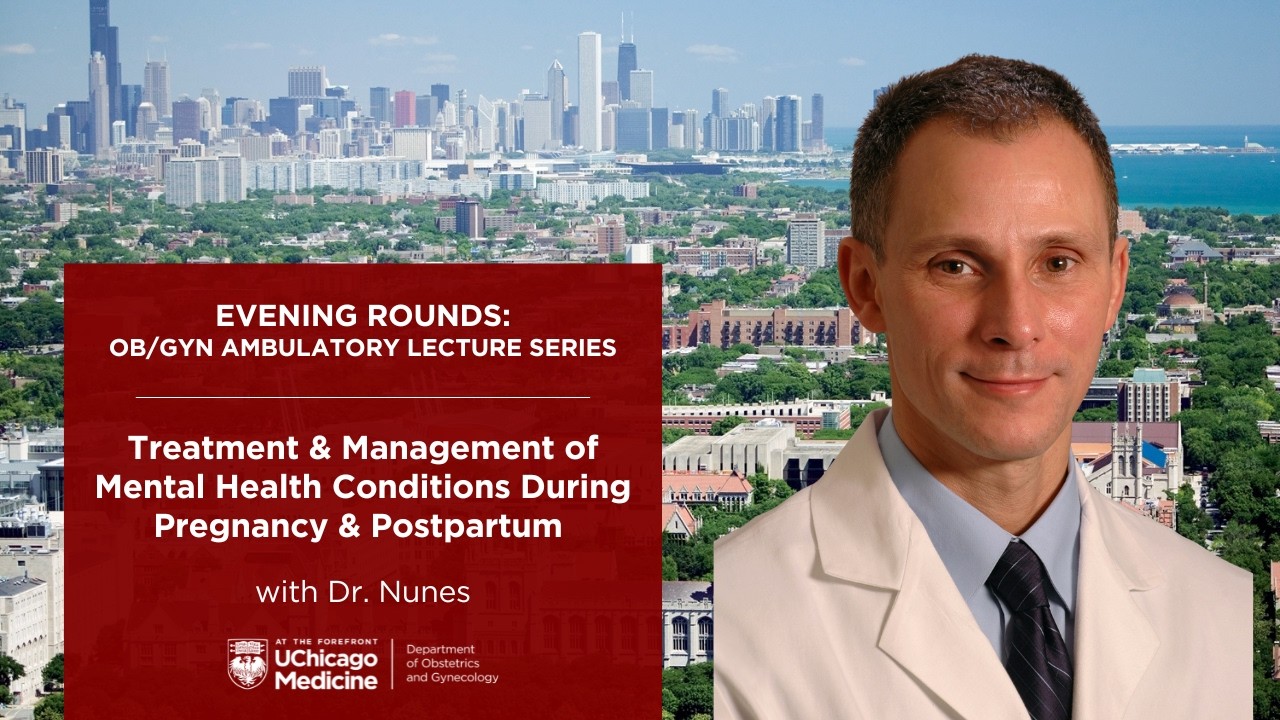
Treatment & Management of Mental Health Conditions - Pregnancy & Postpartum | Evening Rounds
Keywords
Summary
214 words
Critical Evaluation
Value of the Information & Strength of the Argument
The presentation offers valuable clinical information for OB/GYN providers, with a strong emphasis on evidence-based practices and ACOG guidelines. Dr. Nunes effectively argues for the importance of treating mental health conditions during pregnancy, weighing the risks of medication against the risks of untreated illness. He provides specific data, such as the 23% prevalence of underlying bipolar disorder in women screening positive for depression, and explains the rationale behind medication choices. The argumentation is solid, though it relies primarily on clinical experience and guidelines rather than citing specific studies.
Scientific Rigor, Source Quality, Title Accuracy
The presentation demonstrates scientific rigor by adhering to ACOG and SMFM recommendations and referencing validated screening tools. However, it does not provide direct citations to specific studies, instead relying on general knowledge and guidelines. The title accurately reflects the content, and the speaker’s credentials add credibility. The session is well-structured, with clear objectives and a logical flow from background to screening to treatment.
166 words
Title / Content Match
The title accurately reflects the content, which focuses on treatment and management of mental health conditions during pregnancy and postpartum.
Quality & Reliability
8/10
The presentation is by a senior physician at a reputable academic institution, follows ACOG guidelines, and includes specific data and clinical recommendations. However, it is a lecture without peer-reviewed citations or detailed evidence for all claims.
Key Moments
Markers derived by PSI from the transcript: the creator did not define chapters.
- Introduction and objectives of the talk
- Prevalence of perinatal mental health conditions
- Discussion of depression symptoms and definition
- Anxiety disorders in pregnancy and postpartum
- Bipolar disorder screening and importance of MDQ
- Postpartum psychosis and case example of Andrea Yates
- ACOG recommendations for treatment and medication management
- Screening tools: EPDS vs PHQ-9 and transition plans
- Risks of untreated depression and anxiety vs medication risks
- Lactation considerations and team-based care
Cited Sources
- ACOG Practice Bulletin on Mental Health — Referenced as the basis for treatment recommendations
- SMFM (Society for Maternal-Fetal Medicine) — Mentioned regarding fetal echocardiogram recommendations
Concurring Sources
- ACOG Practice Bulletin — The talk aligns with ACOG recommendations on screening and treatment.
Contribution & Novelties
The talk provides a comprehensive overview of perinatal mental health management, with practical insights for OB/GYN providers. It emphasizes the importance of screening for bipolar disorder and discusses the transition to PHQ-9 for depression screening. The discussion of medication risks and benefits is nuanced, offering clear guidance for counseling patients.
Pour aller plus loin :
- Edinburgh Postnatal Depression Scale (EPDS) — A validated screening tool for perinatal depression.
- Patient Health Questionnaire (PHQ-9) — A widely used depression screening instrument.
- Mood Disorder Questionnaire (MDQ) — A screening tool for bipolar disorder.
- ACOG Practice Bulletin on Psychiatric Disorders in Pregnancy — Official guidelines from the American College of Obstetricians and Gynecologists.
109 words
Radar Profile
The radar profile shows high scores in information quantity, quality, and reliability, with a slightly lower technical level, indicating a well-balanced presentation suitable for a clinical audience.