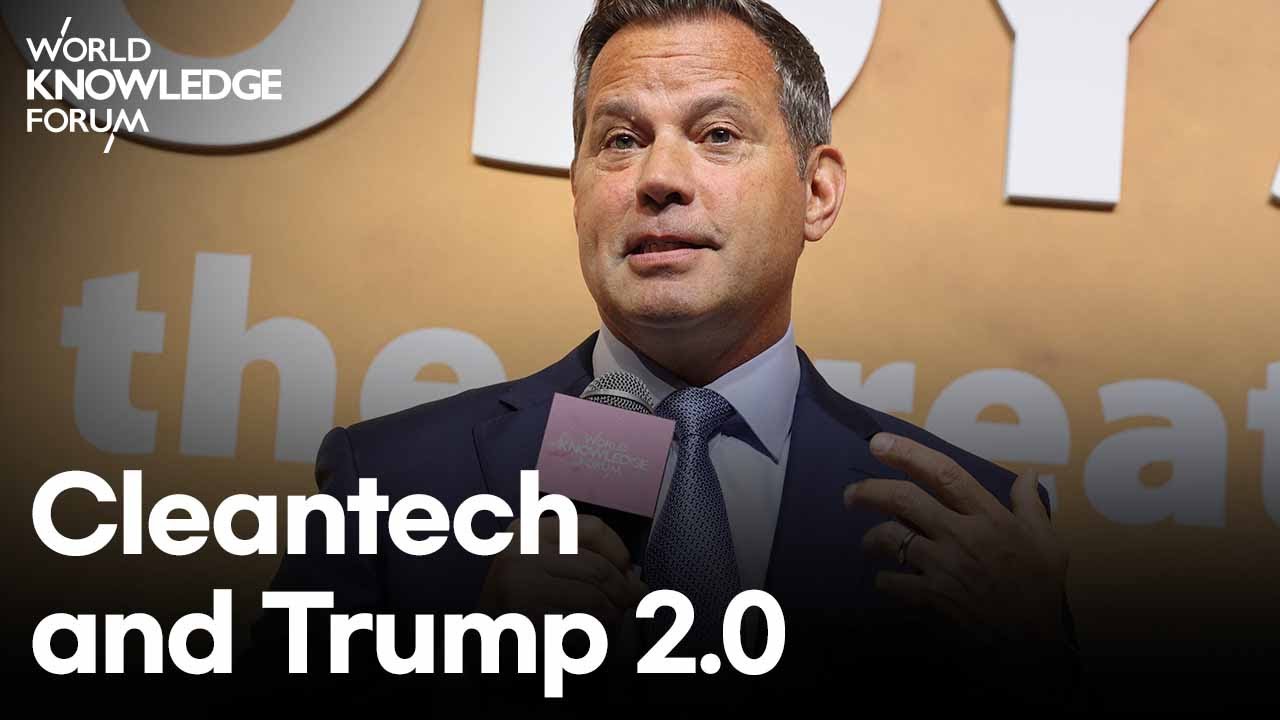
Clean Tech in the Trump 2.0 Era│Mike Boots, Samuel Morillon and KIM Sungwoo
Keywords
Summary
158 words
Critical Evaluation
The session provides a valuable, expert-level overview of the clean tech landscape under the Trump administration. Mike Boots, with his background at Breakthrough Energy, offers credible insights into investment dynamics, citing specific figures from the Clean Investment Monitor and noting the $18 billion in cancelled solar and wind projects. His framing of the innovation ecosystem as a puzzle of technology, capital, and policy is insightful and helps structure the discussion. The analysis of tailwinds and headwinds is nuanced, acknowledging that while the administration is hostile to traditional renewables, tax credits for emerging technologies like nuclear and geothermal remain intact, and that energy demand from AI is driving investment in these areas. Samuel Morillon’s corporate perspective adds practical considerations, such as the importance of speed to market and the green premium. However, the discussion lacks rigorous citation of sources; many claims are presented without specific references, which limits the ability to verify them. The panel format also means that some points are not deeply explored, and the conversation occasionally veers into generalities. The title accurately reflects the content, and the session is well-structured. Overall, the information is reliable and offers a balanced view, but it would benefit from more concrete data and references to primary sources. The audience questions, if any, are not included, so the analysis is based solely on the panelists’ remarks.
223 words
Title / Content Match
The title accurately reflects the session's focus on the impact of the Trump administration on clean technology, with the three speakers addressing the topic from investment and corporate perspectives.
Quality & Reliability
7/10
The discussion features two industry experts with substantial experience in clean energy investment and corporate strategy. They provide concrete data points (e.g., $277 billion in US clean energy investment, $18 billion in cancelled solar/wind projects) and nuanced analysis of policy impacts. However, the format is a panel discussion without formal citations or peer-reviewed sources, and some claims lack specific references. The information is generally reliable but should be corroborated with primary sources.
Key Moments
Markers derived by PSI from the transcript: the creator did not define chapters.
- Introduction by moderator KIM Sungwoo, setting the context of climate change and the impact of the Trump administration on clean tech.
- Mike Boots begins his presentation, outlining the three factors of the clean energy innovation ecosystem: technology, capital, and policy.
- Boots discusses investment trends, citing $277 billion in US clean energy investment and $18 billion in cancelled solar and wind projects.
- Boots identifies four key factors: energy demand, electricity prices, domestic politics, and international geopolitics.
- Boots explains the surge in energy demand from AI and data centers, and the interest in nuclear and geothermal from tech companies.
- Boots discusses the affordability and non-cost barriers to projects, and the domestic political nuances with tax credits remaining intact.
- Boots concludes with advice on navigating uncertainty, emphasizing market readiness, speed to market, and the green premium.
- Samuel Morillon provides his corporate perspective, focusing on business realities and the need for speed to market.
Cited Sources
- Clean Investment Monitor — Cited by Mike Boots as a source for US clean energy investment figures.
- Breakthrough Energy — Mentioned as the organization founded by Bill Gates where Mike Boots previously worked.
- International Energy Agency (IEA) — Referenced by the moderator for data on clean energy investment and climate targets.
Concurring Sources
- Clean Investment Monitor — Provides data on US clean energy investment that aligns with the figures mentioned in the session.
- International Energy Agency (IEA) — Global energy statistics and reports that support the discussion on clean energy investment and climate targets.
Contribution & Novelties
The session provides a timely expert analysis of the clean tech sector under the Trump administration, highlighting the nuanced policy landscape where some tax credits remain intact while others are rolled back. It offers a balanced view of investment trends, noting the continued growth of clean energy investment despite political headwinds, and emphasizes the role of energy demand from AI in driving investment in nuclear and geothermal. The discussion also underscores the importance of speed to market and the green premium in commercializing emerging technologies.
Pour aller plus loin :
- Clean Investment Monitor — Official source for US clean energy investment data.
- Breakthrough Energy — Organization focused on clean technology innovation and investment.
- International Energy Agency (IEA) — Provides global energy data and analysis, including clean energy investment trends.
129 words
Radar Profile
The radar profile shows a balanced performance across all dimensions, with slightly higher scores in information quantity and reliability, reflecting the expert panel's provision of concrete data and nuanced analysis. The technical level is moderate, suitable for a general audience, while the overall quality is solid, indicating a valuable discussion for those interested in clean tech policy and investment.
💬 No comments were provided for analysis.