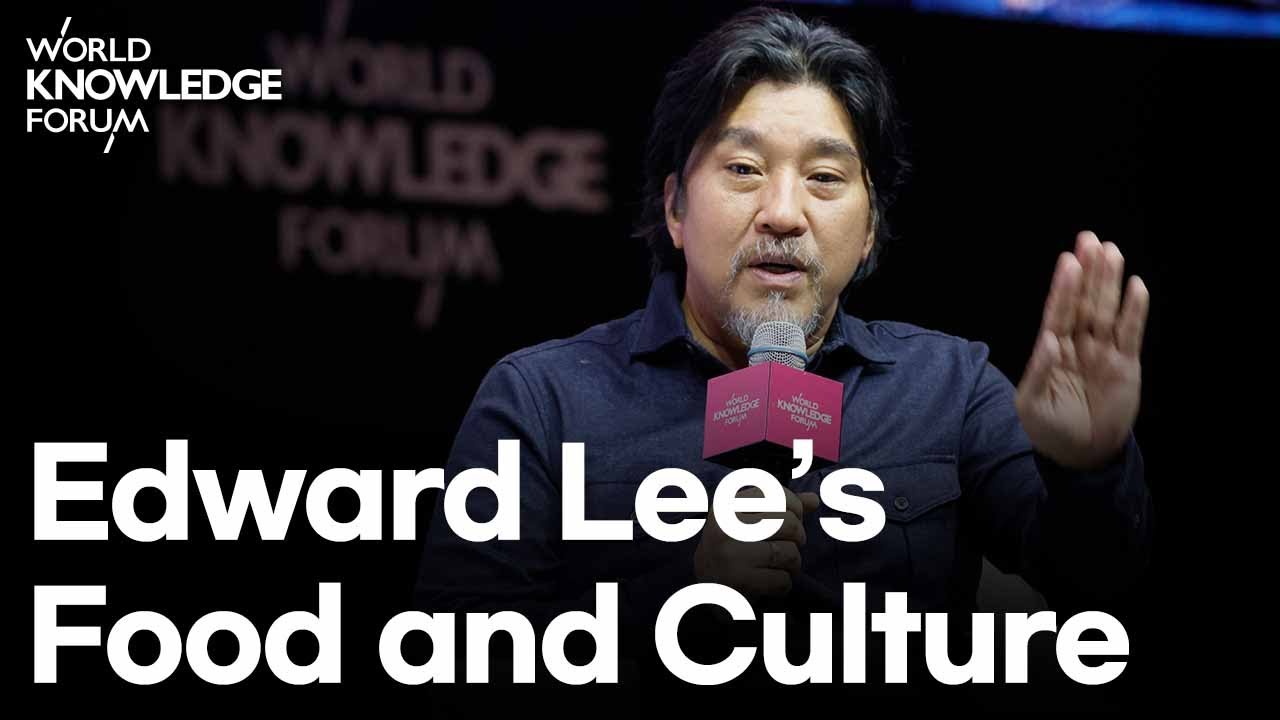
Edward Lee’s Food and Culture
Keywords
Summary
164 words
Critical Evaluation
The video provides a valuable and authentic perspective on food as a cultural bridge, delivered by a chef with significant experience and recognition. Edward Lee’s narrative is compelling and rich with personal anecdotes that illustrate the complexities of cultural identity and culinary fusion. His insights into Korean cuisine, particularly the emphasis on subtlety and care, offer a nuanced understanding that goes beyond common stereotypes. The discussion is well-structured, with the interviewer guiding the conversation through Lee’s biography and current projects, which adds depth to the narrative.
From a scientific standpoint, the content is primarily anecdotal and subjective, lacking empirical data or systematic analysis. However, as an expert opinion, it holds value in its experiential knowledge and cultural observations. Lee’s arguments about the emotional dimension of Korean food are persuasive but not backed by research, which limits the scientific rigor. The sources cited are his own books and restaurants, which are credible within the culinary field but not academic.
The adéquation between title and content is strong, as the talk directly addresses food and culture. The title is broad but accurately reflects the scope of the discussion. The video does not include any promotional segments, so there is no conflict of interest.
Overall, the video is a high-quality cultural discussion that offers unique insights, but it is not a scientific study. It would be most valuable to audiences interested in culinary arts, cultural studies, and personal narratives. The lack of verifiable data is a limitation, but the authenticity of the speaker’s experience compensates to some extent. The note of 4 out of 5 reflects the excellent content quality and relevance, despite the absence of scientific rigor.
275 words
Title / Content Match
The title accurately reflects the content, which focuses on Edward Lee's culinary philosophy and cultural experiences.
Quality & Reliability
7/10
The content is a personal narrative and expert opinion from a renowned chef, providing authentic insights into cultural identity and cuisine. However, it lacks verifiable scientific data and relies on anecdotal evidence, which limits its scientific reliability.
Key Moments
Markers derived by PSI from the transcript: the creator did not define chapters.
- Introduction of Chef Edward Lee and the theme of food as a cultural bridge.
- Lee discusses his multicultural identity and the concept of being a 'pibbeum ingan'.
- Exploration of Korean cuisine's emotional and caring nature, and the difference between traditional and authentic.
- Lee talks about his restaurant Shia in Washington D.C. and his mission to introduce lesser-known Korean flavors to Americans.
- Personal stories about his grandmother's influence and his father's initial disapproval of his culinary career.
- Discussion on his move to Kentucky and how it deepened his connection to Korean cuisine.
- Reflections on his books, including 'Buttermilk Graffiti,' and his role as a cultural ambassador.
Cited Sources
- Buttermilk Graffiti — Lee's book that won the James Beard Award for best book in writing in 2019, referenced as a source of his culinary philosophy.
Concurring Sources
- Buttermilk Graffiti — Lee's book, which aligns with his views on food as a cultural bridge.
Contribution & Novelties
This video offers a unique personal perspective on the intersection of food and cultural identity, particularly focusing on the Korean-American experience. Lee’s insights into the emotional and caring aspects of Korean cuisine, as well as his critique of the narrow perception of Korean food in America, provide a fresh angle not commonly discussed in mainstream media. His emphasis on temple cuisine and lesser-known flavors adds depth to the understanding of Korean culinary diversity.
Pour aller plus loin :
- Food and Cultural Identity — This concept explores how food shapes and reflects cultural identity, directly relevant to Lee’s discussion.
- Korean temple cuisine — A specific example of the subtle and vegetarian cuisine Lee mentions, offering a deeper look into this culinary tradition.
- James Beard Foundation Award — The award Lee received for his book, providing context on its significance in the culinary world.
142 words
Radar Profile
The radar profile shows high scores in quality of information and global reliability, reflecting the authentic and expert nature of the content. However, the quantity of information and technical level are lower, indicating a focus on personal narrative rather than comprehensive or technical data.