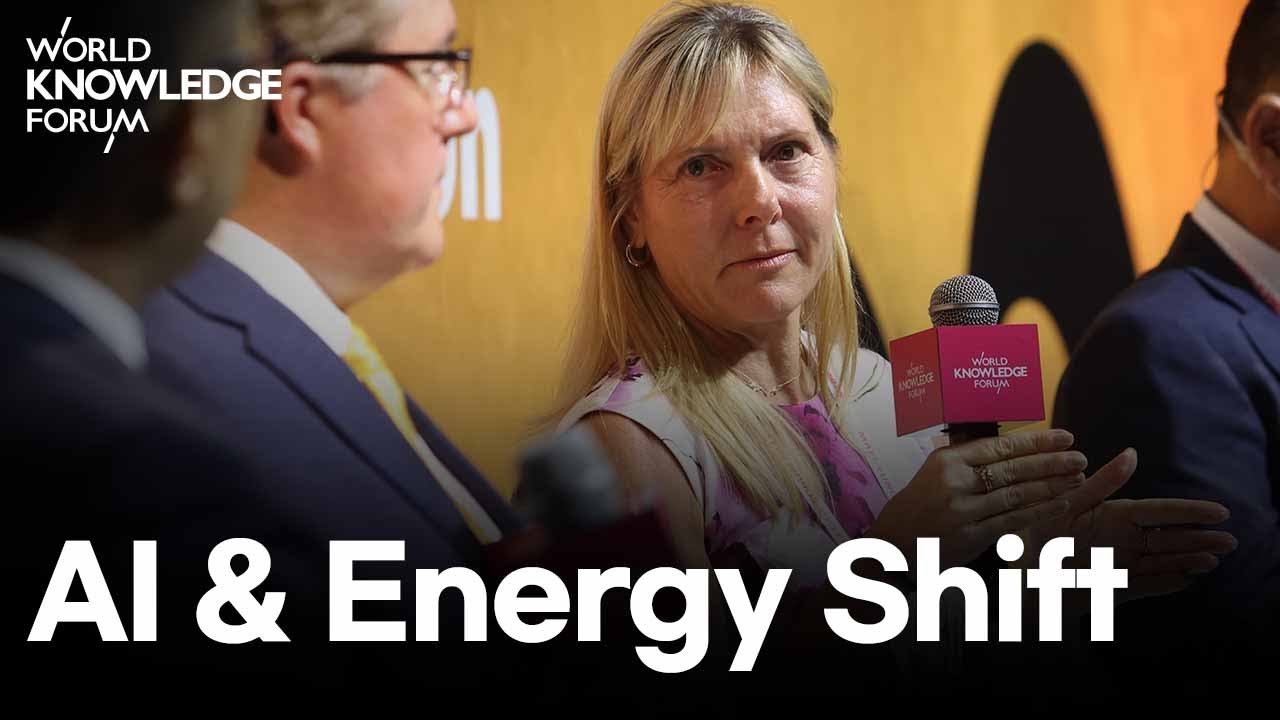
AI & Energy Shift: Opportunities in the U.S. Nuclear Market
Keywords
Summary
187 words
Critical Evaluation
The panel provides a valuable, expert-level overview of the current U.S. nuclear market landscape in the context of AI-driven energy demand. The discussion is grounded in real-world experience, with Robert Denite offering concrete details on PSEG’s operations, including power uprates and license renewals, and the challenges of new builds in deregulated markets. Inshik Park effectively highlights the strategic importance of recent executive orders and Korea’s competitive advantages, though his remarks are somewhat general and lack specific data. Bridget Pash’s financial perspective is insightful, emphasizing the need for predictable cash flows and the role of PPAs, but she does not delve into specific financial instruments or case studies. The argumentation is coherent and balanced, acknowledging both opportunities and risks. However, the discussion is largely qualitative, with few quantitative data points or citations to specific reports or studies. The sources cited are primarily the panelists’ own expertise and the mentioned executive orders, but no specific documents are referenced. The title accurately reflects the content, and the panel stays on topic. Overall, the video is a useful resource for understanding the strategic and practical considerations in the U.S. nuclear market, but it would benefit from more detailed data and references to enhance its scientific rigor.
202 words
Title / Content Match
The title accurately reflects the content, which focuses on the intersection of AI-driven energy demand and nuclear market opportunities in the U.S.
Quality & Reliability
7/10
Panel of experts from utility, finance, and nuclear technology sectors provides practical insights, but lacks detailed data citations and is a recorded discussion rather than a peer-reviewed source.
Key Moments
Markers derived by PSI from the transcript: the creator did not define chapters.
- Introduction by moderator June P., setting the stage for the panel on AI and energy shift.
- Robert Denite discusses the 40% rise in U.S. energy demand and the challenges of new nuclear builds.
- Robert Denite explains the differences between regulated and deregulated markets and the risks for utilities.
- Robert Denite talks about the importance of existing nuclear fleet and license renewals.
- Inshik Park discusses the impact of U.S. executive orders on nuclear energy and opportunities for Korea.
- Bridget Pash provides insights on financing nuclear projects and the role of PPAs.
- Panelists discuss the potential of SMRs and the need for partnerships.
- Discussion on U.S.-Korea collaboration and the future of nuclear energy.
Cited Sources
- Executive Orders on Nuclear Energy (mentioned) — Inshik Park references recent U.S. executive orders on nuclear energy as a key policy driver.
Concurring Sources
- IAEA on Small Modular Reactors — Supports the discussion on SMRs as an emerging technology.
- U.S. Energy Information Administration (EIA) on Nuclear Power — Provides data on U.S. nuclear capacity and generation, aligning with the panel's discussion on existing fleet.
Dissenting Sources
- Union of Concerned Scientists on Nuclear Power
Contribution & Novelties
The panel provides a unique multi-stakeholder perspective (utility, finance, technology) on the U.S. nuclear market’s response to AI-driven energy demand. It highlights the practical challenges of financing and building new nuclear plants, and the strategic role of international partnerships, particularly with Korea. The discussion offers insights into the evolving policy landscape and the potential of SMRs, though it does not introduce novel technical concepts.
Pour aller plus loin :
- Small Modular Reactors (SMRs) — IAEA overview of SMR technology and deployment.
- U.S. Nuclear Regulatory Commission (NRC) Licensing — Official information on licensing new reactors in the U.S.
- Nuclear Power in the United States — EIA data on U.S. nuclear industry and trends.
112 words
Radar Profile
The radar profile shows a balanced performance across all dimensions, with slightly higher scores in quality and reliability, reflecting the expert panel's credibility. The lower score in technical depth suggests the discussion remains accessible to a general audience.
💬 No comments were provided for analysis.