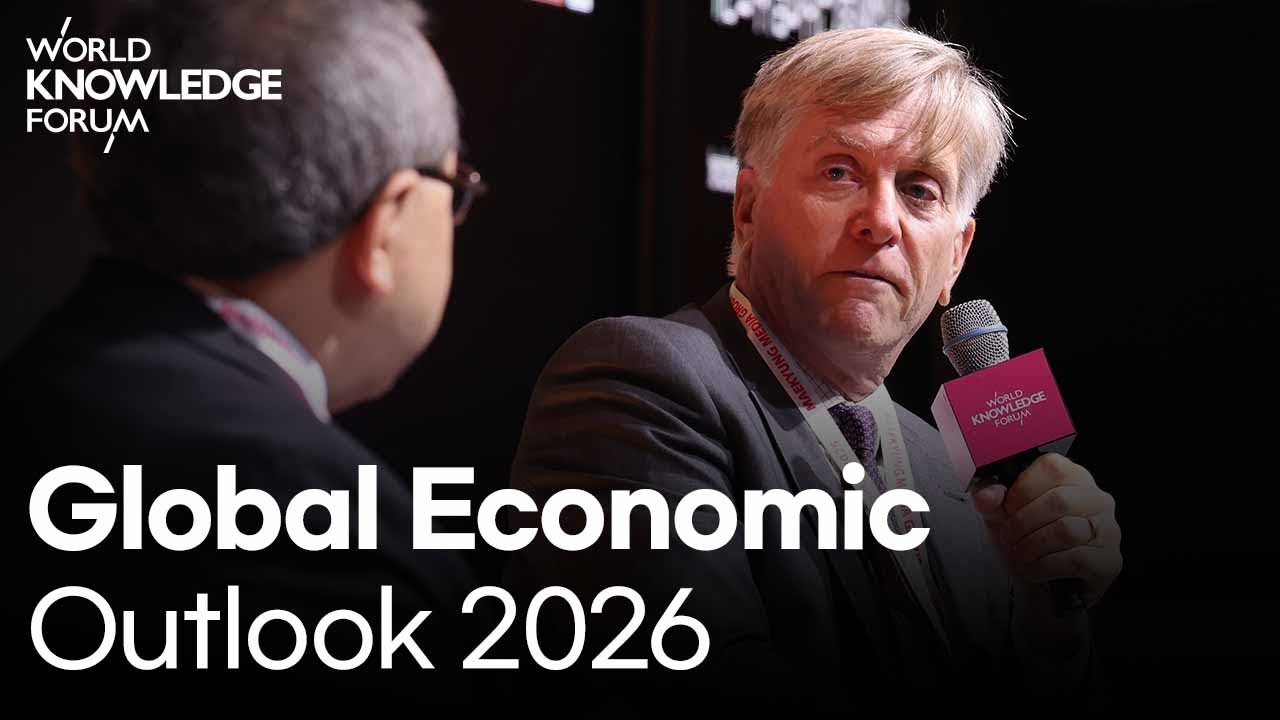
Global Economic Outlook 2026│Torsten Sløk, Larry Hatheway, William Lee
Keywords
Summary
192 words
Critical Evaluation
The video provides a high-quality, expert-level analysis of the global economic outlook for 2026. The panelists are well-respected economists with deep experience in financial markets, lending credibility to their views. Torsten Sløk’s presentation is particularly data-rich, referencing specific economic indicators such as non-farm payrolls, inflation forecasts, and capital flow data. He clearly articulates the key headwinds (tariffs, immigration restrictions, student loan payments) and tailwinds (high stock prices, Fed cuts) affecting the US economy, and his argument for a stagflationary environment is logically presented. The discussion is balanced, with William Lee offering a counterpoint on the relative closedness of the US economy, and the panelists acknowledge uncertainties and risks. However, the analysis is primarily opinion-based and lacks detailed citations to original research or data sources. While Sløk references consensus forecasts from Bloomberg, he does not provide specific sources for his claims. The discussion is also US-centric, with limited depth on global implications, despite the title suggesting a global outlook. The panel’s investment advice, while sensible, is generic and not accompanied by specific data or backtesting. Overall, the video is informative and insightful, but it is more of an expert opinion panel than a rigorous scientific analysis. The adéquation between title and content is good, as the video does cover the global economic outlook, though the focus is heavily on the US. The video includes a brief sponsorship segment, but it does not detract from the content.
235 words
Title / Content Match
The title accurately reflects the content: a panel discussion on the global economic outlook for 2026, featuring the three named economists.
Quality & Reliability
8/10
The video features three prominent economists (Torsten Sløk, Larry Hatheway, William Lee) with extensive experience in global markets. They present data-driven analysis, referencing specific indicators (non-farm payrolls, inflation forecasts, capital flows) and discuss consensus forecasts. The discussion is balanced, acknowledging uncertainties and risks. However, it is primarily opinion-based and lacks detailed citations to original research, and the format is a panel discussion rather than a peer-reviewed analysis.
Key Moments
Markers derived by PSI from the transcript: the creator did not define chapters.
- Introduction by William Lee outlining the three main topics: tariffs, interest rates/asset prices, and capital markets.
- Torsten Sløk begins his presentation, identifying headwinds: tariffs, immigration restrictions, and student loan payments.
- Sløk discusses tailwinds and concludes that headwinds are stronger, expecting a slowdown but not a recession.
- Sløk analyzes foreign purchases of US assets, noting a shift from Treasuries to equities in June.
- Sløk highlights the fiscal situation and treasury issuance, warning of structural risks.
- Sløk presents consensus forecasts: 30% recession probability, GDP slowdown, and rising inflation, leading to stagflation.
- Sløk advises investors to focus on quality in debt and equity in a stagflationary environment.
- William Lee pushes back on stagflation concerns, noting the US is a relatively closed economy.
- Panel discussion on the impact of tariffs on globalization and implications for Asia.
- Discussion on capital markets, the shift towards private markets, and investment strategies.
Cited Sources
- Apollo Global Management — Torsten Sløk is the Chief Economist at Apollo, and his analysis reflects the firm's views.
- Bloomberg — Sløk references consensus forecasts from Bloomberg for GDP, inflation, and recession probability.
Concurring Sources
- IMF World Economic Outlook — The IMF's forecasts often align with the consensus view of slowing growth and elevated inflation risks.
- OECD Economic Outlook — The OECD provides global economic forecasts that are consistent with the panel's expectations of moderate growth.
Dissenting Sources
Contribution & Novelties
The video provides a timely and expert synthesis of the economic outlook for 2026, integrating analysis of tariffs, immigration policy, and fiscal risks. It offers a clear framework for understanding the stagflationary risks facing the US economy and provides practical investment advice. The discussion also touches on the structural shift in capital markets towards private assets, which is a relevant topic for investors.
Pour aller plus loin :
- Stagflation — A key concept discussed in the video, explaining the combination of stagnation and inflation.
- Tariffs and Trade War — The video discusses the impact of tariffs on the economy; this page provides background on tariff theory and effects.
- Federal Reserve — The video references Fed policy; this is the official site for monetary policy information.
125 words
Radar Profile
The radar profile shows high scores in quantity and quality of information, reflecting the depth of expert analysis. The technical level is moderately high, suitable for a professional audience. The overall reliability is strong due to the credibility of the speakers, though the lack of detailed citations slightly reduces the score.
💬 Sur les 0 commentaires analysés, aucune tendance n'est disponible.