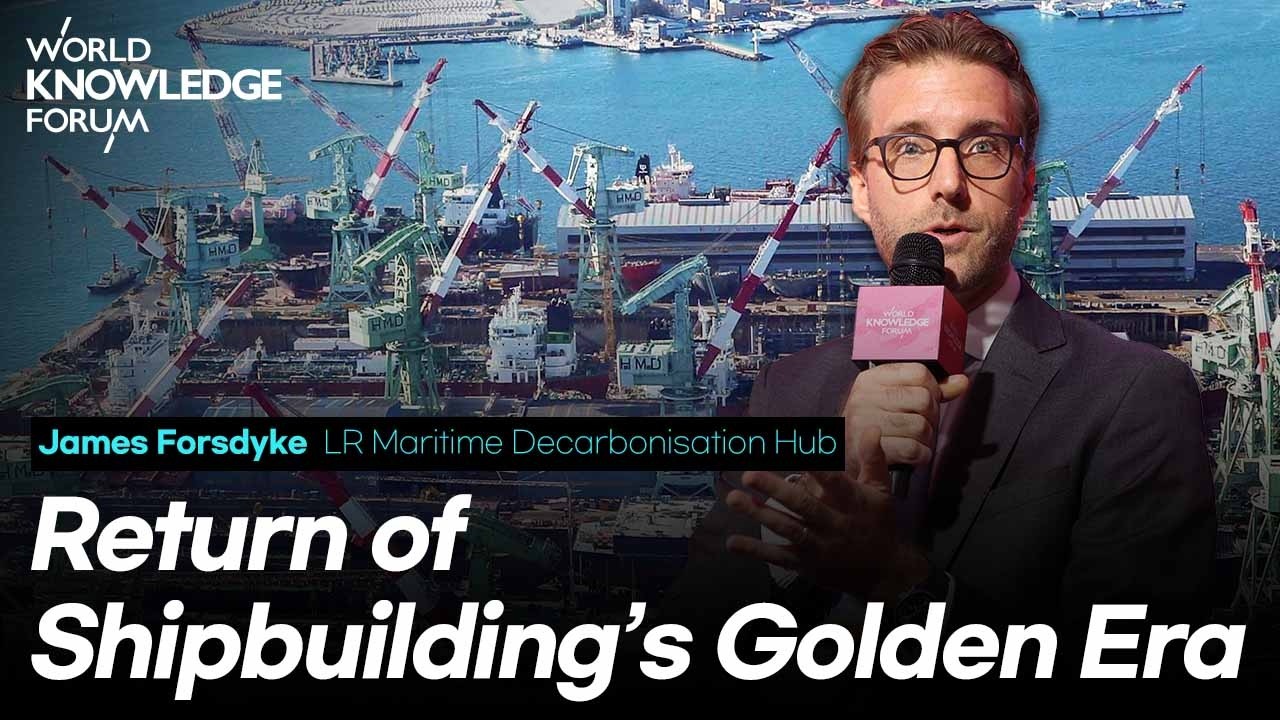
Return of Shipbuilding’s Golden Era
Keywords
Summary
178 words
Critical Evaluation
The video presents a high-level expert panel discussion on the current shipbuilding boom, focusing on decarbonization, geopolitics, and technology. The panelists bring substantial industry experience, lending credibility to their insights. Denny Jeene’s analysis of value drivers is well-structured, though it remains largely conceptual without concrete examples or data. James Forsteike provides a more detailed account of the regulatory landscape, specifically the IMO’s carbon pricing mechanism and the dynamics of alternative fuel adoption, including the methanol order boom and bust. His point about the mismatch between maritime fuel demand and energy sector investment is particularly insightful, highlighting a critical barrier to decarbonization. However, the discussion lacks rigorous sourcing; specific figures (e.g., number of green corridors, financing gaps) are mentioned without citations. The geopolitical segment is truncated, with a panelist making an unsubstantiated claim about crude oil lasting 200 years, which is not adequately challenged. The title accurately reflects the content, and the discussion is relevant and timely. Overall, the video offers valuable expert perspectives but would benefit from more evidence-based support and deeper exploration of certain topics.
176 words
Title / Content Match
The title accurately reflects the content, which discusses the current boom in shipbuilding and its drivers, including decarbonization and geopolitics.
Quality & Reliability
7/10
The panel consists of industry experts (partner at Alvarez & Marsal, managing director at Lloyd's Register Maritime Decarbonisation Hub) providing informed opinions and data. However, the discussion is largely qualitative, with some specific figures (e.g., 200 methanol vessels, 50-100 ammonia vessels by 2030, $55-83 billion financing gap) but lacks detailed citations or verifiable sources. The content is credible but not rigorously sourced.
Key Moments
Markers derived by PSI from the transcript: the creator did not define chapters.
- Introduction by moderator Mean O, setting the stage for the panel on shipbuilding's golden era.
- Denny Jeene begins his presentation, outlining historical shipbuilding cycles and introducing three value drivers: geopolitics, green transition, and technology.
- Denny Jeene discusses the financing gap and the need for blended finance, emphasizing shipyards as value integrators.
- James Forsteike starts his segment, introducing the concepts of policy/regulation and industry sentiment driving decarbonization demand.
- James Forsteike explains the 2024 methanol order boom and subsequent slowdown due to supply issues, citing Maersk's example.
- James Forsteike details the IMO's upcoming carbon pricing regulation and its potential to mandate fleet replacement.
- James Forsteike highlights the challenge of aggregating fuel demand, using ammonia as an example, and calls for cross-sector collaboration.
- Moderator shifts to geopolitics, but a panelist interjects with a comment about crude oil lasting 200 years, leading to a brief exchange.
- Discussion on US re-entry into shipbuilding and China's subsidies begins but is cut short due to time constraints.
Cited Sources
- Lloyd's Register Maritime Decarbonisation Hub — James Forsteike is managing director of this hub, which works on decarbonization pathways for shipping.
- Alvarez & Marsal — Denny Jeene is a partner at this global professional services firm, bringing expertise in shipbuilding and finance.
Concurring Sources
- Lloyd's Register Maritime Decarbonisation Hub — The hub's work aligns with the discussion on decarbonization pathways and alternative fuels.
Contribution & Novelties
The video provides a timely expert perspective on the current shipbuilding boom, emphasizing the shift from volume-driven cycles to value-driven ones, with decarbonization and geopolitics as key drivers. It highlights the critical financing gap for infrastructure and the need for cross-sector collaboration to align fuel demand with energy investment.
Pour aller plus loin :
- IMO greenhouse gas regulations — Official information on the IMO’s strategy to reduce GHG emissions from ships.
- Green shipping corridors — Overview of green shipping corridor initiatives worldwide.
- Ammonia as a marine fuel — Overview of ammonia’s potential as a zero-carbon fuel for shipping.
98 words
Radar Profile
The radar profile shows balanced scores across information quantity, quality, technical level, and reliability, indicating a well-rounded but not exceptional presentation. The video offers solid expert insights but lacks deep technical detail and rigorous sourcing.