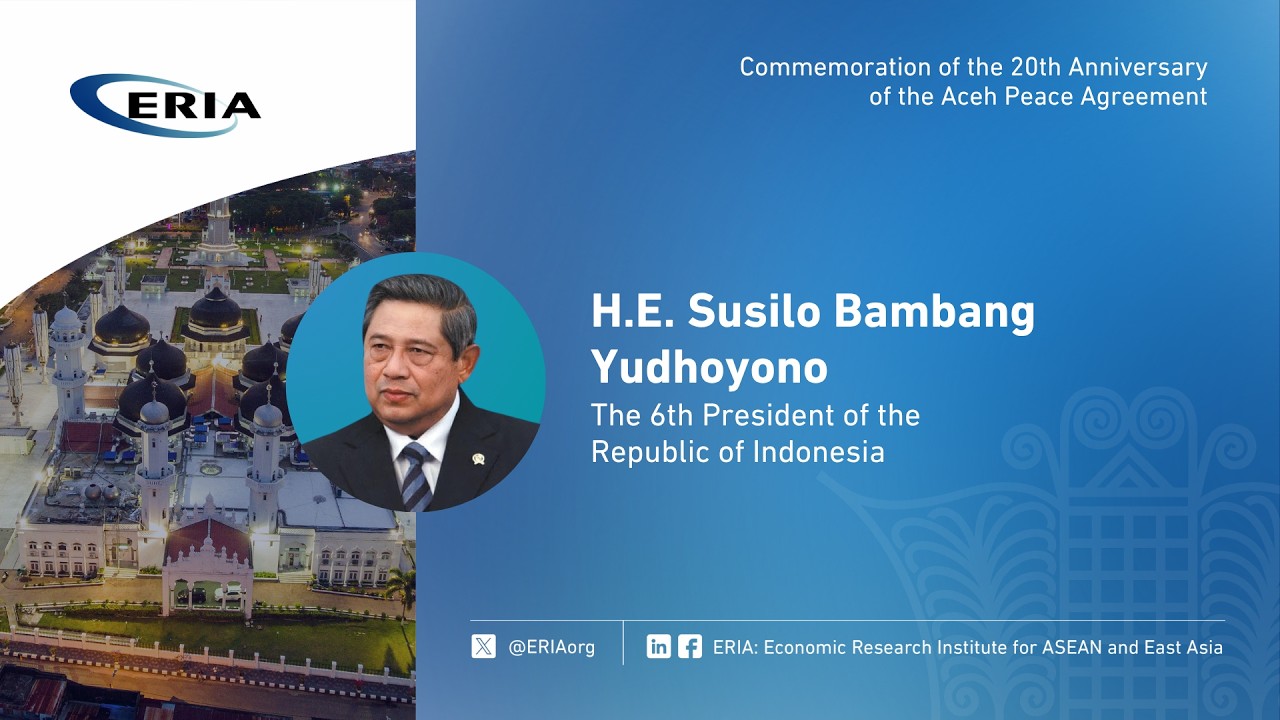
ERIA | H.E. Susilo Bambang Yudhoyono's Speech on the 20th Anniversary of Aceh Peace Agreement
Keywords
Summary
148 words
Critical Evaluation
Value of the Information & Strength of the Argument
The speech provides valuable first-hand insights into the Aceh peace process, offering a detailed narrative of the events and the strategic decisions made. Yudhoyono’s argumentation is coherent and well-structured, emphasizing key lessons such as the need for local ownership, strong leadership, clear parameters, trust-building, and effective implementation. He supports his points with specific examples and personal experiences, which enhances the credibility of his account. However, the speech is inherently subjective, reflecting his personal perspective and role, and may not fully capture the complexities or alternative viewpoints. The argumentation is persuasive but not critically examined, as it is a personal testimony rather than an analytical study.
Scientific Rigor, Source Quality, Title Accuracy
The speech is a primary source, as it is delivered by a key figure in the peace process. It does not cite external sources but relies on the speaker’s direct involvement and memory. The title accurately represents the content, and the speech is consistent with historical records, though it is a personal account. No external sources are provided in the description, so the quality of sources is limited to the speaker’s testimony. The title is appropriate and does not mislead.
200 words
Title / Content Match
The title accurately reflects the content: a speech by Susilo Bambang Yudhoyono on the 20th anniversary of the Aceh Peace Agreement.
Quality & Reliability
8/10
Speech by a former president directly involved in the peace process, providing first-hand account and historical details. High credibility due to his role, but subjective perspective and lack of independent verification.
Key Moments
Markers derived by PSI from the transcript: the creator did not define chapters.
- Introduction and acknowledgments
- Reflection on the long road to peace
- Early attempts: humanitarian pause and Geneva Agreement
- The impact of the 2004 tsunami and renewed urgency
- Negotiations in Helsinki and key decisions
- Implementation and challenges after the agreement
- Lessons learned from the peace process
- Honest assessment of progress and remaining challenges
- Call for evaluation and future priorities
- Closing remarks and vision for the future
Contribution & Novelties
This speech provides a unique first-hand account of the Aceh peace process from the perspective of the then-president, offering insights into the decision-making and leadership dynamics. It adds value by detailing the strategic considerations and the importance of timing and trust. The speech also candidly discusses the shortcomings in post-conflict development, which is a valuable contribution to the discourse on peacebuilding.
Pour aller plus loin :
- Helsinki Accords (Aceh) — Background on the agreement.
- Martti Ahtisaari — The mediator’s role and background.
- Free Aceh Movement — Information on GAM.
- Aceh Monitoring Mission — The international monitoring body.
- Conflict Resolution — General concepts in peacebuilding.
104 words
Radar Profile
The radar profile shows high scores in information quantity, quality, and reliability, reflecting the speaker's direct involvement and detailed account. The technical level is moderate, as the speech is accessible to a general audience. Overall, the profile indicates a credible and informative presentation.