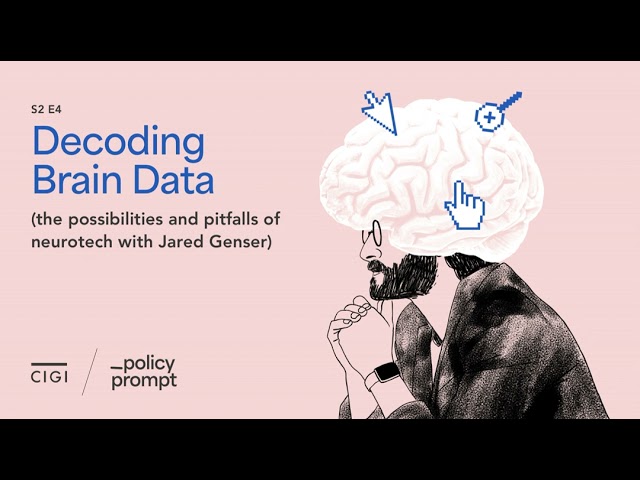
Decoding Brain Data (the possibilities and pitfalls of neurotech with Jared Genser)
Keywords
Summary
177 words
Critical Evaluation
The podcast provides a compelling and accessible overview of neurotechnology’s current capabilities and future trajectory, anchored by the expertise of Jared Genser. Genser’s background as a human rights lawyer and co-founder of the Neurorights Foundation lends authority to the discussion, particularly regarding the legal and ethical dimensions. The episode effectively balances the promise of neurotechnology—such as restoring communication for paralyzed individuals—with the perils, including the potential for thought decoding and mental privacy breaches.
The argumentation is generally solid, with Genser grounding his points in concrete examples like Dr. Eddie Chang’s brain-computer interface research and the development of wearable devices by major tech companies. He also references the U.S. BRAIN Initiative and Chile’s constitutional amendment on neuro-rights, providing a global perspective. However, the discussion remains largely at an introductory level, with limited technical depth. For instance, the distinction between invasive and non-invasive methods is explained clearly, but the underlying neuroscience and engineering challenges are not explored in detail. This is appropriate for a general audience but may leave specialists wanting more.
The sources cited are credible, including academic institutions and reputable news outlets, though the episode does not delve into primary research papers. The reliance on anecdotal evidence and personal expertise is a minor weakness, as some claims, such as the timeline for thought-to-text wearables, are speculative. Nevertheless, Genser is careful to frame such projections as estimates.
The adéquation between title and content is strong; the episode indeed decodes the possibilities and pitfalls of neurotech. The hosts facilitate a fluid conversation, though at times they interject with personal anecdotes that slightly derail the focus. Overall, the episode is a valuable primer for policymakers and the public, highlighting urgent ethical considerations. It does not, however, offer a comprehensive technical analysis or a deep dive into specific research studies, which might be a limitation for those seeking a more scientific perspective.
308 words
Title / Content Match
The title accurately reflects the content, which explores the possibilities and pitfalls of neurotechnology and brain data.
Quality & Reliability
8/10
The discussion features a recognized human rights lawyer and co-founder of the Neurorights Foundation, providing expert insights into neurotechnology's ethical and legal dimensions. The content is well-structured, references concrete examples and initiatives, and avoids sensationalism. However, it lacks peer-reviewed citations and relies on anecdotal evidence and personal expertise.
Key Moments
Markers derived by PSI from the transcript: the creator did not define chapters.
- Introduction to neurotechnology and brain-computer interfaces (BCIs).
- Jared Genser explains invasive vs. non-invasive neurotech devices.
- Discussion of Dr. Eddie Chang's breakthrough in thought-to-text communication.
- Examples of wearable neurotech, including meditation devices and F1 car driving.
- Overview of global brain initiatives and corporate investments (Meta, Apple).
- Risks of neurotech: mental privacy, thought decoding, and dual-use concerns.
- Introduction to neuro-rights and Chile's constitutional amendment.
- Discussion on the Neurorights Foundation and global advocacy efforts.
- The need for legal and regulatory safeguards for neurotechnology.
- Closing thoughts on the future of neurotech and human rights.
Cited Sources
- Chile: Pioneering the protection of neurorights — Referenced as an example of a country enshrining neuro-rights in its constitution.
- Brain-computer interface — Provided as a general explanation of brain-computer interfaces.
- President Obama’s Brain Initiative — Mentioned as a major U.S. funding initiative for neurotechnology research.
- Neuralink — Cited as a prominent company developing invasive brain-computer interfaces.
- Neurorights Foundation — The organization co-founded by Jared Genser, advocating for neuro-rights.
- Brain implant and AI gives a woman with paralysis her voice back — Video of Dr. Eddie Chang's research, referenced as a breakthrough in thought-to-text.
- EMOTIV and Rodrigo Hubner Mendes drive an F1 car using EEG — Example of a wearable device enabling a paraplegic to drive a car using thoughts.
- Robotic exoskeleton helps paralyzed person kick first ball of 2014 World Cup — Example of a brain-computer interface controlling a robotic exoskeleton.
Concurring Sources
- Neurorights Foundation — The organization's mission aligns with the episode's advocacy for neuro-rights.
- UNESCO Courier article on Chile — Supports the claim that Chile is pioneering neuro-rights legislation.
Dissenting Sources
- No discordant sources identified — The episode presents a balanced view, and no conflicting sources were mentioned or found in the description.
External References
Contribution & Novelties
The episode provides a timely and accessible overview of neurotechnology’s current state and its ethical implications, emphasizing the need for new human rights protections. It highlights concrete examples and global initiatives, making it a valuable resource for policymakers and the public.
Pour aller plus loin :
- Neuroethics — Explores the ethical, legal, and social implications of neuroscience.
- Brain–computer interface — Detailed technical overview of BCI technology.
- Cognitive liberty — Concept central to neuro-rights discussions.
- Chile’s constitutional amendment on neuro-rights — Direct reference to the pioneering legal step.
87 words
Radar Profile
The radar profile shows high scores in quantity and quality of information, with a moderate technical level. The reliability is strong due to the expert guest and credible references, but the lack of peer-reviewed sources slightly lowers the overall score.
💬 No comments were provided for analysis.