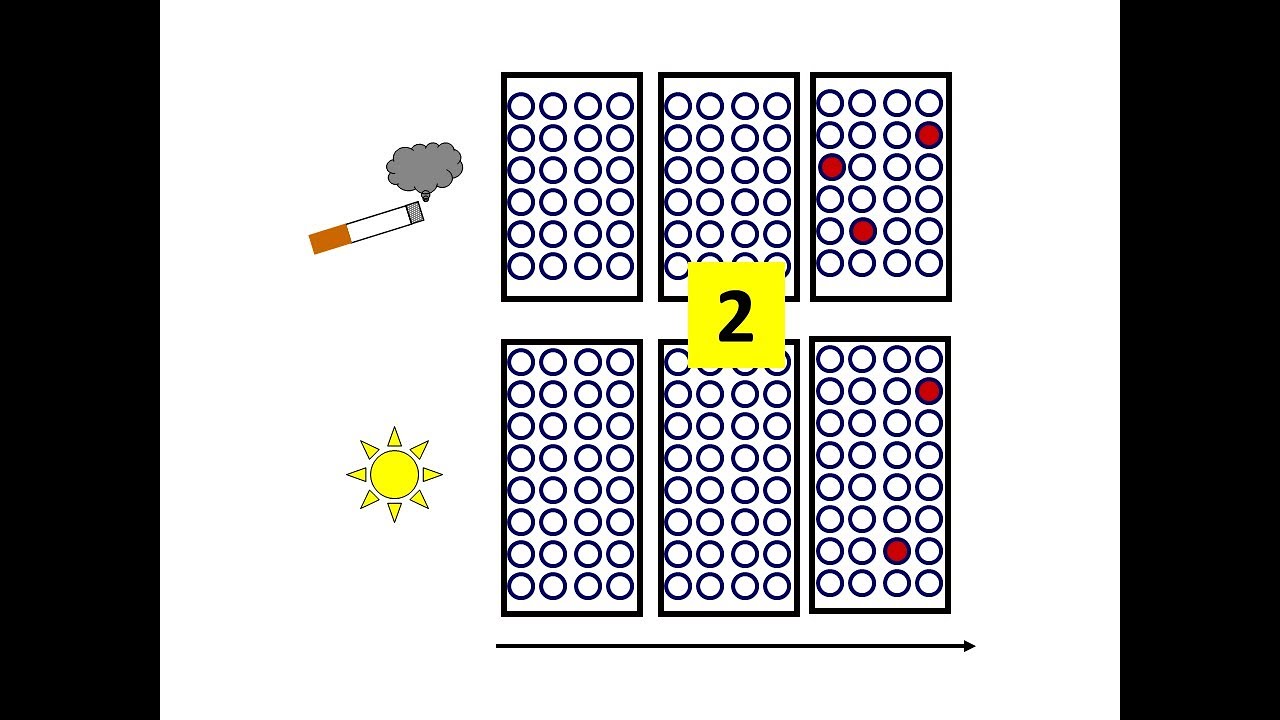
Cohorte 2) Groupe de référence
Keywords
Summary
184 words
Critical Evaluation
Value of the Information & Strength of the Argument
The video provides valuable practical guidance for designing cohort studies, particularly for selecting appropriate reference groups and calculating sample size. The argumentation is solid, using a clear real-world example to illustrate the consequences of selection bias. The instructor logically builds from the need for a reference group to the rules for its selection, and then to the quantitative aspect of sample size. The explanation of the sample size formula is accessible, breaking down each component and its role. The use of an example with changing parameters effectively demonstrates the trade-offs between power, significance level, and effect size. The video is well-structured and the reasoning is coherent, making it a useful educational resource.
Scientific Rigor, Source Quality, Title Accuracy
The scientific rigor is adequate for an educational tutorial. The instructor references standard epidemiological concepts and provides a real example, but does not cite specific studies or sources in detail. The description includes links to his own course materials and to an online calculator (epitools), which are relevant. The title accurately reflects the content. The video does not include any advertising or sponsored content.
191 words
Title / Content Match
The title accurately reflects the content, which focuses on the reference group in cohort studies.
Quality & Reliability
8/10
The video is a clear and structured tutorial on selecting reference groups and calculating sample size for cohort studies. It uses a real example (vaccine efficacy in Alaska) to illustrate selection bias, and provides practical formulas and software recommendations. The content is consistent with standard epidemiological methodology, though it lacks detailed citations to primary literature.
Key Moments
Markers derived by PSI from the transcript: the creator did not define chapters.
Cited Sources
- Formation Epiter — Full list of courses in statistics and epidemiology
- QCM Quizz — Exercises, MCQs, and quizzes
- Epitools - Cohort sample size — Online calculator for cohort sample size
Concurring Sources
- Epitools - Cohort sample size — Online calculator used in the video for sample size calculation.
External References
Contribution & Novelties
The video provides a clear and practical guide to selecting reference groups and calculating sample size for cohort studies, emphasizing common pitfalls such as selection bias. It offers a step-by-step approach to sample size calculation, making it accessible to students and researchers.
Pour aller plus loin :
- Cohort study - Wikipedia — Overview of cohort study design.
- Selection bias - Catalog of Bias — Explanation of selection bias.
- Sample size determination - Wikipedia — General principles of sample size calculation.
80 words
Radar Profile
The radar profile shows high scores in information quantity, quality, and technical level, with a slightly lower but still good score in global reliability. This indicates a well-structured and informative tutorial with minor limitations in sourcing.
💬 No comments were provided for analysis.