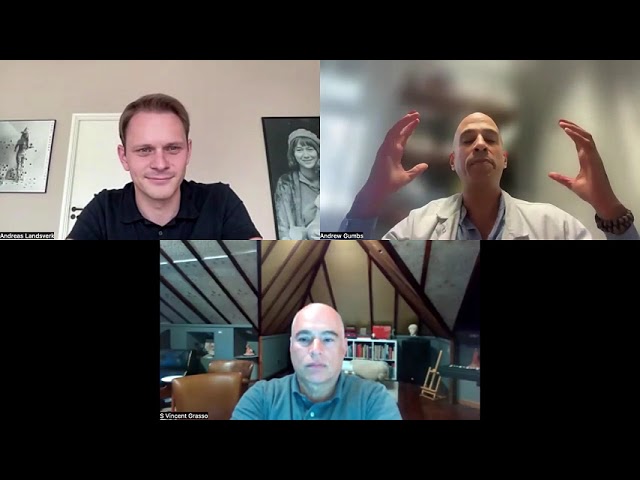
Episode 71: Interview of Andreas Landsverk
Keywords
Summary
198 words
Critical Evaluation
Value of the Information & Strength of the Argument
The value of the information lies in the practical insights into clinical data management and the challenges of AI in healthcare. Landsverk provides a clear explanation of Ledidi’s features, such as self-service setup, granular permissions for data sharing, and the use of AWS for secure storage. The argumentation is coherent, emphasizing the importance of structured data for AI model training and the pragmatic approach to data sharing via permissions rather than complex federated systems. However, the discussion is largely anecdotal, lacking quantitative evidence or case studies to substantiate claims about the platform’s effectiveness. The hosts’ enthusiasm for the tool is evident, but the argumentation would be stronger with more concrete examples or data on outcomes.
Scientific Rigor, Source Quality, Title Accuracy
The scientific rigor is moderate. The interview provides a credible overview of Ledidi’s platform, but it relies on the interviewee’s claims without independent verification. The sources cited are limited to the company’s own description and the hosts’ project, with no external references to peer-reviewed studies or regulatory approvals. The title accurately reflects the content, which is an interview with Andreas Landsverk. The discussion touches on relevant topics such as data sharing regulations and AI readiness, but lacks depth in technical details. Overall, the content is informative but not highly rigorous from a scientific standpoint.
224 words
Title / Content Match
The title accurately reflects the content: an interview with Andreas Landsverk, focusing on his work at Ledidi.
Quality & Reliability
7/10
The interview provides a credible overview of Ledidi's platform for clinical research data management, with practical insights into data sharing and AI readiness. However, it lacks detailed technical specifics and independent verification of claims.
Key Moments
Markers derived by PSI from the transcript: the creator did not define chapters.
- Introduction of the podcast and hosts, mention of impact factor.
- Andreas Landsverk introduces himself and Ledidi.
- Discussion on Ledidi's origin and COVID-19 registries.
- Landsverk's background and experience in innovation management.
- Overview of Ledidi's platform features and data sharing capabilities.
- Discussion on data quality, storage, and costs.
- The Argos project and plans for AI-powered tumor board.
- Concluding remarks on AI in surgery and data infrastructure.
Cited Sources
- Ledidi — Mentioned as the company Andreas works for, providing a platform for clinical research.
Concurring Sources
- Ledidi — The company's official website, which describes the platform's features and mission.
Contribution & Novelties
The interview provides a practical perspective on clinical data management for AI in surgery, highlighting the importance of structured data and user-friendly platforms. It introduces Ledidi as a solution that lowers barriers to research collaboration. The discussion on using permissions for data sharing as a pragmatic alternative to federated systems is a notable insight.
Pour aller plus loin :
- Electronic Case Report Form (eCRF) — Provides background on eCRFs used in clinical research.
- Multimodal learning — Relevant to the discussion of multimodal data in AI.
- Data sharing in clinical research — WHO’s perspective on data sharing in health research.
99 words
Radar Profile
The radar profile shows moderate scores across all dimensions, with slightly higher quality and reliability compared to quantity and technical depth. This suggests the content is credible but not highly detailed or technical, suitable for a general audience interested in clinical data management and AI.
💬 No comments were provided for analysis.