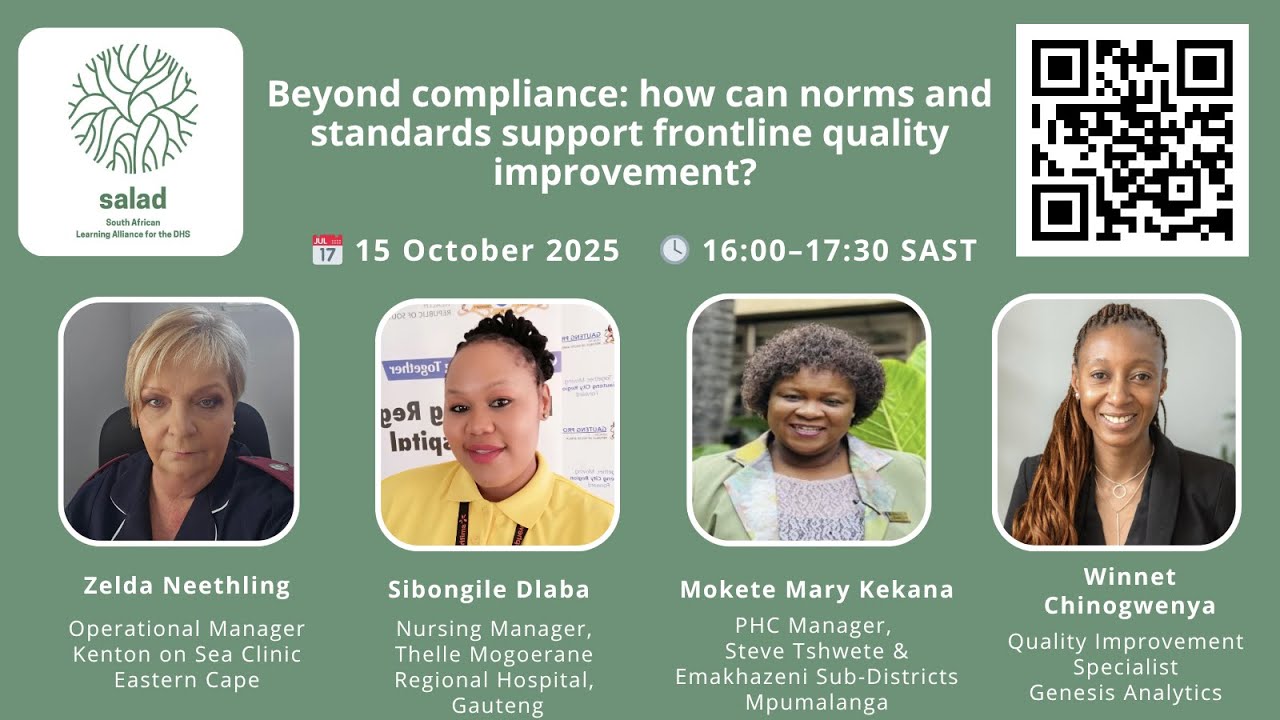
Beyond compliance: How can norms and standards support frontline quality improvement?
Keywords
Summary
157 words
Critical Evaluation
Value of the Information & Strength of the Argument
The webinar provides valuable insights from practitioners directly involved in implementing norms and standards. The presentations are grounded in real-world experiences, offering practical examples of both successes and challenges. The argumentation is solid, drawing on specific case studies and a qualitative research study. The speakers effectively highlight the tension between compliance and genuine quality improvement, advocating for a shift towards a culture of learning and patient-centered care. The discussion is balanced, acknowledging the burden of compliance while emphasizing its potential benefits when implemented effectively.
Scientific Rigor, Source Quality, Title Accuracy
The webinar demonstrates scientific rigor through its use of official guidelines (e.g., National Core Standards, Ideal Clinic, PSI guidelines) and references to WHO frameworks. The qualitative study mentioned is based on systematic research. The title accurately reflects the content, focusing on how norms and standards can support frontline quality improvement. The session is well-structured, with clear presentations and audience engagement. No specific external sources are cited in the description, but the content aligns with established health systems literature.
177 words
Title / Content Match
The title accurately reflects the webinar's focus on exploring how norms and standards can support frontline quality improvement beyond mere compliance.
Quality & Reliability
7/10
The webinar features experienced health system practitioners and researchers presenting practical experiences and a qualitative study. While not peer-reviewed, the content is grounded in field experience and references official guidelines and frameworks. The discussion is balanced, acknowledging both benefits and challenges.
Chapters
- Introduction: Oupa Motshweneng
- The Benefit and Burden of Compliance: Mary Kekana
- Frontline Experiences in the Implementation of PSI Reporting and Learning Guidelines: Sibongile Dlaba
- Appointment System: Zelda Neethling
- Audience engagement
- Beyond Complaince: Winnet Chinogwenya
- Audience engagement
- Wrap up: Helen Schneider
Contribution & Novelties
The webinar offers a frontline perspective on the implementation of norms and standards, highlighting the practical challenges and benefits often overlooked in policy discussions. It emphasizes the need for a shift from compliance-driven to learning-oriented approaches. The case studies provide concrete examples of how facilities can navigate multiple assessment bodies and use standards to drive improvement.
Pour aller plus loin :
- WHO Global Patient Safety Action Plan 2021-2030 — Relevant for understanding the global framework for patient safety.
- South African National Department of Health - Ideal Clinic — Provides details on the Ideal Clinic programme and its standards.
- Office of Health Standards Compliance (OHSC) — The regulatory body for health standards in South Africa.
114 words
Radar Profile
The radar profile shows a balanced performance across all dimensions, with slightly higher scores in quality and reliability, reflecting the webinar's practical and evidence-based content. The moderate technical level indicates accessibility to a broad audience while maintaining depth.