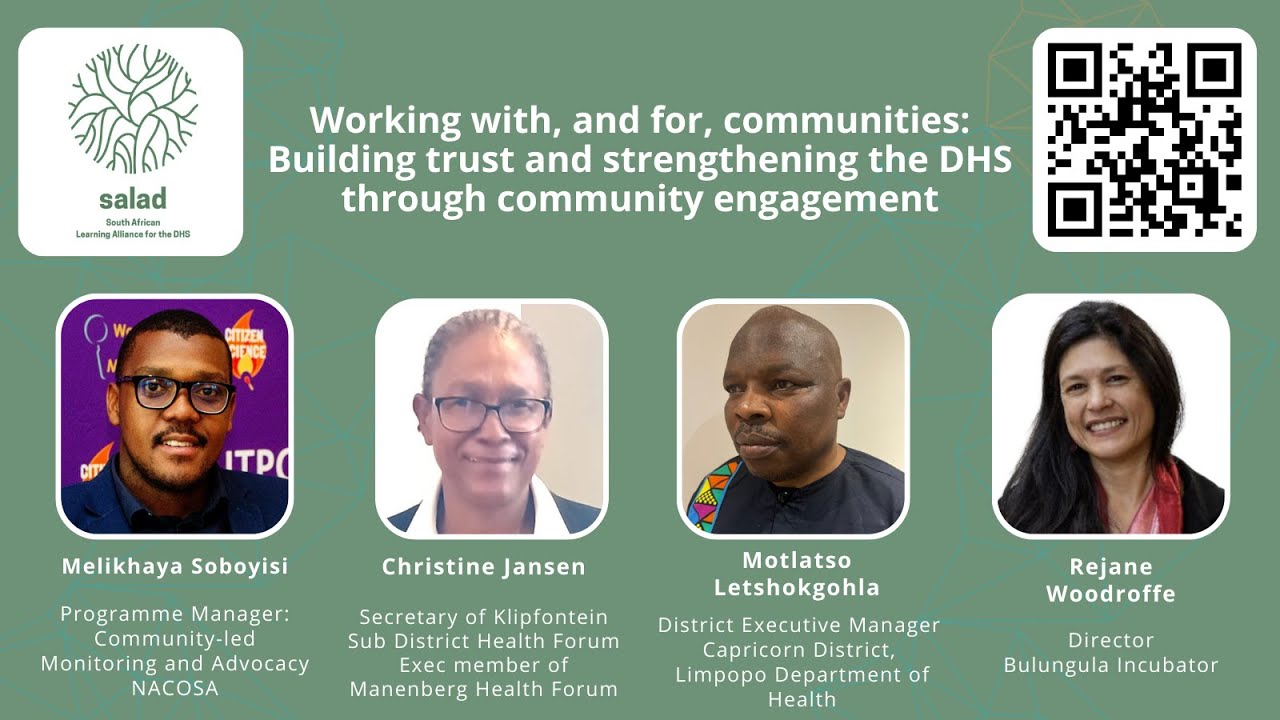
Working with, and for, communities Building trust and strengthening the DHS through community engage
Keywords
Summary
167 words
Critical Evaluation
Value of the Information & Strength of the Argument
The webinar provides valuable insights into practical community engagement strategies, with concrete examples and outcomes. The speakers argue convincingly that trust is built through transparency, respect for community protocols, and genuine partnership. The CLM program’s data-driven approach demonstrates tangible improvements in health service uptake, strengthening the argument for community-led monitoring. However, the argumentation relies heavily on anecdotal evidence and programmatic reports, lacking rigorous scientific evaluation. The speakers’ experiences are compelling but not systematically analyzed, limiting the generalizability of the conclusions.
Scientific Rigor, Source Quality, Title Accuracy
The webinar does not cite formal academic sources, but references key policies and frameworks such as the National Health Act, the National Development Plan, and the Primary Health Care approach. The speakers draw on their professional and community experiences, which adds practical credibility but not scientific rigor. The title accurately reflects the content, which is focused on community engagement for trust-building in the DHS. The webinar is well-structured, but the lack of formal citations and peer-reviewed evidence reduces its scientific reliability.
176 words
Title / Content Match
The title accurately reflects the content, which focuses on community engagement to build trust and strengthen the District Health System.
Quality & Reliability
7/10
The webinar features experienced practitioners and community leaders sharing practical insights and case studies, but lacks formal citations and peer-reviewed evidence, relying primarily on anecdotal and programmatic data.
Key Moments
Markers derived by PSI from the transcript: the creator did not define chapters.
- Introduction by Krish Vallabhjee on the importance of community engagement in primary health care.
- Melikai Soboyesi presents the community-led monitoring program in West Rand.
- Melikai shares key achievements of the CLM program, including increased PrEP initiation and HIV testing.
- Motlatso Letsoalo discusses community engagement protocols in rural Limpopo.
- Motlatso emphasizes the importance of balancing community demands with available resources.
- Christine Jansen shares her experience as a community activist and the challenges faced by health committees.
- Christine discusses the need for joint training and genuine partnership between committees and facility managers.
- Discussion on the need for a national policy on health committees and increased community participation.
Cited Sources
- National Health Act 61 of 2003 — Referenced by Christine Jansen as the legal basis for health committees.
- National Development Plan 2030 — Referenced by Krish Vallabhjee as a policy framework for community engagement.
- People's Health Movement — Referenced by Christine Jansen as a partner in community health advocacy.
Concurring Sources
- Community engagement in health systems — WHO highlights the importance of community engagement for health systems strengthening.
Contribution & Novelties
The webinar offers a unique perspective by combining insights from health system managers, community leaders, and program implementers, highlighting the practical challenges and successes of community engagement in South Africa. It emphasizes the importance of trust-building through transparency and respect for community protocols, and showcases the effectiveness of community-led monitoring in improving health outcomes. The discussion on the need for a national policy on health committees is a novel contribution to the ongoing discourse on community participation in health governance.
Pour aller plus loin :
- Community Health Workers in South Africa — Provides background on community health workers, a key element of community engagement.
- Primary Health Care — Foundational concept for community participation in health.
- National Health Insurance (South Africa) — Context for current health system reforms and community involvement.
130 words
Radar Profile
The radar profile shows high scores in quantity and quality of information, reflecting the rich practical insights and case studies. The technical level is moderate, indicating the content is accessible to a broad audience. Reliability is moderate due to the lack of formal citations and reliance on anecdotal evidence.