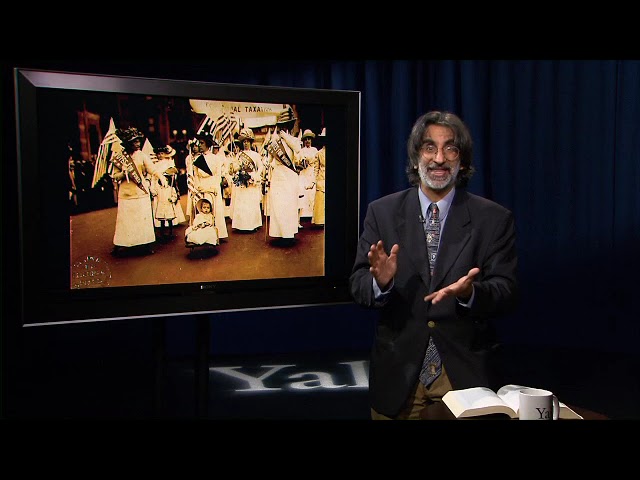
Progressive Reforms, Part 2 | America's Written Constitution with Akhil Reed Amar
Keywords
Summary
160 words
Critical Evaluation
This lecture is a masterful exposition of constitutional history, delivered by Akhil Reed Amar, a leading scholar of constitutional law. The content is rich in historical detail and legal analysis, demonstrating a deep understanding of the subject. Amar’s argument that the income tax was always constitutional is well-reasoned, drawing on the original understanding of ‘direct tax’ and the precedent of Lincoln’s wartime income tax. He acknowledges the counterarguments and explains why he finds them unpersuasive, which adds to the credibility of his analysis. The discussion of the 17th Amendment is particularly insightful, as Amar traces the various improvisations that preceded it and its broader implications for American governance. He connects the amendment to the later one-person-one-vote principle and changes in the career paths of senators and presidents. The treatment of the 19th Amendment is comprehensive, exploring the social and political dynamics that led to women’s suffrage, including the role of the West and the bandwagon effect. Amar’s narrative is engaging and accessible, making complex constitutional issues understandable without oversimplifying. The lecture is well-structured, with clear transitions between topics. The only minor weakness is that some of Amar’s interpretations are contested, but he acknowledges this and provides evidence for his views. Overall, this is an excellent educational resource that offers valuable insights into the Progressive Era amendments and their lasting impact on American democracy.
223 words
Title / Content Match
The title accurately reflects the content, which covers the 16th, 17th, and 19th Amendments as progressive reforms.
Quality & Reliability
9/10
Lecture by a renowned constitutional scholar, with historical evidence and legal analysis. The arguments are well-supported, though some interpretations are contested.
Chapters
- The income tax, and whether it was ever barred
- The Court reverses itself, and Harlan dissents
- The four times an amendment overruled the Court
- The Seventeenth Amendment
- The Oregon plan
- Downstream effects on the cabinet and the presidency
- The Nineteenth Amendment
- Why the West enfranchised women first
- The bandwagon, state by state
- Wilson, the war, and the League of Nations
Cited Sources
- America's Written Constitution - Yale Online — Course page for the lecture series
- America's Written Constitution - Coursera — Online course version of the lecture
- YouTube Playlist for the Course — Playlist containing all lectures
Concurring Sources
- Pollock v. Farmers' Loan & Trust Co. — The Supreme Court case that the 16th Amendment overturned.
- Oregon System — The initiative and referendum system that influenced direct election of senators.
Dissenting Sources
- The Income Tax Amendment: A Reappraisal
Contribution & Novelties
This lecture provides a nuanced interpretation of the Progressive Era amendments, arguing that the income tax was always constitutional and that the 17th Amendment had far-reaching effects on American politics. Amar’s analysis of the 19th Amendment highlights the strategic and social factors behind women’s suffrage.
Pour aller plus loin :
- Sixteenth Amendment to the United States Constitution — Overview of the amendment and its history.
- Seventeenth Amendment to the United States Constitution — Details on the direct election of senators.
- Nineteenth Amendment to the United States Constitution — History and impact of women’s suffrage.
94 words
Radar Profile
The radar profile shows high scores across all dimensions, indicating a well-balanced and authoritative lecture. The strongest aspects are the quality and reliability of the information, reflecting Amar's expertise and the historical evidence presented.