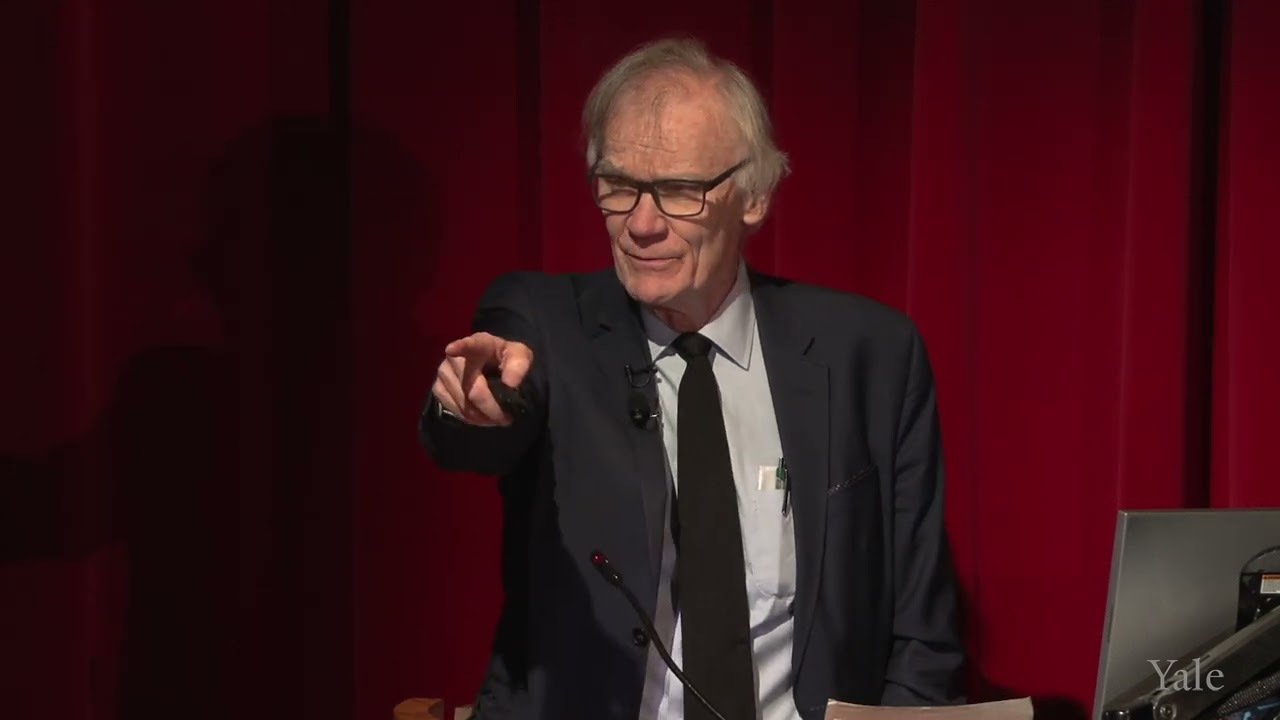
Class 21, Retreat from Reconstruction, the Grant Era and Paths to “Southern Redemption”
Keywords
Summary
141 words
Critical Evaluation
Professor Blight delivers a compelling and scholarly lecture on the retreat from Reconstruction, focusing on the Grant era and the paths to Southern Redemption. The lecture is well-structured, beginning with a powerful quote from Frederick Douglass that sets the tone for the discussion of slavery’s enduring legacy. Blight’s biographical treatment of Grant is nuanced, acknowledging his flaws (drinking, depression, corrupt associates) while emphasizing his military genius and commitment to the Union. The lecture benefits from Blight’s deep expertise, evident in his references to primary sources (Douglass’s speech) and scholarly works (Chernow’s biography). The argumentation is solid, as Blight connects Grant’s personal history to broader political developments, such as the impeachment of Andrew Johnson and the election of 1868. The lecture is part of a university course, so it assumes some prior knowledge, but it remains accessible. The title accurately reflects the content, which focuses on the retreat from Reconstruction and the Grant era. The lecture does not explicitly address the ‘Southern Redemption’ in detail, but it sets the stage for the next lecture. Overall, the lecture is rigorous and informative, with high-quality sources and clear argumentation. The only minor weakness is that it is a lecture, not a peer-reviewed publication, but it is delivered by a recognized expert. The lecture also includes a brief aside about women in the military, which is tangential but does not detract from the main content. The public comments (if any) are not provided, so no analysis of audience reception is possible. The lecture’s value lies in its synthesis of historical events and its engaging narrative style, making it a valuable resource for students and enthusiasts of American history.
274 words
Title / Content Match
The title accurately reflects the content, which covers the retreat from Reconstruction, the Grant era, and paths to Southern Redemption.
Quality & Reliability
8/10
Lecture by a Yale professor, part of a university course, with historical expertise and references to primary sources and scholarly works.
Key Moments
Markers derived by PSI from the transcript: the creator did not define chapters.
- Introduction and Frederick Douglass quote about slavery not being honestly dead.
- Discussion of Grant's early life, including his drinking problem and resignation from the army.
- Grant's rise during the Civil War and his military genius.
- Grant's presidency and his views on Reconstruction.
- Discussion of the election of 1868 and the impeachment of Andrew Johnson.
- Grant's world tour and his memoirs written while dying.
- Conclusion and transition to the next lecture on Southern Redemption.
Cited Sources
- Can It Happen Here Again? Yale, Slavery, and Legacies: 2024 DeVane Lecture Series — Playlist of the lecture series this video belongs to.
Concurring Sources
- Reconstruction: America's Unfinished Revolution, 1863-1877 — Eric Foner's seminal work on Reconstruction, which aligns with the lecture's themes.
Contribution & Novelties
This lecture provides a nuanced analysis of the Grant era and the retreat from Reconstruction, emphasizing the complexity of Grant’s character and his role in shaping Reconstruction policies. It offers a fresh perspective on the period by connecting Grant’s personal experiences to broader political developments. The lecture also highlights the enduring legacy of slavery and the incomplete nature of emancipation.
Pour aller plus loin :
- Reconstruction era — Overview of the Reconstruction period.
- Ulysses S. Grant — Biography of Grant.
- Frederick Douglass — Context on Douglass’s speeches and activism.
89 words
Radar Profile
The radar profile shows high scores in quality of information and reliability, with slightly lower scores in quantity and technical level, indicating a focused and authoritative lecture.